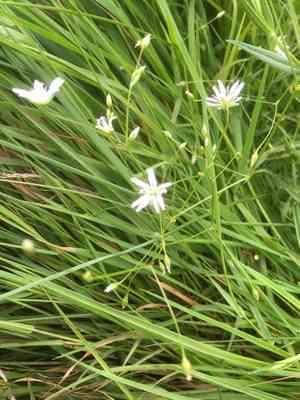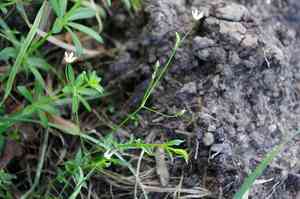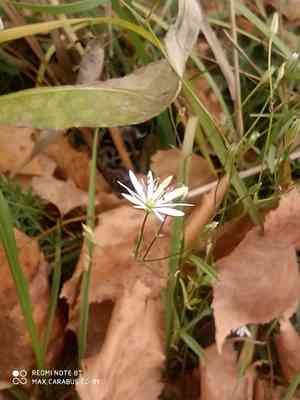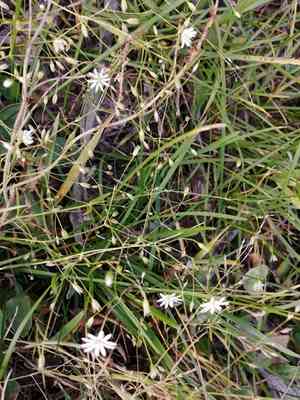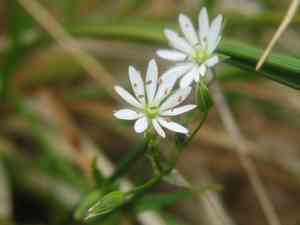
Grass-like starwort(Stellaria graminea)

Grass-like starwort (Stellaria graminea)

Also known as: Lesser starwort, Common starwort, Stitchwort

Grass-like starwort (Stellaria graminea), originally from Eurasia, has spread widely due to its weedy nature. In the United States, it is prevalent in the northeastern and midwestern regions, often seen in lawns, meadows, and disturbed areas. Characterized by its small, star-shaped white flowers, this plant attracts various pollinators like bees and butterflies. Additionally, birds such as doves and sparrows feed on its seeds, while caterpillars consume its foliage.

Attributes of Grass-like starwort

Lifespan
Perennial
Plant Type
Herb
Plant Height
90 cm
Spread
20 cm
Leaf Color
Green Blue
Flower Size
8 mm
Flower Color
White

ForwardPlant - Identify plants with a snap

Identify and diagnose plants, get toxicity alerts, and explore safety guides for all types of fungi.

Try for Free

Images of Grass-like starwort

Grass-like starwort(Stellaria graminea)

Quickly Identify Grass-like starwort

1
Grass-leaved Starwort can be identified by its thin, grass-like leaves and small, star-shaped white flowers that typically have five deeply lobed petals.

Scientific Classification of Grass-like starwort

Phylum
Vascular plants
Class
Dicotyledons
Order
Caryophyllales
Family
Pink
Genus
Chickweeds
Species
Grass-like starwort

Planting and Growing of Grass-like starwort

Care Difficulty
Easy
Watering Schedule
Every 3 days
Sunlight Requirements
Full sun
Sunshine Duration
4-8 hours
Ideal Temperature
60-75℉
Soil Type
Potting Mix, Peat Mix
Soil pH
6.5-7.5
Fertilizer Type
Balanced
Pruning Season
Spring, Summer
Pruning Area
Branches, Leaves
Pruning Frequency
2 times a year
Repotting Season
Spring
Pot Type
Plastic, Terracotta

water icon How to Water Grass-like starwort?

The watering amount for Stellaria graminea should ensure the soil is moist but not waterlogged. This plant prefers around 150 milliliters per session, enough to penetrate the top 2 inches of soil. Consistency is vital to maintain the right moisture level.
What are the symptoms of an underwatered Grass-like starwort? ›
What should I do if my Grass-like starwort is not getting enough water? ›
What are the symptoms of an overwatered Grass-like starwort? ›
How to save an overwatered Grass-like starwort? ›

sunlight icon What Are the Sunlight Requirements for Grass-like starwort?

Sunlight Requirements: Full sun, Partial sun
Duration of light: 4 to 6 hours
Stellaria graminea benefits from full to partial sunlight, ensuring 4 to 6 hours daily exposure. Ideal lighting enhances photosynthesis, encouraging vigorous growth, sturdy stems, and abundant blooms, contributing to a robust plant life cycle.
Optimal Sun Exposure ›
Solution for Ideal Light ›
Benefits of Ideal Lighting ›
More About Sunlight Requirements Techniques→

temperature icon What Is the Ideal Temperature Range for Grass-like starwort?

Ideal Temperature: 60 ~ 75℉
The ideal temperature range for Stellaria graminea lies between 60°F and 75°F. This range ensures optimal growth and flowering. At these temperatures, the metabolic processes of the plant function efficiently, promoting healthy development and resilience against pests and diseases.

soil icon What Soil is Best for Grass-like starwort?

Soil type: Sandy soil, Loam, Sandy loam
Soil PH: 6.5 ~ 7.5
Stellaria graminea thrives in well-drained soil that prevents water from pooling around the roots, which can lead to rot. This ensures healthy root development and optimal growth. The plant prefers soil with moderate fertility, which provides essential nutrients without overwhelming the plant and encourages balanced growth and flowering. While the soil should be well-drained, it should also retain enough moisture to not dry out too quickly, supporting consistent growth. Sandy loam achieves this balance efficiently.

fertilize icon How to Fertilize Grass-like starwort?

Fertilizer type: Balanced
For Stellaria graminea, moderation is key when it comes to fertilization. A diluted liquid fertilizer at half strength is sufficient, as the plant doesn't require heavy nutrients. Ensure the soil is moist before application to avoid root burn.

prune icon How to Prune Grass-like starwort?

Pruning Time: Spring, Summer, Autumn
Begin pruning from the base of the plant. This ensures you remove the oldest or the most crowded growth first, allowing better sunlight penetration. Make your cuts at a 45-degree angle to the stem. This prevents water from accumulating at the cut, reducing the risk of rot and infection. Be cautious to not remove more than one-third of the plant at once. Over-pruning can stress it, hindering its natural growth and recovery.

propagate icon How to Propagate Grass-like starwort plant?

Propagate Time: Spring, Early summer
1
Collect seeds from mature Stellaria graminea plants once the seed pods have dried and turned brown. Be gentle when handling seeds to avoid damaging them. Store collected seeds in a cool, dry place until you are ready to plant them.
2
Prepare well-drained soil with a slightly acidic to neutral pH for planting Stellaria graminea. Mix in organic matter, such as compost, to improve soil fertility. Loosen the soil to ensure good aeration and root penetration.
3
For division propagation, carefully dig up an established Stellaria graminea plant in early summer. Use a sharp, clean knife to separate the plant into smaller sections, ensuring each section has roots attached. Replant the divisions immediately in prepared soil.
More About Propagating Techniques→

repot icon How to Repot Grass-like starwort plant?

Repotting frequency: Every 2-3 years
1
Stellaria graminea needs repotting when you notice roots growing through the drainage holes or the plant looks stressed despite proper care. Another sign is soil compacting or nutrient depletion, resulting in stunted growth. These indicators suggest it's time to provide the plant with fresh soil and ample space for root development.
2
Select a pot that's one size larger than the current one, with good drainage holes to prevent waterlogging. This ensures proper root expansion and oxygen flow, reducing the risk of root rot. Opt for clay pots that allow natural air circulation, keeping the plant healthier and promoting robust growth.
3
Opt for well-draining potting mix rich in organic matter. Such soil blends maintain the right moisture balance and provide essential nutrients, preventing water stagnation, root rot, and nutrient deficiency. This choice encourages strong root structures and an overall healthy plant.

ForwardPlant - Identify plants with a snap

Find the best spots for them to optimize their health, simply using your phone.

Try for Free

Toxicity of Grass-like starwort

Is Grass-like starwort toxic to humans?

The grass-like starwort is known to exhibit a mild toxicity level in humans, particularly when ingested. This entire plant harbors saponins, which are the primary compounds responsible for its toxic characteristics. Ingesting even small amounts of grass-like starwort may trigger a variety of symptoms. Affected individuals might suffer from gastrointestinal issues, such as nausea, vomiting, and diarrhea. Additionally, consuming grass-like starwort can occasionally lead to headaches and feelings of dizziness. It is crucial for people to exercise caution and prevent unintentional ingestion of grass-like starwort, as every part of the plant carries the risk of causing negative health effects.

Identify toxic plants for your safety

Learn which plants are harmful to you and your pets, and make informed choices for a safer home!

Try for Free
WARNING
The judgment on toxicity and danger is for reference only. We DO NOT GUARANTEE any accuracy of such judgment. Therefore, you SHALL NOT rely on such judgment. It is IMPORTANT TO SEEK PROFESSIONAL ADVICE in advance when necessary.
More About Toxic Techniques→