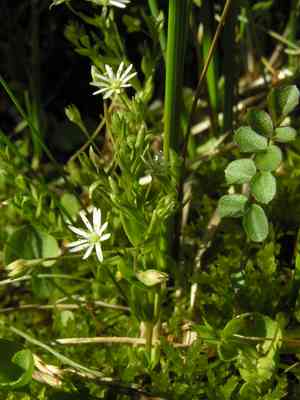
Fleshy starwort (Stellaria crassifolia)
Also known as: No known aliases
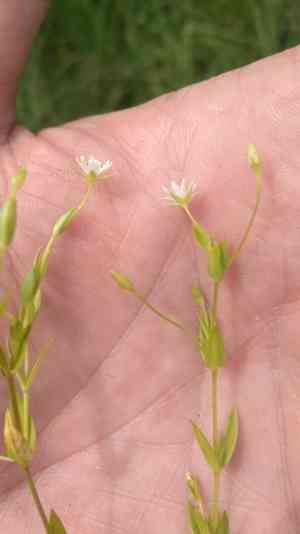
Fleshy starwort (Stellaria crassifolia) is a low-growing plant that often forms dense mats. It features small, delicate white flowers that appear to have 10 petals, arranged in pairs, creating a star-like shape. This distinctive floral arrangement is the reason behind its "starwort" nickname.
In This Article
Attributes of Fleshy starwort
Lifespan
Perennial
Plant Type
Herb
Plant Height
10 cm to 25 cm
Spread
Up to 30 cm
Leaf Color
Green
Flower Size
0.5-1 cm
Flower Color
White
Images of Fleshy starwort
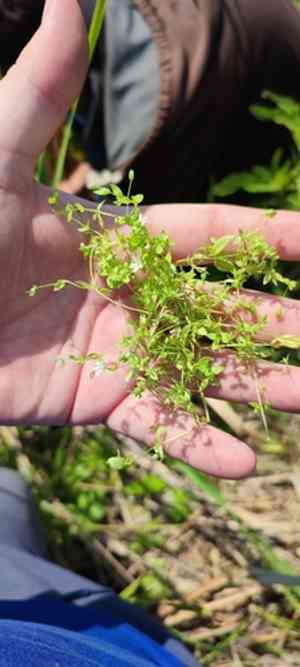
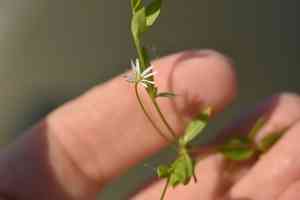
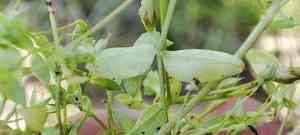
Quickly Identify Fleshy starwort
1
Stellaria crassifolia can be identified by its small white star-shaped flowers, which have five deeply notched petals, and its fleshy, succulent leaves that are opposite and lanceolate in shape. The plant usually forms mats owing to its creeping growth habit.
Scientific Classification of Fleshy starwort
Phylum
Vascular plants
Class
Dicotyledons
Order
Caryophyllales
Family
Pink
Genus
Chickweeds
Species
Fleshy starwort
Planting and Growing of Fleshy starwort
Care Difficulty
Easy
Watering Schedule
Every 2 days
Sunlight Requirements
Partial sun
Sunshine Duration
8-12 hours
Ideal Temperature
50-68℉
Soil Type
Potting Mix, Peat Mix
Soil pH
6-7.5
Fertilizer Type
Balanced
Pruning Season
Spring, Summer
Pruning Area
Branches, Leaves
Pruning Frequency
2 times a year
Repotting Season
Spring
Pot Type
Plastic, Terracotta
 How to Water Fleshy starwort?
For Stellaria crassifolia, it's essential to maintain consistently moist soil without waterlogging. Watering should ensure that the soil is damp to the top two inches. Avoid allowing the soil to become entirely dry or overly saturated, striking a balance that keeps the plant consistently hydrated.
What are the symptoms of an underwatered Fleshy starwort?
›
What should I do if my Fleshy starwort is not getting enough water?
›
What are the symptoms of an overwatered Fleshy starwort?
›
How to save an overwatered Fleshy starwort?
›
 What Are the Sunlight Requirements for Fleshy starwort?
Partial sun exposure ensures Stellaria crassifolia gets enough light for photosynthesis without stress from extreme conditions. This balance supports optimal growth, healthy foliage, and flowering.
What is the best way to position Stellaria crassifolia?
›
How can I maximize light for this plant indoors?
›
What should I avoid in terms of lighting for this plant?
›
 What Is the Ideal Temperature Range for Fleshy starwort?
The ideal temperature range for the growth of Stellaria crassifolia is between 50°F and 68°F. Maintaining temperatures within this range helps ensure optimal growth and flowering. This plant thrives in cool to mild conditions, typical of its native habitat, which consists of moist and temperate climates.
 What Soil is Best for Fleshy starwort?
Stellaria crassifolia thrives in well-drained soil to prevent root rot. Ensuring good drainage helps maintain the plant's metabolic processes and can prevent water-logged conditions that often lead to physiological stress. This plant prefers soil enriched with organic matter. Introducing well-rotted compost or manure provides essential nutrients that foster lush growth and robust blooms, ultimately contributing to a healthier plant lifecycle. While drainage is crucial, the soil must also retain adequate moisture for the plant's consistent hydration. Loamy soils offer a balanced texture allowing water retention without flooding, crucial for ensuring continuous nutrient absorption.
 How to Fertilize Fleshy starwort?
Stellaria crassifolia generally requires light feeding. When using liquid fertilizer, a dilution of one-quarter strength is typically sufficient. Too much fertilizer can cause harm, so it's best to err on the side of caution.
 How to Prune Fleshy starwort?
Look for stems that appear brown or withered. These stems should be removed first. Cutting out dead matter encourages better airflow and redirects nutricients to healthier parts of the plant. Trim the outer edges of the plant to maintain its desired shape. Aim to cut just above a node to encourage branching and bushier growth, which will result in a more compact and dense plant structure. If the plant becomes too dense, thin out some of the inner growth. This step is crucial in preventing diseases that thrive in poorly ventilated environments and ensuring sunlight can penetrate through the foliage.
More About Pruning Techniques→
 How to Propagate Fleshy starwort plant?
1
Collect seeds once they mature and scarify the tough exterior with sandpaper. This step is crucial to promote water absorption and improve germination rates.
2
Prepare a mixture of well-draining soil with equal parts of peat and perlite. This ensures good aeration and moisture retention essential for rooting cuttings.
3
Carefully lift and split mature plants during the early spring. Each division should have a good root portion and foliage to establish quickly after transplanting.
 How to Repot Fleshy starwort plant?
1
You should consider repotting Stellaria crassifolia when you notice it’s becoming root-bound, where roots start creeping out of the drainage holes. Another signal is when the plant growth slows down significantly despite ample care. Ideally, aim for repotting during the active growth period in spring or summer to minimize stress. Doing this will ensure your plant has room to grow and thrive in its new environment.
2
Select a pot that is 1-2 inches larger in diameter than the current one. Ensure it has effective drainage holes to prevent waterlog, which could lead to root rot. Using a slightly bigger pot encourages growth while maintaining the plant within a manageable size, enhancing the aesthetic appeal without overwhelming the space it occupies.
3
Choose a well-draining soil mix that retains some moisture but allows excess water to escape. A good mix may include a combination of peat, sand, and perlite. This composition prevents the roots from sitting in waterlogged conditions, promoting a healthy root system and preventing diseases.



