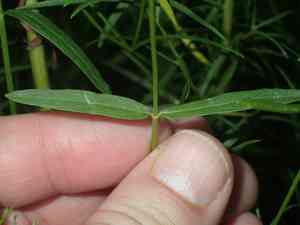
Hyssopleaf hedgenettle (Stachys hyssopifolia)
Also known as: Hyssop-leaf Hedge-nettle
Hyssopleaf hedgenettle is a hardy herbaceous plant characterized by its slender, lance-shaped leaves similar to hyssop. It produces small, tubular flowers that range from lavender to pink, arranged in whorled clusters, and blooms from summer through fall, drawing in pollinators. This plant flourishes in well-drained soils and partial sun, making it well-suited to rocky areas or the edges of woodlands.
In This Article
Attributes of Hyssopleaf hedgenettle
Lifespan
Annual
Plant Type
Herb
Plant Height
30 to 60 cm
Spread
20 to 30 cm
Leaf Color
Green
Flower Size
1 to 2 cm
Flower Color
White Purple Pink
Images of Hyssopleaf hedgenettle
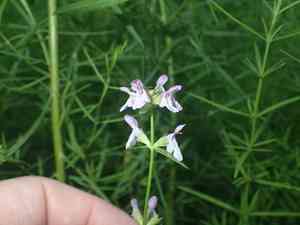
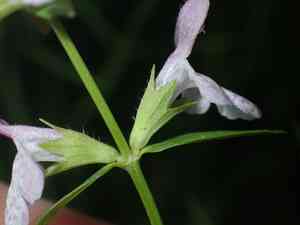
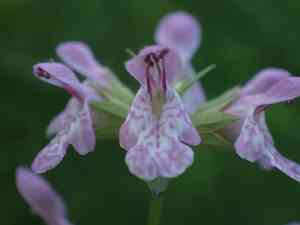
Quickly Identify Hyssopleaf hedgenettle
1
Stachys hyssopifolia can be identified by its square stems, opposite leaves, and dense flower spikes. The leaves are linear to lanceolate, and the flowers are tubular with a two-lipped corolla, typically pink or white.
Scientific Classification of Hyssopleaf hedgenettle
Phylum
Vascular plants
Class
Dicotyledons
Order
Lamiales
Family
Mint
Genus
Hedgenettle
Species
Hyssopleaf hedgenettle
Planting and Growing of Hyssopleaf hedgenettle
Care Difficulty
Easy
Watering Schedule
Every 4 days
Sunlight Requirements
Partial sun
Sunshine Duration
6-10 hours
Ideal Temperature
60-75℉
Soil Type
Potting Mix, Peat Mix
Soil pH
6.5-7.5
Fertilizer Type
Balanced
Pruning Season
Spring, Summer
Pruning Area
Branches, Leaves
Pruning Frequency
2 times a year
Repotting Season
Spring
Pot Type
Plastic, Ceramic
 How to Water Hyssopleaf hedgenettle?
Stachys hyssopifolia thrives best when its soil is kept moderately moist. Implement a watering regime where the soil receives a generous soaking but avoids pooling water. Ensure water penetrates the soil up to 200 ml, moistening it deeply without waterlogging.
What are the symptoms of an underwatered Hyssopleaf hedgenettle?
›
What should I do if my Hyssopleaf hedgenettle is not getting enough water?
›
What are the symptoms of an overwatered Hyssopleaf hedgenettle?
›
How to save an overwatered Hyssopleaf hedgenettle?
›
 What Are the Sunlight Requirements for Hyssopleaf hedgenettle?
Partial sun exposure, ideally morning sun and afternoon shade, allows Stachys hyssopifolia to thrive. Ideal light facilitates its natural growth cycle, ensuring strong and vibrant leaf development.
What is the ideal placement for Stachys hyssopifolia?
›
How can you optimize sunlight exposure for Stachys hyssopifolia?
›
What benefits does ideal light provide to Stachys hyssopifolia?
›
 What Is the Ideal Temperature Range for Hyssopleaf hedgenettle?
The ideal temperature range for cultivating Stachys hyssopifolia is between 60 to 75 degrees Fahrenheit. This range provides optimal conditions for growth and health, facilitating effective nutrient uptake and photosynthesis.
 What Soil is Best for Hyssopleaf hedgenettle?
Stachys hyssopifolia thrives in soils with good drainage. Proper drainage prevents waterlogging which can lead to root rot. Ensure soil texture allows excess water to flow away quickly for healthier growth. This plant requires soil with moderate fertilizer content. Balanced nutrients promote lush foliage and vigorous growth. Avoid soils leached of essential nutrients to ensure the plant's optimal development. Soil with a loose, aerated structure is essential for Stachys hyssopifolia. Such a structure improves air exchange around roots, enhancing respiration and nutrient uptake for the plant's wellbeing.
 How to Fertilize Hyssopleaf hedgenettle?
When it comes to fertilizing Stachys hyssopifolia, it is important to use a balanced fertilizer with an N-P-K ratio of around 10-10-10. For liquid fertilizers, a dilution rate of 1:2 with water is recommended to prevent root burn. Each application should provide about 5-10 grams of the diluted solution per plant, ensuring that the soil is moist prior to application to facilitate nutrient uptake.
 How to Prune Hyssopleaf hedgenettle?
Begin by visually inspecting your Stachys hyssopifolia and identifying any damaged, dead, or diseased stems. Use sharp, clean pruning shears to remove these first. Then, shape the plant by cutting back overgrown branches, always making cuts just above a leaf node to encourage new growth. Pruning is best done during active growing periods—spring through autumn. You'll want to focus on removing spent flowers and cutting back lanky growth. Regular trimming of the tips encourages a bushier growth habit, enhancing the plant's overall appearance.
More About Pruning Techniques→
 How to Propagate Hyssopleaf hedgenettle plant?
1
Start by preparing a well-draining soil mix. For seeds, ensure the soil is fine and rich in organic matter to support initial growth. For cuttings, use a mix that retains some moisture without becoming waterlogged.
2
Gently press seeds into the soil surface and cover with a thin layer of vermiculite. Water lightly and maintain moisture; avoid direct sunlight until seedlings emerge. Germination typically occurs within 2–4 weeks.
3
For cuttings, cut healthy stems at a 45-degree angle and dip the cut end in rooting hormone. Plant them in moist potting mix and cover with a plastic dome to retain humidity, placing in indirect sunlight.
 How to Repot Hyssopleaf hedgenettle plant?
1
Look for signs of being root-bound like roots growing out of drainage holes or poor growth despite regular care. Repotting in spring or autumn gives the plant optimal conditions for establishing itself with minimal stress, benefiting from moderate temperatures and active growth periods.
2
Select a pot that is one size larger than the current one, with ample drainage holes. A slightly larger pot provides room for root growth, avoiding water accumulation that could lead to root rot. Ensure the pot is made of breathable material to allow air circulation around the roots.
3
Opt for a well-draining sandy mix; a combination of garden soil, coarse sand, and perlite works well. This type of soil prevents waterlogging, ensuring sufficient aeration and preventing root diseases, while also providing the nutrients necessary for healthy plant growth.



