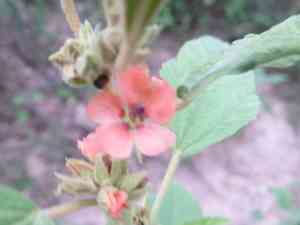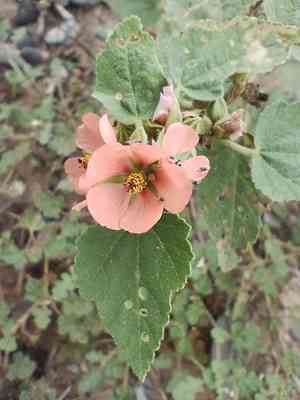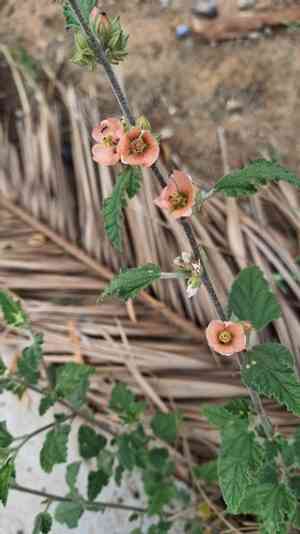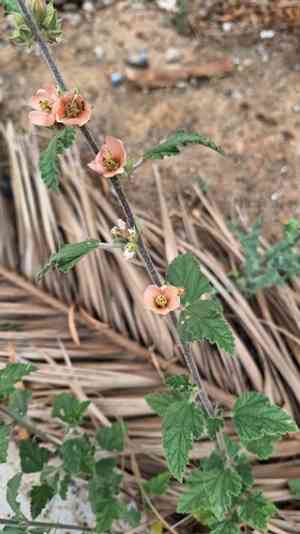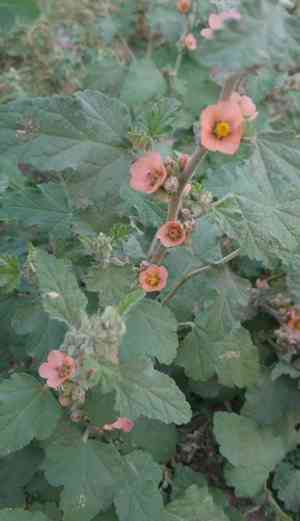
Latin globemallow(Sphaeralcea bonariensis)

Latin globemallow (Sphaeralcea bonariensis)

Also known as: Flower of the Prairie

Latin globemallow (Sphaeralcea spp.) possesses several distinctive traits and adaptations that enable it to prosper in open grasslands:

1. **Growth Form**: Exhibits a robust, erect growth pattern, which aligns well with the open spaces of grasslands.
2. **Leaf Adaptations**: The gray-green, lobed leaves are covered in fine hairs, helping to minimize water loss and protect against harsh sunlight.
3. **Flowering Strategy**: Produces striking orange-pink flowers on tall stems, effectively attracting pollinators in arid environments.
4. **Water Efficiency**: The plant's structure and leaf adaptations contribute to its high efficiency in water usage, a crucial trait for survival in dry conditions.

These characteristics collectively enable Latin globemallow to withstand and flourish in the often-harsh conditions of open grasslands, where other plants might struggle.

Attributes of Latin globemallow

Lifespan
Perennial
Plant Type
Herb
Plant Height
0.5 to 1 meter
Spread
0.3 to 0.5 meters
Leaf Color
Green
Flower Size
3 to 5 cm
Flower Color
Orange to red

ForwardPlant - Identify plants with a snap

Identify and diagnose plants, get toxicity alerts, and explore safety guides for all types of fungi.

Try for Free

Images of Latin globemallow

Latin globemallow(Sphaeralcea bonariensis)

Quickly Identify Latin globemallow

1
The plant can be identified by its deeply lobed leaves, hairy stems, and bright orange to red, cup-shaped flowers. The flowers typically have five petals and a prominent central column of stamens.

Scientific Classification of Latin globemallow

Phylum
Vascular plants
Class
Dicotyledons
Order
Malvales
Family
Mallow
Genus
Globe mallows
Species
Latin globemallow

Planting and Growing of Latin globemallow

Care Difficulty
Easy
Watering Schedule
Every 3 days
Sunlight Requirements
Full sun
Sunshine Duration
6-10 hours
Ideal Temperature
65-75℉
Soil Type
Potting Mix, Peat Mix
Soil pH
6.5-7.5
Fertilizer Type
Balanced
Pruning Season
Spring, Summer
Pruning Area
Branches, Leaves
Pruning Frequency
2 times a year
Repotting Season
Spring
Pot Type
Plastic, Ceramic

water icon How to Water Latin globemallow?

For Sphaeralcea bonariensis, aim to water enough to thoroughly moisten the soil, ensuring it reaches a depth of about 6 inches. This ensures the root system receives adequate moisture without becoming waterlogged, which can be detrimental.
What are the symptoms of an underwatered Latin globemallow? ›
What should I do if my Latin globemallow is not getting enough water? ›
What are the symptoms of an overwatered Latin globemallow? ›
How to save an overwatered Latin globemallow? ›

sunlight icon What Are the Sunlight Requirements for Latin globemallow?

Sunlight Requirements: Full sun, Partial sun
Duration of light: 6-8 hours daily
Sphaeralcea bonariensis best performs in full sun to partial sun conditions. Such environments result in a plethora of benefits including prolific blooming, vigorous growth, and increased resistance to pest-related stress.
Optimal Sunlight Duration ›
Solution for Achieving Ideal Light ›
Benefits of Ideal Light ›

temperature icon What Is the Ideal Temperature Range for Latin globemallow?

Ideal Temperature: 65 ~ 75℉
The ideal temperature range for Sphaeralcea bonariensis is between 65°F and 75°F. This range promotes optimal plant growth by ensuring efficient photosynthesis and metabolic processes. Growth may slow significantly outside this range.

soil icon What Soil is Best for Latin globemallow?

Soil type: Sandy soil, Loam, Sandy loam
Soil PH: 6.5 ~ 7.5
Sphaeralcea bonariensis thrives best in well-drained soil. Ensuring the soil doesn't retain excess moisture prevents root rot and promotes healthy plant growth, resulting in more vibrant and robust flowers. Soils that provide good aeration are essential for this plant, as they allow the roots to access sufficient oxygen, which is vital for nutrient uptake and overall plant vitality. A balanced nutrient profile in the soil supports optimal growth. While this plant is not overly demanding, it benefits from a soil rich in organic matter to sustain its flowering and development.

fertilize icon How to Fertilize Latin globemallow?

Fertilizer type: Balanced
For Sphaeralcea bonariensis, using liquid fertilizer, dissolve about one teaspoon of fertilizer in a gallon of water. For slow-release granules, use approximately one tablespoon per square foot of soil. These quantities ensure the plant receives a balanced dose without the risk of burning its roots.

prune icon How to Prune Latin globemallow?

Pruning Time: Spring, Summer, Autumn
Begin by sterilizing the pruning shears to avoid transmitting diseases. Trim dead, damaged, or diseased branches first, cutting back to the nearest healthy outward-facing node. When shaping the plant, aim for a balanced form by trimming back uneven growth. Maintain an open center for better light penetration, which will encourage vibrant blooms. For overgrown Sphaeralcea bonariensis, perform a more intensive pruning by removing up to a third of the old wood. This rejuvenates the shrub and stimulates fresh growth. More About Pruning Techniques→

propagate icon How to Propagate Latin globemallow plant?

Propagate Time: Early spring, Late spring, Early summer
1
Soak the Sphaeralcea bonariensis seeds in water for 24 hours before sowing. This softens the seed coat and encourages faster germination.
2
Fill seed trays with a well-draining potting mix and scatter the seeds on top. Cover with a thin layer of soil and water lightly to keep the surface moist.
3
For cuttings, select healthy stems and cut 4-6 inch sections just below a node. Remove leaves from the lower half and dip the end in rooting hormone.
More About Propagating Techniques→

repot icon How to Repot Latin globemallow plant?

Repotting frequency: Every 1-2 years
1
Sphaeralcea bonariensis generally signals the need for repotting when its roots become visible through drainage holes, or if it becomes root-bound, showing signs of wilting despite watering. Spring is ideal, offering optimal recovery time. These signs indicate the plant requires more space for healthy growth, ensuring it remains vibrant and flourishing.
2
Select a pot approximately 2 inches larger in diameter than the current one. It should have ample drainage holes to prevent waterlogging, which can lead to root rot. A terracotta or ceramic pot is often beneficial as it allows breathability, maintaining the right moisture balance within the soil, fostering healthy root development.
3
Opt for well-draining sandy soil to prevent water retention, which can harm the roots of Sphaeralcea bonariensis. This type of soil ensures robust drainage while retaining adequate moisture, providing the plant with a stable environment to absorb nutrients and water effectively, supporting strong and healthy growth.

ForwardPlant - Identify plants with a snap

Find the best spots for them to optimize their health, simply using your phone.

Try for Free