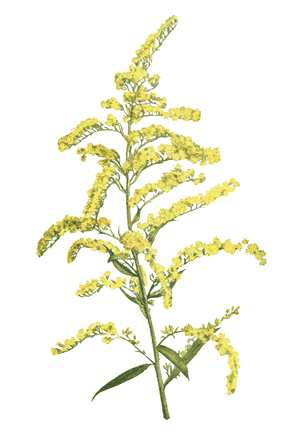
Western goldenrod (Solidago lepida)
Also known as: Western Goldenrod, Western Canada goldenrod
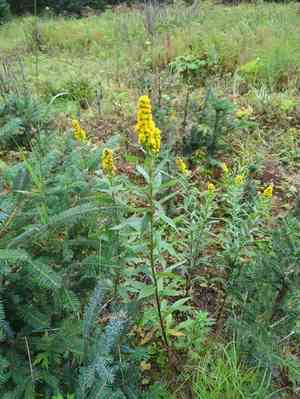
Western goldenrod is a perennial plant recognized for its striking clusters of small, vivid yellow flowers that bloom on tall, upright stems. These flower clusters, reminiscent of golden plumes, are prominent in late summer landscapes, especially in meadows and alongside roads. The plant's ability to flourish in diverse environments and its robust growth make it a familiar sight. Its narrow, lance-shaped leaves further accentuate its distinctive appearance.
In This Article
Attributes of Western goldenrod
Lifespan
Perennial
Plant Type
Herb
Plant Height
3 to 6 feet (0.9 to 1.8 meters)
Spread
1 to 2 feet (0.3 to 0.6 meters)
Leaf Color
Green
Flower Size
0.2 inches (0.5 cm)
Flower Color
Yellow
Images of Western goldenrod
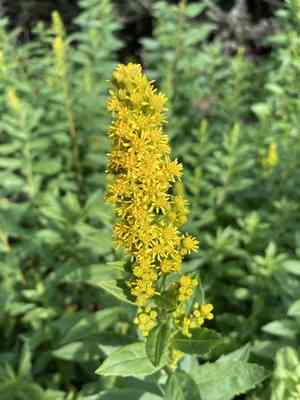
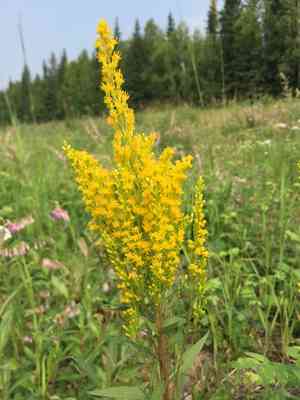
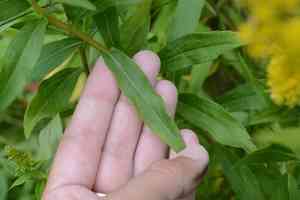
Quickly Identify Western goldenrod
1
Identify Solidago lepida by its tall, upright stems and clusters of small, bright yellow flowers forming dense, plume-like structures. The leaves are narrow and lance-shaped with a rough texture.
Scientific Classification of Western goldenrod
Phylum
Vascular plants
Class
Dicotyledons
Order
Asterales
Family
Daisy
Genus
Goldenrods
Species
Western goldenrod
Planting and Growing of Western goldenrod
Care Difficulty
Easy
Watering Schedule
Every 2 days
Sunlight Requirements
Full sun
Sunshine Duration
4-8 hours
Ideal Temperature
65-75℉
Soil Type
Potting Mix, Peat Mix
Soil pH
6-7.5
Fertilizer Type
Balanced
Pruning Season
Spring, Summer
Pruning Area
Branches, Leaves
Pruning Frequency
2 times a year
Repotting Season
Spring
Pot Type
Plastic, Ceramic
 How to Water Western goldenrod?
For Solidago lepida, watering frequency should allow the soil to remain slightly moist but not waterlogged. Each watering session should see approximately 500ml of water, ensuring the entire root system receives moisture without the risk of accumulating excess water.
What are the symptoms of an underwatered Western goldenrod?
›
What should I do if my Western goldenrod is not getting enough water?
›
What are the symptoms of an overwatered Western goldenrod?
›
How to save an overwatered Western goldenrod?
›
 What Are the Sunlight Requirements for Western goldenrod?
Solidago lepida prefers full to partial sunlight, ideally spanning 4 to 6 hours a day. With this ideal light range, photosynthesis is optimized, promoting vigorous growth and abundant flowering, both enhancing visual appeal and ecological benefits.
Why is Full Sun Important?
›
How to Ensure Ideal Light?
›
Benefits of Ideal Light Exposure
›
 What Is the Ideal Temperature Range for Western goldenrod?
For optimal growth, Solidago lepida thrives best within a temperature range of 65°F to 75°F. This range provides the plant with the warmth it needs for photosynthesis while ensuring the enzymes function efficiently. Staying within this range helps the plant perform vital processes, including nutrient absorption and water uptake, thereby supporting robust growth and flowering.
 What Soil is Best for Western goldenrod?
Solidago lepida thrives in well-draining soil, which prevents waterlogging and root rot. Optimal drainage fosters robust roots that efficiently absorb nutrients and water, leading to healthier and more vibrant growth. This plant thrives in soil with moderate nutrient levels, reducing the need for frequent fertilization. Balanced nutrients support sustained growth and prevent nutrient deficiencies, ensuring the plant remains lush and blooms abundantly. Maintaining the soil pH between 6.0 and 7.5 is crucial for nutrient absorption in Solidago lepida. A balanced pH promotes effective uptake of essential minerals, enhancing overall plant health and resilience.
 How to Fertilize Western goldenrod?
For Solidago lepida, apply a balanced 10-10-10 fertilizer at a rate of one teaspoon per gallon of water for liquid fertilizers. If using slow-release granules, distribute evenly to cover the root zone.
 How to Prune Western goldenrod?
Solidago lepida, commonly known as Western Goldenrod, benefits from quarterly pruning. During each session, focus on removing dead or damaged stems to maintain plant health and vigor. Use sharp, clean pruning shears to cut down to the base of the stem, which encourages bushier growth and more prolific flowering in the coming season.
More About Pruning Techniques→
 How to Propagate Western goldenrod plant?
1
Gather seeds from mature Solidago lepida flower heads in late autumn when the seeds are ripe. Clean the seeds and store them in a cool, dry place until early spring.
2
In early spring, sow seeds thinly in a seed tray filled with potting soil. Cover them lightly with soil and keep them in a warm, well-lit area. Water lightly to keep the soil moist.
3
In spring, carefully dig around established plants. Gently separate the roots into sections, ensuring each section has a healthy root system. Replant divisions immediately in prepared soil or pots.
 How to Repot Western goldenrod plant?
1
Solidago lepida shows signs of needing repotting when the roots begin to visibly grow out of the drainage holes, or the growth of the plant appears stunted and unhealthy. Spring is the ideal time for this process as the plant is in a phase of active growth, allowing it to recover and establish quickly.
2
Opt for a pot that's approximately 2 inches larger in diameter than the current one. This provides ample space for root expansion without overwhelming the plant with too much soil, which can retain excessive moisture. Ensure the pot has adequate drainage to prevent root rot.
3
Choose a well-draining potting mix, ideally with perlite or sand included, ensuring aeration and moisture balance. This mix supports healthy root growth and reduces the risk of waterlogging, which solidago is particularly sensitive to.
Toxicity
None
WARNING
The judgment on toxicity and danger is for reference only. We DO NOT GUARANTEE any accuracy of such judgment. Therefore, you SHALL NOT rely on such judgment. It is IMPORTANT TO SEEK PROFESSIONAL ADVICE in advance when necessary.
Learn More About Western goldenrod Diseases
Anthracnose
Bacterial Leaf Spot
Bacterial Wilt
Crown Gall
Cyst Nematode
Damping-off
Downy Mildew
Drought Stress
Fusarium Wilt
Gray Mold
Leaf Spot
Mosaic
Nutrient Deficiency
Nutrient Toxicity
Powdery Mildew
Root Rot
Root-knot Nematode
Rusts
Sooty Mold
Spider Mites
Temperature Stress
Thrips Damage
White Mold



