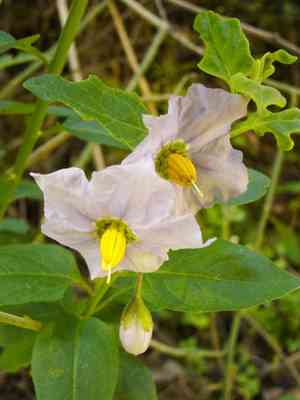
Bluewitch nightshade (Solanum umbelliferum)
Also known as: California nightshade, Bluewitch nightshade
When ripe, the fruits of bluewitch nightshade look like tiny eggplants. However, the plant's alkaloids are poisonous if ingested. Its flowers close into tight balls at night and open up during the day.
In This Article
Attributes of Bluewitch nightshade
Lifespan
Perennial
Plant Type
Shrub
Plant Height
61 cm to 91 cm
Spread
60 cm to 90 cm
Leaf Color
Dark green
Flower Size
2.5 cm
Flower Color
Purple
Images of Bluewitch nightshade
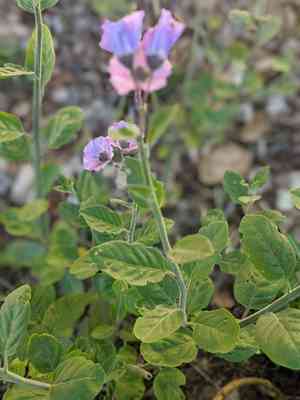
Quickly Identify Bluewitch nightshade
1
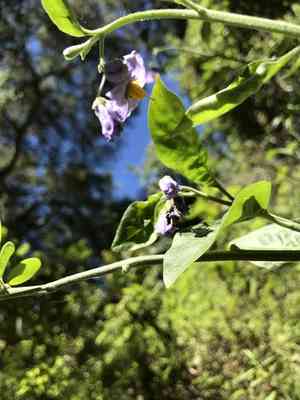
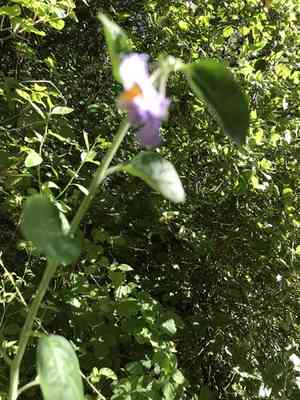
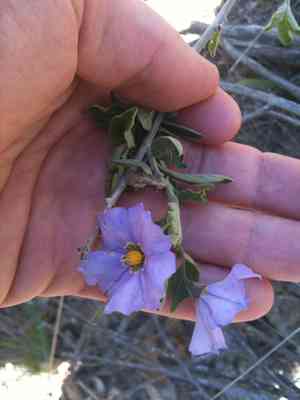
To identify Solanum umbelliferum, look for its bright blue to purple star-shaped flowers with yellow centers. The plant has a bushy habit and typically measures 1 to 3 feet in height. The leaves are oval, dark green, and somewhat hairy. Another key feature is the presence of small, round berries that turn from green to yellow or orange as they mature.
Scientific Classification of Bluewitch nightshade
Phylum
Vascular plants
Class
Dicotyledons
Order
Solanales
Family
Nightshade
Genus
Nightshades
Species
Bluewitch nightshade
Planting and Growing of Bluewitch nightshade
Care Difficulty
Easy
Watering Schedule
Every 2 days
Sunlight Requirements
Full sun
Sunshine Duration
4-6 hours
Ideal Temperature
60-75℉
Soil Type
Potting Mix, Peat Mix
Soil pH
6.5-7.5
Fertilizer Type
Balanced
Pruning Season
Spring, Summer
Pruning Area
Branches, Leaves
Pruning Frequency
2 times a year
Repotting Season
Spring
Pot Type
Plastic, Ceramic
 How to Water Bluewitch nightshade?
Watering Solanum umbelliferum should be done with precision. The goal is to make sure the soil is moist but not waterlogged, allowing the roots to breathe. Approximately 250ml per watering session should suffice in general environments, but feel the soil for moisture before proceeding.
What are the symptoms of an underwatered Bluewitch nightshade?
›
What should I do if my Bluewitch nightshade is not getting enough water?
›
What are the symptoms of an overwatered Bluewitch nightshade?
›
How to save an overwatered Bluewitch nightshade?
›
 What Are the Sunlight Requirements for Bluewitch nightshade?
Solanum umbelliferum ideally requires full sun to partial sun, benefiting from consistent sun exposure that supports robust growth and abundant flowering, crucial for its vibrant, bushy appearance.
More About Sunlight Requirements Techniques→
How much light does Solanum umbelliferum need?
›
What are suitable locations for Solanum umbelliferum?
›
What are the benefits of ideal lighting for Solanum umbelliferum?
›
 What Is the Ideal Temperature Range for Bluewitch nightshade?
Solanum umbelliferum thrives best in an ideal temperature range of 60 to 75°F. Maintaining this temperature range helps ensure robust growth, flowering, and overall plant health. These temperatures closely mimic the plant's native environment, providing optimal conditions for vital physiological processes and minimizing stress.
 What Soil is Best for Bluewitch nightshade?
Solanum umbelliferum thrives in nutrient-rich soils that provide essential minerals for growth. This promotes vibrant foliage and robust flowering. A well-draining soil is crucial for Solanum umbelliferum to prevent root rot. Ensuring good drainage will support healthy root development and longevity. The soil should retain enough moisture to keep the plant hydrated but not waterlogged. This balance helps in maintaining consistent growth and flowering.
 How to Fertilize Bluewitch nightshade?
For Solanum umbelliferum, apply a balanced liquid fertilizer at half the manufacturer's recommended strength. This layer of nutrients should lightly nourish the plant without overwhelming it. Properly mixing and measuring the fertilizer ensures that the delicate roots are protected while promoting healthy growth.
 How to Prune Bluewitch nightshade?
Begin with clean, sharp pruning shears to ensure a smooth cut. Start by removing any dead or damaged branches, cutting them all the way back to where they meet the main stem. Next, thin out the interior of the plant to improve air circulation, which can reduce disease risk. Be sure to cut just above a node to encourage new growth. To maintain a desired shape and size for your Solanum umbelliferum, trim back the longer, more vigorous branches. Cut back to an outward-facing bud to direct growth outward, fostering a bushier appearance. This practice not only keeps the plant compact but also enhances its overall aesthetic appeal.
More About Pruning Techniques→
 How to Propagate Bluewitch nightshade plant?
1
Begin by filling seedling trays with a well-draining potting mix. Sow the Solanum umbelliferum seeds thinly on the surface of the soil, covering them lightly with additional mix. Mist the soil to maintain moisture levels without over-watering.
2
Use sterile pruning shears to cut healthy stems about 4-6 inches long, making sure each cutting has several nodes. Remove any leaves from the lower half of the cutting to prevent rot once planted.
3
Once the seedlings have developed a robust root system, or cuttings have rooted, transplant them into individual pots with a similar soil mix. Acclimate them gradually to outdoor conditions if planning to plant in the garden.
 How to Repot Bluewitch nightshade plant?
1
Repotting Solanum umbelliferum is best done when you observe its roots growing out of the drainage holes, or the plant exhibits stunted growth and reduced blooming. This typically indicates that the plant outgrows its container and needs more space.
2
Select a pot that is one size larger than the current one, made of breathable material like terracotta. This allows excess moisture to evaporate, preventing root rot, and provides sufficient space for root expansion.
3
Choose a soil mix that is rich in organic matter and drains well, such as a mix with perlite or pumice. This will help prevent waterlogging which can damage the roots and support healthy growth by providing necessary nutrients.
Toxicity
Ingestion
WARNING
The judgment on toxicity and danger is for reference only. We DO NOT GUARANTEE any accuracy of such judgment. Therefore, you SHALL NOT rely on such judgment. It is IMPORTANT TO SEEK PROFESSIONAL ADVICE in advance when necessary.
Learn More About Bluewitch nightshade Diseases
Anthracnose
Bacterial Leaf Spot
Bacterial Wilt
Damping-off
Downy Mildew
Drought Stress
Fusarium Wilt
Gray Mold
Late Blight
Leaf Curl
Leaf Spot
Mosaic
Nutrient Deficiency
Nutrient Toxicity
Powdery Mildew
Root Rot
Root-knot Nematode
Rusts
Sooty Mold
Spider Mites
Temperature Stress
Thrips Damage
White Mold



