Purple african nightshade(Solanum marginatum)

Purple african nightshade (Solanum marginatum)

Also known as: White-edged nightshade

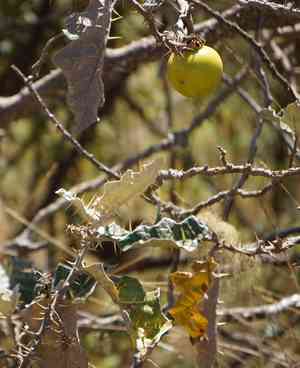
Purple African nightshade (Solanum scabrum) is notable for its dark green leaves with purple hues on the undersides rather than white margins. The plant lacks thorn-tipped branches and does not form an impenetrable shrub. Its flowers are small, ranging from white to light purple, and mature into small black berries, not yellow-orange.

### Characteristics:
- **Leaves**: Broad and dark green with purple-tinged undersides.
- **Flowers**: Small, white to light purple with yellow stamens.
- **Fruits**: Small spherical berries that turn black when ripe.
- **Height**: Typically grows to about 1 to 3 feet tall.

### Growing Conditions:
- **Climate**: Prefers warm, tropical to subtropical climates.
- **Soil**: Grows best in well-drained, fertile soils rich in organic matter.
- **Sunlight**: Thrives in full sun to partial shade.
- **Watering**: Needs regular watering, especially in dry periods.
- **Propagation**: Propagated through seeds or cuttings.
- **Harvesting**: Leaves can be harvested repeatedly starting 6-8 weeks after planting.

Unlike the more defensive plants, this species uses its vibrant flowers to attract pollinators rather than relying on spines for protection. It’s relatively easy to cultivate and adds nutritional value to gardens with suitable growing conditions.

Attributes of Purple african nightshade

Lifespan
Perennial
Plant Type
Shrub
Plant Height
1-3 meters
Spread
Approximately 1-2 meters
Leaf Color
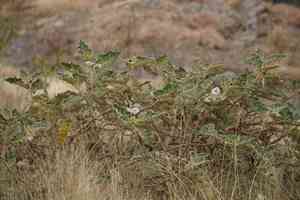
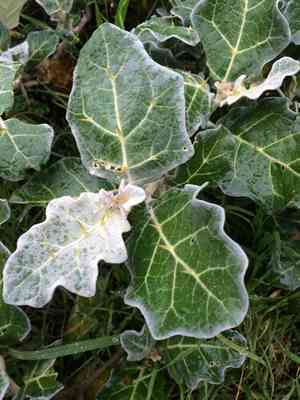
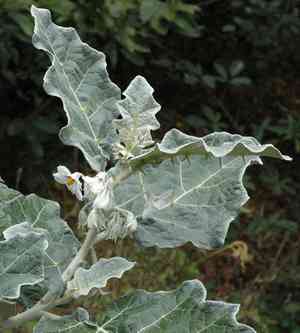
Green with white margins
Flower Size
2-3 cm
Flower Color
White to pale yellow

ForwardPlant - Identify plants with a snap

Identify and diagnose plants, get toxicity alerts, and explore safety guides for all types of fungi.

Try for Free

Images of Purple african nightshade
Purple african nightshade(Solanum marginatum)

Quickly Identify Purple african nightshade

1
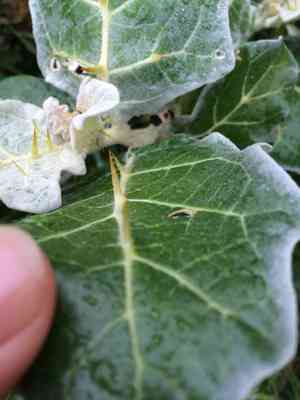
To identify Solanum marginatum, look for its woolly, ovate leaves with white margins, and white to pale yellow flowers. The plant often has prickles on its stems and leaves.

Scientific Classification of Purple african nightshade

Phylum
Vascular plants
Class
Dicotyledons
Order
Solanales
Family
Nightshade
Genus
Nightshades
Species
Purple african nightshade

Planting and Growing of Purple african nightshade

Care Difficulty
Moderate
Watering Schedule
Every 4 days
Sunlight Requirements
Full sun
Sunshine Duration
4-6 hours
Ideal Temperature
60-75℉
Soil Type
Potting Mix, Peat Mix
Soil pH
6.5-7.5
Fertilizer Type
Balanced
Pruning Season
Spring, Summer
Pruning Area
Branches, Leaves
Pruning Frequency
2 times a year
Repotting Season
Spring
Pot Type
Plastic, Ceramic

water icon How to Water Purple african nightshade?

For Solanum marginatum, it's crucial to water just enough to keep the soil slightly moist but not waterlogged. Aim for approximately 250 milliliters each time, ensuring water reaches the root level but does not pool on the surface. The soil should feel damp to the touch, much like a sponge that has been wrung out yet is still slightly moist.
What are the symptoms of an underwatered Purple african nightshade? ›
What should I do if my Purple african nightshade is not getting enough water? ›
What are the symptoms of an overwatered Purple african nightshade? ›
How to save an overwatered Purple african nightshade? ›

sunlight icon What Are the Sunlight Requirements for Purple african nightshade?

Sunlight Requirements: Full sun, Partial sun
Duration of light: 6 to 8 hours daily
Ideal light conditions for Solanum marginatum include full to partial sun exposure, translating to approximately 6 to 8 hours of sunlight daily. This range supports optimal growth, vibrant foliage, and prolific blooming by aligning with the plant's natural light preferences.
How much light does Solanum marginatum need? ›
What solutions can help Solanum marginatum get ideal lighting? ›
What are the benefits of providing ideal lighting for Solanum marginatum? ›

temperature icon What Is the Ideal Temperature Range for Purple african nightshade?

Ideal Temperature: 60 ~ 75℉
The ideal temperature range for Solanum marginatum is between 60°F and 75°F. This range allows the plant to perform photosynthesis efficiently while sustaining optimal growth and development. Keeping temperatures within this range helps maintain healthy foliage, supports flowering, and prevents stress-induced disorders. Regular temperature monitoring ensures the plant remains within this range for best results.

soil icon What Soil is Best for Purple african nightshade?

Soil type: Loam, Sandy loam, Calcareous soil
Soil PH: 6.5 ~ 7.5
Solanum marginatum thrives in well-draining soils that prevent waterlogging, which is crucial for avoiding root rot. This requirement ensures that the roots get sufficient air and nutrients, promoting healthy growth and blooming. The plant benefits from a nutrient-rich growing medium. Adding organic matter like compost can significantly enhance soil fertility, supplying vital nutrients that bolster the plant's resilience and vigor. The soil should retain enough moisture without becoming overly saturated. This balance allows the plant to access water between watering intervals, reducing stress and encouraging robust foliage and flowering.

fertilize icon How to Fertilize Purple african nightshade?

Fertilizer type: Balanced
The amount of fertilizer for Solanum marginatum should be moderate, ensuring not to overwhelm its soil ecosystem. Liquid fertilizers should be diluted to half the recommended strength on the package. For solid fertilizers, use about a tablespoon for smaller plants and up to a quarter cup for larger ones, ensuring even distribution around the base.

prune icon How to Prune Purple african nightshade?

Pruning Time: Spring, Summer, Autumn, Winter
Start by removing any dead, damaged, or crossing branches. Look for inward-facing branches that can congest the plant and reduce light penetration. Removing these encourages outward growth and helps the plant maintain a pleasant shape. Make cuts at a 45-degree angle, just above a node or outward-facing bud. This encourages new growth in the desired direction. Avoid leaving stubs or cutting too close to the node to minimize the risk of stem dieback. More About Pruning Techniques→

propagate icon How to Propagate Purple african nightshade plant?

Propagate Time: Spring,Early summer,Early spring
1
Harvest mature seeds from the berries of Solanum marginatum. Ensure the seeds are cleaned and dried properly for optimal germination.
2
Select healthy stems and cut about 6 inches below a node. Remove lower leaves to reduce moisture loss and stimulate root growth.
3
Plant seeds in a seedling tray filled with well-draining soil. Alternatively, insert cuttings into the soil mixed with perlite to enhance aeration.
More About Propagating Techniques→

repot icon How to Repot Purple african nightshade plant?

Repotting frequency: Every 1-2 years
1
Solanum marginatum shows clear signs when it's ready for repotting. Look for roots emerging from the drainage holes, slow growth, or soil that dries out too quickly. These are indications that the plant needs more space to thrive, signaling it's time for a new pot.
2
Select a pot that's one size larger than the current one with ample drainage holes. A slightly larger pot gives roots space to grow without overwhelming them with excess soil, which can lead to waterlogged conditions and root rot.
3
Opt for a well-draining, sandy soil mix to prevent water retention. Solanum marginatum prefers aerated soil that mimics its native environment, promoting healthy root development and reducing the risk of overwatering.

ForwardPlant - Identify plants with a snap

Find the best spots for them to optimize their health, simply using your phone.

Try for Free

Toxicity

Ingestion and contact

Identify toxic plants for your safety

Learn which plants are harmful to you and your pets, and make informed choices for a safer home!

Try for Free
WARNING
The judgment on toxicity and danger is for reference only. We DO NOT GUARANTEE any accuracy of such judgment. Therefore, you SHALL NOT rely on such judgment. It is IMPORTANT TO SEEK PROFESSIONAL ADVICE in advance when necessary.