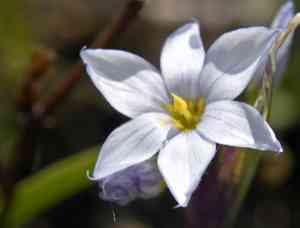
White blue-eyed grass (Sisyrinchium albidum)
Also known as: White Blue-eyed Grass
The white blue-eyed grass, scientifically named *Sisyrinchium albidum*, is a perennial plant native to eastern North America. Its name is derived from the Greek words "sys" and "rhinos."
In This Article
Attributes of White blue-eyed grass
Lifespan
Perennial
Plant Type
Herb
Plant Height
30 cm to 46 cm
Spread
8 cm to 15 cm
Leaf Color
Green
Flower Size
2.5 cm
Flower Color
White Pink Purple Blue
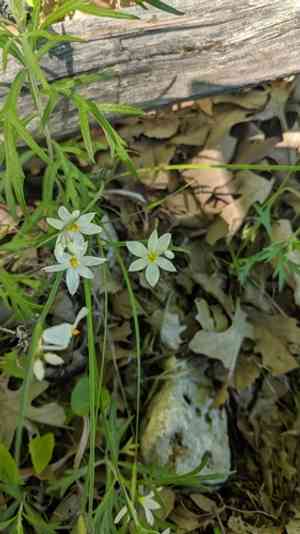
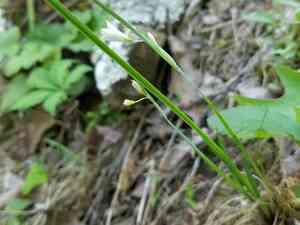
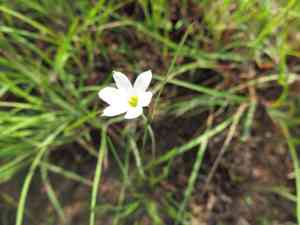
Images of White blue-eyed grass
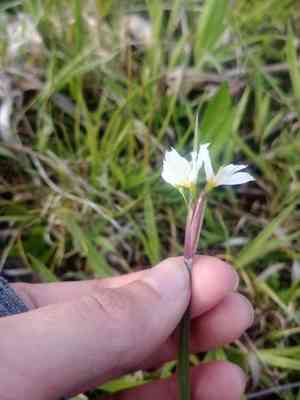
Quickly Identify White blue-eyed grass
1
Look for small, grass-like leaves and clusters of tiny, white to light blue star-shaped flowers. The flowers have a yellow center and are borne on slender stems.
Scientific Classification of White blue-eyed grass
Phylum
Vascular plants
Class
Monocotyledons
Order
Asparagales
Family
Iris
Genus
Blue-eyed grasses
Species
White blue-eyed grass
Planting and Growing of White blue-eyed grass
Care Difficulty
Easy
Watering Schedule
Every 2 days
Sunlight Requirements
Full sun
Sunshine Duration
6-10 hours
Ideal Temperature
60-75℉
Soil Type
Potting Mix, Peat Mix
Soil pH
6-7.5
Fertilizer Type
Balanced
Pruning Season
Spring, Summer
Pruning Area
Branches, Leaves
Pruning Frequency
2 times a year
Repotting Season
Spring
Pot Type
Plastic, Terracotta
 How to Water White blue-eyed grass?
When watering Sisyrinchium albidum, ensure that the soil gets evenly moist but not soggy. This species prefers moderate watering—enough to keep the soil hydrated without pooling in the pot. A volume of around 250 milliliters should suffice, depending on your pot and soil's water retention capabilities.
What are the symptoms of an underwatered White blue-eyed grass?
›
What should I do if my White blue-eyed grass is not getting enough water?
›
What are the symptoms of an overwatered White blue-eyed grass?
›
How to save an overwatered White blue-eyed grass?
›
 What Are the Sunlight Requirements for White blue-eyed grass?
Partial to full sunlight ranging from 4 to 8 hours daily is ideal for Sisyrinchium albidum, encouraging robust growth and vibrant blooms.
More About Sunlight Requirements Techniques→
What are the ideal lighting conditions for Sisyrinchium albidum?
›
How can I achieve the ideal lighting conditions for Sisyrinchium albidum?
›
What benefits does Sisyrinchium albidum gain from ideal lighting?
›
 What Is the Ideal Temperature Range for White blue-eyed grass?
Sisyrinchium albidum thrives best in a temperature range of 60°F to 75°F. This range allows for optimal growth and development, ensuring that the plant's physiological processes function smoothly. Maintaining this range can help in producing vibrant flowers and healthy foliage.
 What Soil is Best for White blue-eyed grass?
Sisyrinchium albidum thrives in well-drained soil, which prevents root rot by facilitating excess water drainage. Soil that retains too much moisture can lead to diseases, but well-drained conditions ensure healthy root systems and optimal growth. This plant prefers moderately fertile soil, rich in organic matter. This type of soil provides essential nutrients and encourages robust plant development, promoting vibrant bloom production and healthy foliage. A neutral to slightly acidic soil pH is ideal for Sisyrinchium albidum, facilitating nutrient availability and uptake. This pH balance ensures the plant has access to essential elements necessary for growth and flowering.
 How to Fertilize White blue-eyed grass?
For Sisyrinchium albidum, it’s crucial to use a balanced, diluted fertilizer. Avoid heavy applications; instead, apply a diluted liquid feed—such as a 1/4 strength of an all-purpose formula, following the plant's nutritional needs. More frequent, lighter applications are better than fewer, heavier ones.
 How to Prune White blue-eyed grass?
Be mindful not to prune more than one-third of the plant at a time. Over-pruning can stress Sisyrinchium albidum, leading to stunted growth or excessive exposure to environmental stresses. Prune primarily during active growth seasons like spring and summer. Avoid pruning during dormancy in winter when the plant recovers from shock more slowly and could be prone to damage.
More About Pruning Techniques→
 How to Propagate White blue-eyed grass plant?
1
Start by acquiring fresh seeds of Sisyrinchium albidum. Clean and dry the seeds properly to remove any flesh or debris. Fresh seeds have a higher success rate for germination. Store seeds in a cool, dry place until you're ready to plant them.
2
Fill a seed tray with a well-draining seed-starting mix, and sow the Sisyrinchium albidum seeds evenly on the surface. Lightly cover with a thin layer of soil or sand, and water gently to moisten the soil without washing away the seeds. Maintain a consistent moisture level.
3
For division propagation, carefully dig up mature Sisyrinchium albidum clumps in early spring. Use a garden fork to separate the clump into smaller sections, ensuring each section has healthy roots and shoots. Replant the divisions at the same depth they were originally growing.
 How to Repot White blue-eyed grass plant?
1
Keep an eye out for signs that your Sisyrinchium albidum needs repotting, such as roots growing out of the drainage holes or the plant becoming top-heavy. Another indicator is the potting mix breaking down rapidly or not retaining moisture as expected. The ideal time to repot is when these signals appear, preferably in spring or summer for optimal growth conditions.
2
Select a pot that is one size larger than the current one to provide adequate room for root expansion. Ensure the pot has sufficient drainage holes to prevent waterlogging, which can harm the plant's root system. This approach encourages healthy growth, prevents root rot, and allows the plant to establish itself more robustly in its new home.
3
Opt for a well-draining sandy loam to ensure proper aeration and moisture retention for Sisyrinchium albidum. Such soil mimics its natural habitat, allowing water to pass through easily while holding enough moisture to sustain the plant. This choice helps in avoiding root rot and provides a favorable environment for sustained growth.
Learn More About White blue-eyed grass Diseases
Anthracnose
Bacterial Leaf Spot
Bacterial Soft Rot
Bacterial Wilt
Chemical Injury
Crown Gall
Cyst Nematode
Damping-off
Downy Mildew
Drought Stress
Fusarium Wilt
Gray Mold
Leaf Spot
Mosaic
Nutrient Deficiency
Nutrient Toxicity
Powdery Mildew
Root Rot
Root-knot Nematode
Rusts
Sooty Mold
Spider Mites
Temperature Stress
Thrips Damage
White Mold



