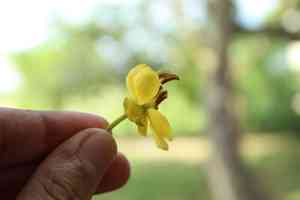
Siamese cassia (Senna siamea)
Also known as: Ironwood cassia, Siamese senna, Cassod tree
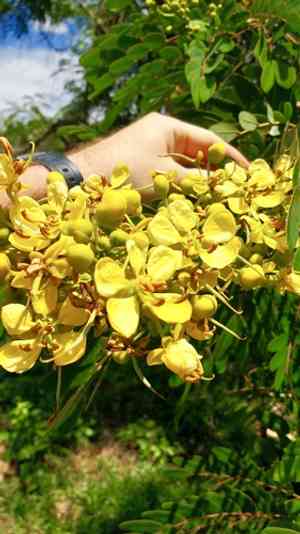
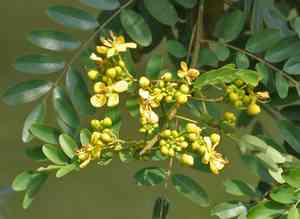
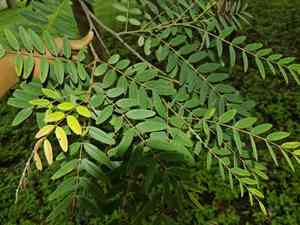
Senna siamea, also known as Siamese cassia, kassod tree, or cassia tree, is a leguminous tree in the subfamily Caesalpinioideae. Originating from Southeast Asia, its precise native range is not well-defined. This medium-sized, evergreen tree can grow up to 18 meters tall and features yellow flowers. It is frequently planted as a shade tree in coffee, cocoa, and tea plantations. In Thailand, it holds the status of the provincial tree of Chaiyaphum Province, and several locations are named after it. The tree’s leaves are pinnately compound, with 6 to 12 pairs of leaflets on short stalks, and have a green-reddish axis.
In This Article
Attributes of Siamese cassia
Lifespan
Perennial
Plant Type
Tree
Plant Height
18 m
Spread
4.5 m to 6 m
Leaf Color
Green
Flower Size
2.5 cm
Flower Color
Yellow
Images of Siamese cassia
Quickly Identify Siamese cassia
1
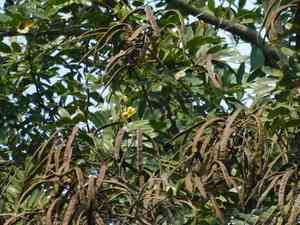
Look for a medium to large size tree with compound leaves that are pinnately arranged. The leaves have a dark green color and are elliptical. The tree produces clusters of bright yellow flowers, and the fruit is a flat, long legume.
Scientific Classification of Siamese cassia
Phylum
Vascular plants
Class
Dicotyledons
Order
Legumes, milkworts and allies
Family
Legume
Genus
Sennas
Species
Siamese cassia
Planting and Growing of Siamese cassia
Care Difficulty
Easy
Watering Schedule
Every 4 days
Sunlight Requirements
Full sun
Sunshine Duration
4-8 hours
Ideal Temperature
68-86℉
Soil Type
Potting Mix, Peat Mix
Soil pH
6.5-7.5
Fertilizer Type
Balanced
Pruning Season
Spring, Summer
Pruning Area
Branches, Leaves
Pruning Frequency
2 times a year
Repotting Season
Spring
Pot Type
Plastic, Ceramic
 How to Water Siamese cassia?
Senna siamea prefers a moderate watering schedule. Water it until the soil is evenly moist but not waterlogged. You should see water draining from the bottom of the pot as a sign that there is enough moisture. This ensures the roots have adequate access to water without being submerged in excess moisture, which can cause root rot.
What are the symptoms of an underwatered Siamese cassia?
›
What should I do if my Siamese cassia is not getting enough water?
›
What are the symptoms of an overwatered Siamese cassia?
›
How to save an overwatered Siamese cassia?
›
 What Are the Sunlight Requirements for Siamese cassia?
Senna siamea requires full sun for optimal growth, ensuring energy needs for photosynthesis are met. This exposure promotes vigorous growth, lush foliage, and abundant flowering, mimicking its natural tropical environment.
More About Sunlight Requirements Techniques→
What is the best light condition?
›
How can I achieve ideal lighting for Senna siamea?
›
What are the benefits of ideal lighting for this plant?
›
 What Is the Ideal Temperature Range for Siamese cassia?
The optimal temperature range for Senna siamea lies between 68°F and 86°F. This range supports optimal growth and physiological processes. At these temperatures, the plant can efficiently photosynthesize and maximize nutrient uptake. The ideal conditions also help to minimize the stress factors, resulting in healthier development and growth.
 What Soil is Best for Siamese cassia?
Senna siamea thrives in well-draining soil to prevent root rot. The plant's preference for loam or sandy loam soil types helps to ensure adequate drainage, supporting robust root development. This plant benefits from soil rich in organic matter, which supplies essential nutrients for vigorous growth and abundant flowering. Regular addition of organic compost can enhance the nutrient profile of the soil. While the soil should be well-draining, it needs to retain enough moisture to support the plant’s water needs. Striking this balance helps ensure steady growth and healthy foliage.
 How to Fertilize Siamese cassia?
Senna siamea is not a heavy feeder, but it benefits from a balanced fertilizer regimen. Use liquid fertilizer diluted at a rate of 1 tablespoon per gallon of water for optimum growth. For solid fertilizers, apply 1 to 2 pounds per plant annually, distributing the fertilizer evenly around the root zone.
 How to Prune Siamese cassia?
Begin by checking for any dead or diseased branches and remove these first as they can affect the overall health of the plant. Use clean, sharp pruning shears to cut these branches back to the point where healthy wood begins. Then, focus on shaping the plant, aiming to encourage a balanced form by cutting back branches that grow out of the desired shape. Target the branches growing inward toward the tree's center, as opening up the interior to light and air is beneficial. Regularly step back to observe your work from a distance, ensuring you're achieving the desired shape and balance.
More About Pruning Techniques→
 How to Propagate Siamese cassia plant?
1
Begin by collecting mature seeds from the Senna siamea pods. Soak them in warm water for 24 hours to soften the seed coat and enhance germination. After soaking, plant them in seedling trays with a well-draining soil mix.
2
Choose healthy, disease-free branches for cuttings. The ideal cutting should be about 6-8 inches long, with at least two nodes present. Use pruning shears to make a clean cut at a 45-degree angle.
3
Dip the base of each cutting into rooting hormone powder to enhance root development. Plant them in pots with a well-draining potting mix, ensuring at least one node is buried in the soil.
 How to Repot Siamese cassia plant?
1
Senna siamea needs repotting when its roots are visibly crowding the pot or emerging from drainage holes. Yellowing leaves can be another indicator. The optimal time is during active growth in spring or early summer, as it helps the plant adapt better to the new environment.
2
Select a pot that is one size larger than the current one and ensures adequate drainage. A slightly bigger pot encourages root expansion without overwhelming the plant with too much space, which might lead to water retention issues.
3
Choose a well-draining, sandy soil mix to ensure proper aeration and to prevent root rot. Senna siamea thrives in this type of soil, mimicking its natural growing conditions, which helps maintain its vigorous growth.



