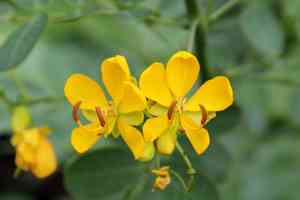
Christmas bush (Senna bicapsularis)
Also known as: Winter cassia, Yellow candlewood, Rambling senna
Once known as Senna bicapsularis, the Christmas Bush is a sizable evergreen shrub. It showcases vibrant yellow flowers that bloom in late fall and persist through the frost.
In This Article
Attributes of Christmas bush
Lifespan
Perennial
Plant Type
Tree, Vine, Shrub
Plant Height
3.5 m
Spread
1.8 m to 3 m
Leaf Color
Green
Flower Size
2 cm
Flower Color
Yellow Gold
Images of Christmas bush
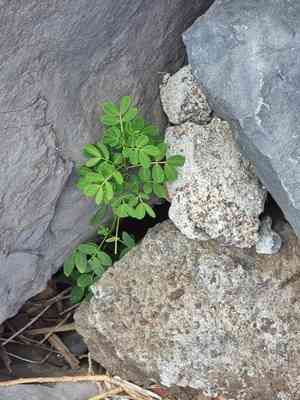
Quickly Identify Christmas bush
1
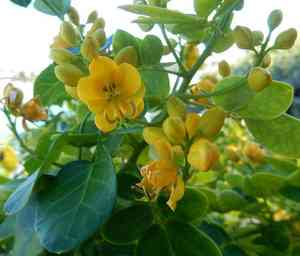
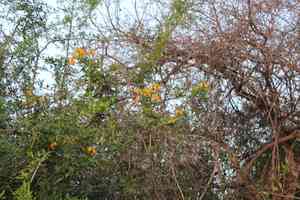
Bright yellow flowers bloom in fall and winter, distinct from other species.
2
Fruit pods reach up to 6 inches (15 cm), splitting to reveal seeds.
3
Pinnately compound leaves with 3-5 pairs of obovate leaflets, textured surface.
4
Trunk composed of slender stems, mottled bark in light gray to brown hues.
5
Flowers are buttercup-shaped, measuring 0.5 inch (1.3 cm) across, with curved stamens.
Scientific Classification of Christmas bush
Phylum
Vascular plants
Class
Dicotyledons
Order
Fabales
Family
Legume
Genus
Sennas
Species
Christmas bush
Planting and Growing of Christmas bush
Care Difficulty
Easy
Watering Schedule
Every 2 days
Sunlight Requirements
Full sun
Sunshine Duration
6-10 hours
Ideal Temperature
68-77℉
Soil Type
Potting Mix, Peat Mix
Soil pH
6.5-7.5
Fertilizer Type
Balanced
Pruning Season
Spring, Summer
Pruning Area
Branches, Leaves
Pruning Frequency
2 times a year
Repotting Season
Spring
Pot Type
Ceramic, Plastic
 How to Water Christmas bush?
Senna bicapsularis prefers a deep watering strategy, ensuring the soil is moistened to about 2-3 inches down. This means approximately 500 milliliters of water should be sufficient, depending on the soil type and pot size.
What are the symptoms of an underwatered Christmas bush?
›
What should I do if my Christmas bush is not getting enough water?
›
What are the symptoms of an overwatered Christmas bush?
›
How to save an overwatered Christmas bush?
›
 What Are the Sunlight Requirements for Christmas bush?
Senna bicapsularis performs best in full sun to partial sun. With this exposure, it can produce plentiful, vibrant flowers and maintain healthy, lush foliage, enhancing its visual appeal and resilience.
More About Sunlight Requirements Techniques→
Is it suitable for full sun exposure?
›
What if there’s limited sunlight available?
›
How does optimal lighting affect its blooming?
›
 What Is the Ideal Temperature Range for Christmas bush?
Senna bicapsularis thrives best in temperatures ranging from 68°F to 77°F. This range supports optimal growth and flowering, as consistent warmth is vital for the plant’s metabolic processes and enzyme activity. Ensuring temperatures remain within this range helps prevent stress and promotes vigorous health.
 What Soil is Best for Christmas bush?
Senna bicapsularis thrives in well-draining soil, which prevents waterlogged conditions and root rot. Good drainage ensures that the roots receive adequate oxygen, promoting healthy growth and vibrant flowering. This plant benefits from a nutrient-rich growing medium that supports its vigorous growth. Incorporating organic matter like compost can improve soil fertility, providing essential nutrients for lush foliage and abundant blooms. While well-draining, the soil should also retain moderate moisture to support continuous growth. This balance helps maintain adequate hydration without waterlogging, a vital aspect of its optimal growth.
 How to Fertilize Christmas bush?
For optimal growth, Senna bicapsularis requires a balanced approach to fertilization. When applying liquid fertilizer, use a diluted solution at half the strength recommended for general use. For slow-release fertilizers, a light sprinkling around the base of the plant, sufficient to cover a 2-foot radius, is adequate to support its nutritional needs over time.
 How to Prune Christmas bush?
Start by trimming back any long, leggy branches to maintain the plant's ideal shape. This encourages the plant to grow bushier and fuller. Trim just above a node to encourage new growth and more blooms. Make clean cuts at a 45-degree angle to ensure proper healing and prevent water from pooling on cut ends.
More About Pruning Techniques→
 How to Propagate Christmas bush plant?
1
Firstly, collect seeds from mature Senna bicapsularis pods. Soak the seeds in warm water for 24 hours to soften the hard seed coat, which will facilitate germination. Sow the seeds into a pre-moistened seed starting mix in trays or small pots.
2
Select healthy, semi-hardwood stems from the parent plant. Use pruning shears to cut 4-6 inch sections just below a node. Remove leaves from the lower half of the cutting to reduce transpiration and ensure direct contact with the rooting medium.
3
Place seed trays or cuttings under indirect sunlight. Maintain a warm temperature, ideally between 70°F and 75°F (21°C to 24°C). Cover trays with a clear plastic dome to retain humidity, an important factor in successful germination and rooting.
 How to Repot Christmas bush plant?
1
You should consider repotting Senna bicapsularis when you notice it's becoming root-bound, with roots growing out of drainage holes or circling the pot's surface. Another sign is when water takes too long to drain, indicating the soil is compacted. Spring or early summer is the ideal time for repotting, as the plant is actively growing and can recover from the stress more easily.
2
Select a pot that is one size larger than the current one and has plenty of drainage holes. The pot should be unglazed or made of a breathable material like terracotta, which allows excess moisture to evaporate. This choice prevents overwatering issues by letting the roots breathe and reducing the risk of root rot.
3
Opt for a well-draining sandy mix, which replicates the plant’s natural habitat and prevents waterlogging. This type of soil ensures that excess water drains away quickly, preventing root rot, while allowing the roots to access the air they need. Amend with organic matter for added nutrients.
Toxicity
Ingestion
WARNING
The judgment on toxicity and danger is for reference only. We DO NOT GUARANTEE any accuracy of such judgment. Therefore, you SHALL NOT rely on such judgment. It is IMPORTANT TO SEEK PROFESSIONAL ADVICE in advance when necessary.
Learn More About Christmas bush Diseases
Anthracnose
Bacterial Leaf Spot
Bacterial Soft Rot
Bacterial Wilt
Chemical Injury
Damping-off
Drought Stress
Fusarium Wilt
Gray Mold
Leaf Spot
Mosaic
Nutrient Deficiency
Nutrient Toxicity
Powdery Mildew
Root Rot
Root-knot Nematode
Rusts
Sooty Mold
Spider Mites
Temperature Stress
Thrips Damage
White Mold



