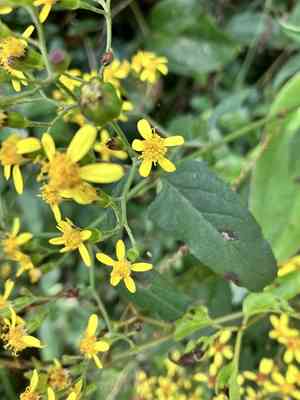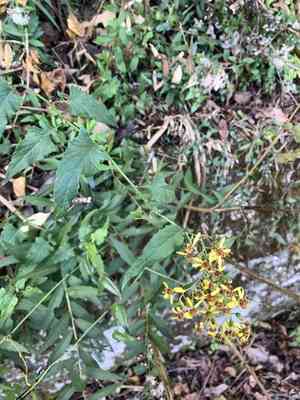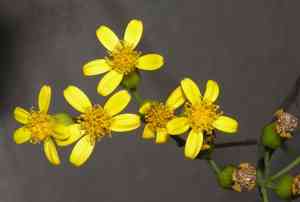
Cape-ivy(Senecio scandens)

Cape-ivy (Senecio scandens)

Also known as: Italian ivy, German-ivy

Cape-ivy (Delairea odorata) is a perennial vine that features glossy, lobed leaves and clusters of small, yellow, daisy-like flowers, typically blooming in the winter. This plant is native to South Africa but has spread to various other regions, becoming invasive in countries like the United States and Australia. It prefers moist, coastal and riparian habitats, thriving in forests and disturbed areas. Cape-ivy can form dense mats that overtake and smother native plant species, leading to ecological challenges. Unlike the high-altitude habitat of its relatives, cape-ivy is found in lower elevation areas, making it a versatile and aggressive invader.

Attributes of Cape-ivy

Lifespan
Perennial
Plant Type
Vine
Plant Height
5 m
Spread
Variable, depending on the support structure
Leaf Color
Green
Flower Size
2 mm to 7 mm
Flower Color
Yellow

ForwardPlant - Identify plants with a snap

Identify and diagnose plants, get toxicity alerts, and explore safety guides for all types of fungi.

Try for Free

Images of Cape-ivy

Cape-ivy(Senecio scandens)

Quickly Identify Cape-ivy

1
Senecio scandens can be identified by its climbing habit, green, lobed leaves, and bright yellow flowers that resemble small daisies. The leaves are variable in shape but generally have a distinctive lobed or toothed margin.

Scientific Classification of Cape-ivy

Phylum
Vascular plants
Class
Dicotyledons
Order
Asters bellflowers fanflowers and allies
Family
Daisy
Genus
Ragworts
Species
Cape-ivy

Planting and Growing of Cape-ivy

Care Difficulty
Easy
Watering Schedule
Every 2 days
Sunlight Requirements
Partial sun
Sunshine Duration
4-8 hours
Ideal Temperature
65-77℉
Soil Type
Potting Mix, Peat Mix
Soil pH
6.5-7.5
Fertilizer Type
Balanced
Pruning Season
Spring, Summer
Pruning Area
Branches, Leaves
Pruning Frequency
2 times a year
Repotting Season
Spring
Pot Type
Plastic, Ceramic

water icon How to Water Cape-ivy?

The watering amount for Senecio scandens should ensure the soil is moist but not waterlogged. A typical session involves about 250 ml of water. Use a finger to check the top 2 inches of soil—it should be slightly dry before watering again. The goal is to provide enough hydration without causing root rot, always ensuring excess water can drain away to prevent stagnation.
What are the symptoms of an underwatered Cape-ivy?
What should I do if my Cape-ivy is not getting enough water?
What are the symptoms of an overwatered Cape-ivy?
How to save an overwatered Cape-ivy?

sunlight icon What Are the Sunlight Requirements for Cape-ivy?

Sunlight Requirements: Partial sun, Full sun
Duration of light: 4 to 6 hours daily
Senecio scandens thrives best in partial to full sun conditions. It benefits from morning sunlight, which stimulates optimal growth and maintains vibrant leaf coloration and overall plant vitality.
Ways to Obtain Ideal Lighting
Specific Measures to Guarantee Optimal Light
Benefits of Optimal Lighting
More About Sunlight Requirements Techniques

temperature icon What Is the Ideal Temperature Range for Cape-ivy?

Ideal Temperature: 65 ~ 77℉
The ideal temperature range for cultivating Senecio scandens is between 65°F and 77°F. This range is optimal for promoting healthy growth and vibrant foliage. Maintaining this temperature range ensures that the plant can perform its physiological processes efficiently, leading to robust development and resistance against pests and diseases.

soil icon What Soil is Best for Cape-ivy?

Soil type: Loam, Sandy loam
Soil PH: 6.5 ~ 7.5
Senecio scandens thrives in well-draining soil, ensuring excess water does not remain around the roots, thus preventing root rot. This benefit is crucial for maintaining the plant's overall health and vigor. A soil with moderate fertility provides enough nutrients for growth without being too rich, which can cause lanky growth. A balanced nutrient supply supports sturdy and healthy development. The ideal soil retains necessary moisture but also remains aerated. Aeration helps the roots breathe, encouraging strong root growth and preventing waterlogging.

fertilize icon How to Fertilize Cape-ivy?

Fertilizer type: Balanced
For Senecio scandens, apply liquid fertilizer at half the recommended strength to avoid over-fertilization. A balanced 20-20-20 liquid fertilizer diluted to half its strength is optimal, ensuring you don't stress the plant.

prune icon How to Prune Cape-ivy?

Pruning Time: Spring, Summer, Autumn
Start by examining your Senecio scandens for any dead, damaged, or diseased stems. Use clean, sharp pruning shears to cut these back to healthy tissue. Trim back any overly long or unruly stems to your desired shape, pruning above a leaf node to encourage new growth. To promote blooming, focus on pinching off spent flowers regularly. This not only tidies the plant but also redirects energy to new buds, encouraging more abundant flowering. Always make your cuts just below the faded blooms to remove the entire flower head. More About Pruning Techniques

propagate icon How to Propagate Cape-ivy plant?

Propagate Time: Spring,Early summer
1
Select healthy stems approximately 10 cm long. Remove leaves from the lower half to reduce moisture loss and use rooting hormone to encourage root development.
2
Sow seeds in a well-draining potting mix. Cover them lightly with soil, and maintain moisture but avoid overwatering to prevent rot.
3
Bend a low-growing stem to the ground, cover it with soil, and secure with a small stone. Roots will form at the contact point with the soil.
More About Propagating Techniques

repot icon How to Repot Cape-ivy plant?

Repotting frequency: Every 1-2 years
1
Senecio scandens shows clear signs when it's time for a new pot. Look for roots growing out of the drainage holes or visible on the soil's surface. Growth might slow down as well, indicating it's time. Spring offers optimal conditions as the growing season kicks in, ensuring the plant can quickly adapt.
2
Pick a pot only slightly larger than the current one, preferably with drainage holes to prevent waterlogging. The material matters, too; clay pots offer excellent aeration but dry out faster, while plastic pots retain moisture longer, suiting different environments.
3
Opt for a well-draining soil mix, rich with organic matter. This type of soil prevents root rot by ensuring water doesn't accumulate, while providing necessary nutrients. Adding perlite or sand can improve drainage further, keeping roots healthy and happy.

ForwardPlant - Identify plants with a snap

Find the best spots for them to optimize their health, simply using your phone.

Try for Free

Toxicity

Ingestion or significant physical contact with sap

Identify toxic plants for your safety

Learn which plants are harmful to you and your pets, and make informed choices for a safer home!

Try for Free
WARNING
The judgment on toxicity and danger is for reference only. We DO NOT GUARANTEE any accuracy of such judgment. Therefore, you SHALL NOT rely on such judgment. It is IMPORTANT TO SEEK PROFESSIONAL ADVICE in advance when necessary.