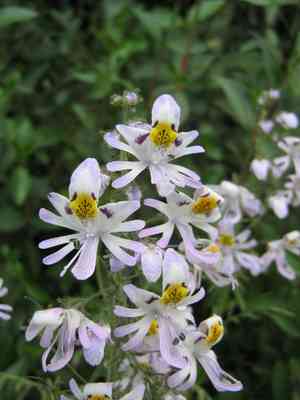
Poorman's orchid (Schizanthus pinnatus)
Also known as: Poor man's orchid, Butterfly flower, Fringe flower
Despite its name, the Poorman's orchid is not a true orchid but a flowering plant that mimics one. It flourishes in cooler climates and does well in partially shaded areas or hanging baskets.
In This Article
Attributes of Poorman's orchid
Lifespan
Annual, Biennial
Plant Type
Herb
Plant Height
30 cm to 46 cm
Spread
20 cm
Leaf Color
Green
Flower Size
2 cm to 3 cm
Flower Color
Purple White Yellow Pink Red
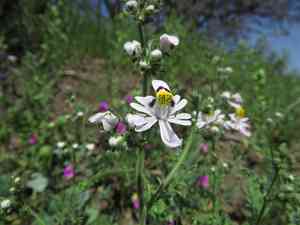
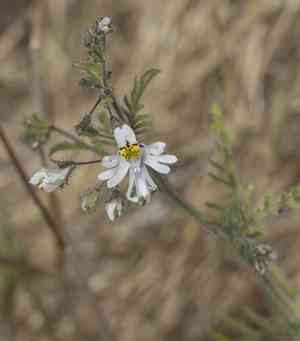
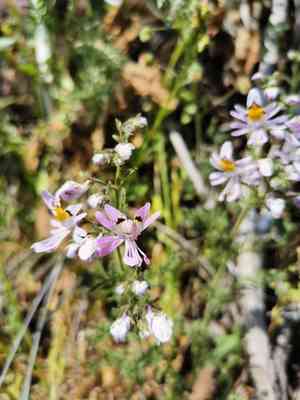
Images of Poorman's orchid
Quickly Identify Poorman's orchid
1
Striking, orchid-like flowers in vibrant colors (pink, white, red, violet) with intricate patterns.
2
Finely dissected, feathery green leaves up to 4 inches (10 cm) long.
3
Slender green stems with fine hairs, reaching up to 2 feet (60 cm) in length.
4
Flowers bilaterally symmetrical, with 5-10 petals, each about 1 inch (2.5 cm) across.
5
Distinctive annual reaching 18 inches (45 cm) in both height and width.
Scientific Classification of Poorman's orchid
Phylum
Vascular plants
Class
Dicotyledons
Order
Nightshades, bindweeds, gooseweeds, and allies
Family
Nightshade
Genus
Butterfly flower
Species
Poorman's orchid
Planting and Growing of Poorman's orchid
Care Difficulty
Moderate
Watering Schedule
Every 4 days
Sunlight Requirements
Full sun
Sunshine Duration
4-8 hours
Ideal Temperature
60-70℉
Soil Type
Potting Mix, Peat Mix
Soil pH
6.5-7.5
Fertilizer Type
Balanced
Pruning Season
Spring, Summer
Pruning Area
Branches, Leaves
Pruning Frequency
2 times a year
Repotting Season
Spring
Pot Type
Plastic, Ceramic
 How to Water Poorman's orchid?
Schizanthus pinnatus requires a balanced watering approach. Each watering session should deliver approximately 250 milliliters of water. Ensure the soil is moist but not waterlogged. This plant thrives on consistency; therefore, water thoroughly but allow the soil surface to dry between sessions.
What are the symptoms of an underwatered Poorman's orchid?
›
What should I do if my Poorman's orchid is not getting enough water?
›
What are the symptoms of an overwatered Poorman's orchid?
›
How to save an overwatered Poorman's orchid?
›
 What Are the Sunlight Requirements for Poorman's orchid?
Schizanthus pinnatus prefers partial sun to full sun conditions where it can receive light for about 5-7 hours daily. This light range supports optimal growth and flowering, ensuring a healthier plant with abundant and vivid blooms.
More About Sunlight Requirements Techniques→
What are the best lighting conditions for Schizanthus pinnatus?
›
How can I achieve the ideal lighting for Schizanthus pinnatus?
›
What benefits does Schizanthus pinnatus gain from ideal lighting?
›
 What Is the Ideal Temperature Range for Poorman's orchid?
The ideal temperature range for growing Schizanthus pinnatus is between 60°F and 70°F. This temperature range provides optimal conditions for healthy growth and vibrant flowering, ensuring that the plant's physiological processes function effectively.
 What Soil is Best for Poorman's orchid?
Schizanthus pinnatus thrives with nutrient-rich soil. This promotes vibrant flowering and robust growth. An ample amount of organic matter ensures the plant receives essential nutrients, enhancing its beauty and health. Proper drainage is critical for Schizanthus pinnatus to prevent root rot. Ensuring the soil drains well allows air circulation in the root zone, which keeps the plant's roots healthy and disease-free. While good drainage is necessary, the soil should retain some moisture. Schizanthus pinnatus benefits from moderate moisture, which aids in sustaining its delicate blooms and maintaining lush foliage.
 How to Fertilize Poorman's orchid?
For Schizanthus pinnatus, it's crucial not to over-fertilize as it can lead to salt buildup. When using liquid fertilizers, dilute it to half of the recommended concentration and apply about 200 ml per plant. Solid fertilizers should be moderately sprinkled around the base, approximately one tablespoon per plant, ensuring it is well-watered afterward to assist absorption.
 How to Prune Poorman's orchid?
The best time to prune Schizanthus pinnatus is during its active growing seasons, spring and summer. Focus on cutting just above a leaf node which can stimulate new growth. While pruning, step back occasionally to check the overall shape, ensuring a symmetrical and aesthetically pleasing profile. If your Schizanthus pinnatus starts looking leggy or overcrowded, prune back the longer branches to manage its size. This helps maintain air circulation and ensures that sunlight reaches all parts of the plant, reducing the risk of fungal diseases.
More About Pruning Techniques→
 How to Propagate Poorman's orchid plant?
1
Before sowing seeds, it's important to prepare the soil in your seed trays. Fill the trays with a well-draining potting mix, leaving about half an inch from the top. Lightly water the soil to ensure it's moist but not soggy, which provides an ideal medium for seeds to germinate.
2
Sow the Schizanthus pinnatus seeds evenly over the prepared soil surface. Unlike some other seeds, they do not require covering because they need light to germinate. Gently press the seeds onto the soil to ensure good contact which is crucial for successful germination.
3
Once the seeds are sown, place the trays in a location that gets indirect sunlight and maintains a temperature between 65-75°F (18-24°C). Maintaining these conditions will support germination, which typically occurs within 10-21 days.
 How to Repot Poorman's orchid plant?
1
Schizanthus pinnatus typically needs repotting when the roots start to grow out of the drainage holes of the current pot or if the soil seems compacted and doesn't drain well. Another sign is if the plant seems too large for its pot, suggesting it's outgrown its space. These signals indicate it's time for a roomier environment with fresh soil to promote healthy growth.
2
Pick a pot that is one size larger than the current one, with good drainage holes to prevent waterlogging. The right pot will accommodate future growth and prevent root rot by ensuring excess water can drain away effectively. Terra cotta pots are a great option as they allow excess moisture to evaporate, keeping the soil aerated.
3
Choose a well-draining potting mix that ensures excess water doesn't stagnate. Mixtures containing perlite or sand are especially beneficial as they enhance drainage and prevent the roots from becoming waterlogged. This type of soil supports the plant's requirements for dry to moderately moist conditions.
Learn More About Poorman's orchid Diseases
Anthracnose
Bacterial Leaf Spot
Bacterial Soft Rot
Bacterial Wilt
Black Spot
Chemical Injury
Crown Gall
Damping-off
Downy Mildew
Drought Stress
Fusarium Wilt
Gray Mold
Leaf Spot
Mosaic
Nutrient Deficiency
Nutrient Toxicity
Powdery Mildew
Root Rot
Root-knot Nematode
Rusts
Sooty Mold
Spider Mites
Temperature Stress
Thrips Damage
White Mold



