
Badlands mule-ears (Scabrethia scabra)
Also known as: Bitterweed, Gumweed
Badlands mule-ears (Wyethia scabra) is a resilient perennial known for its rough, textured leaves. These leaves are thick and leathery, aiding in water retention by minimizing water loss. The plant's dull green color further reduces evaporation under harsh sunlight. It produces small flowers that, while not very noticeable, are crucial for pollinators in the ecosystem. Additionally, its ability to thrive in poor soil conditions showcases its remarkable adaptability to arid environments.
In This Article
Attributes of Badlands mule-ears
Lifespan
Perennial
Plant Type
Herb, Shrub
Plant Height
30-100 cm
Spread
N/A
Leaf Color
Green
Flower Size
2-4 cm
Flower Color
Yellow
Images of Badlands mule-ears
Quickly Identify Badlands mule-ears
1
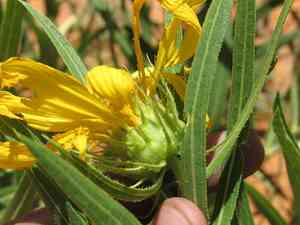
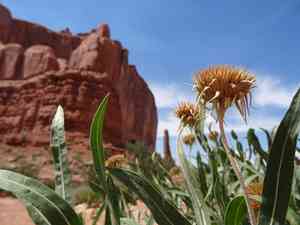
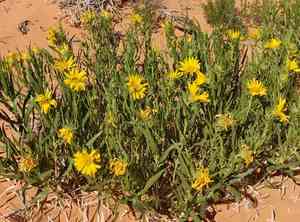
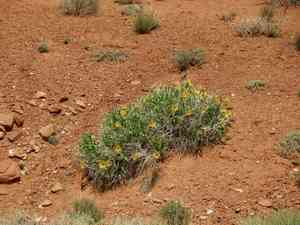
Scabrethia scabra can be identified by its rough, hairy leaves, which are lance-shaped and may have toothed edges. The plant blooms with bright yellow flowers, typically during late summer to early autumn, and has a sticky, resinous texture.
Scientific Classification of Badlands mule-ears
Phylum
Vascular plants
Class
Dicotyledons
Order
Asterales
Family
Daisy
Genus
Mule-ears
Species
Badlands mule-ears
Planting and Growing of Badlands mule-ears
Care Difficulty
Hard
Watering Schedule
Every 2 days
Sunlight Requirements
Full sun
Sunshine Duration
6-12 hours
Ideal Temperature
60-75℉
Soil Type
Potting Mix, Peat Mix
Soil pH
6.5-7.5
Fertilizer Type
Balanced
Pruning Season
Spring, Summer
Pruning Area
Branches, Leaves
Pruning Frequency
2 times a year
Repotting Season
Spring
Pot Type
Plastic, Ceramic
 How to Water Badlands mule-ears?
For Scabrethia scabra, aim to provide around 250 milliliters of water per session, ensuring that the soil is evenly moist. Do not let it dry out completely, but avoid waterlogging. The soil should retain some moisture without becoming soggy.
What are the symptoms of an underwatered Badlands mule-ears?
›
What should I do if my Badlands mule-ears is not getting enough water?
›
What are the symptoms of an overwatered Badlands mule-ears?
›
How to save an overwatered Badlands mule-ears?
›
 What Are the Sunlight Requirements for Badlands mule-ears?
The ideal light range for Scabrethia scabra is full to partial sun, allowing maximum photosynthetic activity, hence promoting healthy growth and strengthening under adequate environmental conditions.
What is the ideal light condition for Scabrethia scabra?
›
How can you achieve ideal lighting conditions?
›
What benefits do ideal lighting conditions provide?
›
 What Is the Ideal Temperature Range for Badlands mule-ears?
For optimal growth, Scabrethia scabra thrives in temperatures ranging from 60°F to 75°F. This range ensures that the plant can photosynthesize effectively while maintaining proper cell function. Providing this temperature range will help the plant develop robust foliage and healthy blooms.
 What Soil is Best for Badlands mule-ears?
Scabrethia scabra thrives in well-drained soil, which prevents root rot by allowing excess water to escape. This feature ensures the plant's roots have access to enough oxygen, promoting healthy growth. This plant prefers moderately fertile soil, which provides essential nutrients without causing excessive foliage that could hinder flower production. Balanced fertility supports both lush growth and prolific blooming. A pH range of 6.5 to 7.5 is ideal for Scabrethia scabra, as it facilitates optimal nutrient uptake. Deviating from this range could affect nutrient availability, impacting overall plant health and vigor.
 How to Fertilize Badlands mule-ears?
For Scabrethia scabra, apply liquid fertilizer at a concentration of half the standard recommendation to avoid over-fertilization. A general-purpose liquid fertilizer, diluted to half strength, works well. In the case of slow-release fertilizers, use about 1 to 1.5 teaspoons scattered around the base of the plant to provide a consistent nutrient supply.
 How to Prune Badlands mule-ears?
Ensure you use the right tool for the job. For smaller twigs, pruning shears work best, while for thicker branches, consider using loppers. All tools should be sharp and disinfected before use to prevent the spread of pathogens. Perform pruning during the early morning or late afternoon when temperatures are cooler to help the plant recover faster. Be gentle and avoid excessive pruning, as this can stress the plant. Aim to remove no more than one-third of the plant's total mass at any one time.
More About Pruning Techniques→
 How to Propagate Badlands mule-ears plant?
1
Harvest seeds from mature flowers once they have dried. Ensure seeds are fully developed and viable by selecting seeds with a firm texture and mature color.
2
Select healthy stems for cutting with several nodes. Make a clean cut just below a node and remove lower leaves to reduce moisture loss.
3
Carefully dig around the plant to expose roots. Use a sharp tool to divide the root clump into sections, ensuring each section has viable roots and shoots.
 How to Repot Badlands mule-ears plant?
1
Scabrethia scabra should be repotted when you observe roots curling at the pot's edge or emerging through the drainage holes. Another clear indicator is if the plant growth seems stunted despite proper care. These signs typically suggest that the plant has outgrown its current container and it's time for a roomier pot.
2
Select a pot that is just one size larger than the current one. An oversized pot might lead to waterlogging and root rot, while a slightly larger pot encourages healthy growth. Ensure that the pot has adequate drainage holes to prevent water accumulation, promoting healthier root systems.
3
Opt for a well-draining sandy loam mix to promote better aeration and drainage, crucial for Scabrethia scabra's root health. This soil type prevents the roots from sitting in water, reducing the risk of rot and creating an ideal environment for the plant to thrive. The light nature of this soil also supports robust root expansion.
Learn More About Badlands mule-ears Diseases
Anthracnose
Bacterial Leaf Spot
Bacterial Soft Rot
Bacterial Wilt
Chemical Injury
Crown Gall
Cyst Nematode
Damping-off
Downy Mildew
Drought Stress
Fusarium Wilt
Gray Mold
Leaf Spot
Mosaic
Nutrient Deficiency
Nutrient Toxicity
Powdery Mildew
Root Rot
Root-knot Nematode
Rusts
Sooty Mold
Spider Mites
Temperature Stress
Thrips Damage
White Mold



