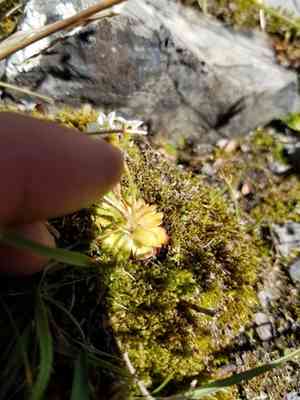
Biennial saxifrage (Saxifraga adscendens)
Also known as: Ascending saxifrage
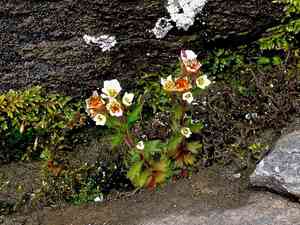
The **biennial saxifrage** is a hardy alpine plant recognized for its mat-forming growth and tufted rosettes. Its thick, spatulate leaves are designed to conserve water in rocky environments. This plant blooms with small white flowers that often have yellow or red accents, attracting pollinators in mountainous regions. Flourishing in cool, damp areas, the biennial saxifrage exemplifies resilience in tough high-altitude conditions.
In This Article
Attributes of Biennial saxifrage
Lifespan
Perennial
Plant Type
Herb
Plant Height
10 cm to 25 cm
Spread
10 to 20 cm
Leaf Color
Green
Flower Size
0.5 to 1 cm
Flower Color
White
Images of Biennial saxifrage
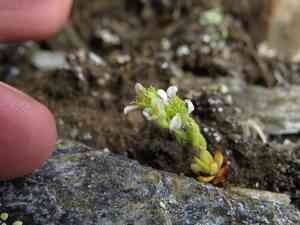
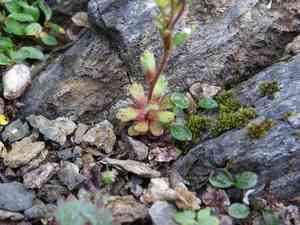
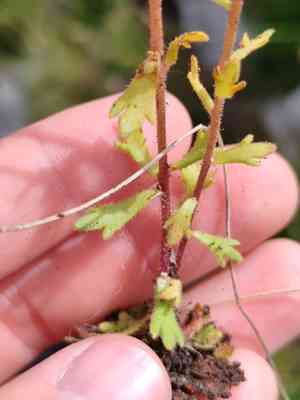
Quickly Identify Biennial saxifrage
1
To identify Saxifraga adscendens, look for its small, star-shaped white flowers and its basal rosette of toothed leaves. The stems are often reddish and can form dense, cushion-like clusters in rocky alpine areas.
Scientific Classification of Biennial saxifrage
Phylum
Vascular plants
Class
Dicotyledons
Order
Saxifragales
Family
Saxifrage
Genus
Saxifrages
Species
Biennial saxifrage
Planting and Growing of Biennial saxifrage
Care Difficulty
Moderate
Watering Schedule
Every 2 days
Sunlight Requirements
Partial sun
Sunshine Duration
6-10 hours
Ideal Temperature
50-70℉
Soil Type
Potting Mix, Peat Mix
Soil pH
6.5-7.5
Fertilizer Type
Balanced
Pruning Season
Spring, Summer
Pruning Area
Branches, Leaves
Pruning Frequency
2 times a year
Repotting Season
Spring
Pot Type
Plastic, Ceramic
 How to Water Biennial saxifrage?
Saxifraga adscendens requires moderate watering. Ensure that each time you water, the soil is moistened to a depth of about 2 inches. Watering adequately ensures that the roots have ample moisture without becoming waterlogged, which helps in proper nutrient uptake.
What are the symptoms of an underwatered Biennial saxifrage?
›
What should I do if my Biennial saxifrage is not getting enough water?
›
What are the symptoms of an overwatered Biennial saxifrage?
›
How to save an overwatered Biennial saxifrage?
›
 What Are the Sunlight Requirements for Biennial saxifrage?
Saxifraga adscendens prefers partial sun to partial shade. Ideal lighting enhances photosynthesis, promotes vibrant foliage, and supports optimal flowering, while preventing damage from direct sunlight.
What is the ideal lighting condition for Saxifraga adscendens?
›
How to achieve ideal lighting conditions for Saxifraga adscendens?
›
What are the benefits of ideal lighting conditions for Saxifraga adscendens?
›
 What Is the Ideal Temperature Range for Biennial saxifrage?
For Saxifraga adscendens, the ideal temperature range is between 50°F and 70°F. This range provides optimal conditions for growth and development, allowing the plant to photosynthesize effectively while minimizing stress. Maintaining this temperature range can lead to healthier leaves and more robust flowering, ensuring the plant thrives.
 What Soil is Best for Biennial saxifrage?
Saxifraga adscendens thrives in well-drained soils, which prevent root rot and fungal diseases by ensuring excess water quickly moves away from the root zone. This is especially important in climates with high rainfall, where water logging can be an issue. The plant benefits from soils rich in organic matter that provide essential nutrients. Loamy soil is ideal as it maintains a balance of moisture and nutrients, supporting healthy plant growth and vibrant blooms. Saxifraga adscendens prefers soils with a neutral to slightly alkaline pH, typically ranging from 6.5 to 7.5. This range helps in optimum nutrient absorption, ensuring robust growth and flowering of the plant.
 How to Fertilize Biennial saxifrage?
For Saxifraga adscendens, it is important to use a balanced fertilizer at a diluted rate. Typically, a water-soluble 10-10-10 fertilizer is ideal at half strength for liquid applications. For solid fertilizers, consider using a 14-14-14 slow-release formula, applying it lightly to avoid root burn and ensure steady nutrient availability.
 How to Prune Biennial saxifrage?
Start by removing any dead or withered flowers and stems. Use sharp, clean shears to ensure a clean cut, which helps prevent disease. Trim the plant back to facilitate dense growth, but ensure not to cut into the main stem. Lightly prune larger leaves to improve air circulation and allow more light to reach the center of the plant.
 How to Propagate Biennial saxifrage plant?
1
To propagate via seeds, begin by preparing a seed tray with a suitable, well-draining mix. Sow the seeds thinly, lightly covering them with soil. Keep the soil moist and place the tray in a bright but indirect light exposure until the seeds germinate.
2
For cuttings, select healthy non-flowering shoots and cut at an angle using a sterile knife. Strip the lower leaves and dip the cut end in rooting hormone before planting it into a pot with a mixture of sand and peat.
3
After flowering, divide mature plants by carefully removing them from their pots. Gently separate the roots and replant the divisions into fresh soil, maintaining regular watering to establish new growth.
 How to Repot Biennial saxifrage plant?
1
Saxifraga adscendens typically needs repotting when its roots start growing out of the drainage holes, or when growth seems stunted and the current soil appears depleted of nutrients. These signs usually manifest every 2-3 years. Timing repotting for spring or summer allows the plant to recover in favorable conditions.
2
Select a pot that is one size larger than the current one, with good drainage holes to prevent waterlogging. A terracotta pot is ideal due to its porous material, which allows excess moisture to evaporate, helping to prevent root rot and disease.
3
Saxifraga adscendens thrives in well-draining, gritty soil mixes. Use a mix of potting soil, coarse sand, and perlite to ensure good drainage. This type of soil prevents waterlogged roots, providing the plant with the necessary aeration and reducing the risk of root diseases.
Learn More About Biennial saxifrage Diseases
Anthracnose
Bacterial Leaf Spot
Bacterial Soft Rot
Crown Gall
Damping-off
Downy Mildew
Drought Stress
Fusarium Wilt
Gray Mold
Leaf Curl
Leaf Spot
Mosaic
Nutrient Deficiency
Nutrient Toxicity
Powdery Mildew
Root Rot
Root-knot Nematode
Rusts
Sooty Mold
Spider Mites
Temperature Stress
Thrips Damage
White Mold



