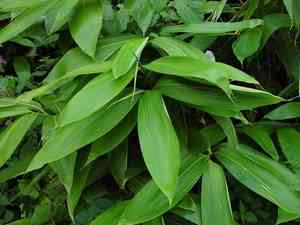
Broad-leaved bamboo (Sasa palmata)
Also known as: Broadleaf Bamboo, Palmleaf Sasa
Broad-leaved bamboo originally comes from the mountainous regions of China, though it is now grown in various parts of the world. It is often used in gardens to create privacy screens and dense hedges due to its lush foliage. In Asia, its large leaves are sometimes utilized for wrapping food and adding decorative touches to dinner presentations.
In This Article
Attributes of Broad-leaved bamboo
Lifespan
Perennial
Plant Type
Grass
Plant Height
2.5 m
Spread
4 m
Leaf Color
Green Brown Blue Variegated
Flower Size
Not applicable, rarely flowers
Flower Color
Not applicable, rarely flowers
Images of Broad-leaved bamboo
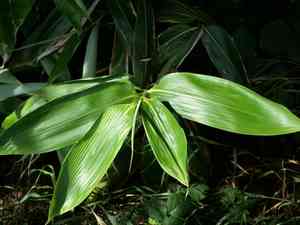
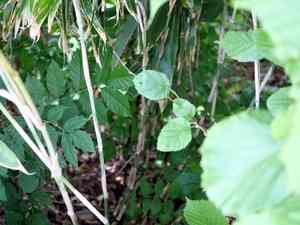
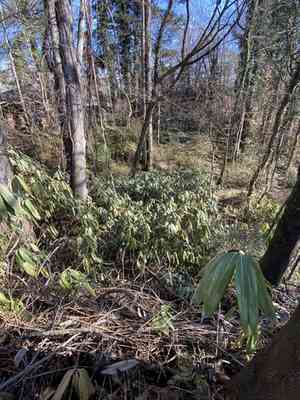
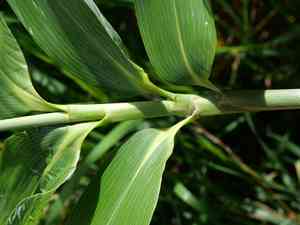
Quickly Identify Broad-leaved bamboo
1
Identify Sasa palmata by its broad, elongated leaves that are palm-like in shape, typically measuring 15-25 cm in length. The leaves are an intense green color with a glossy surface. The plant’s culms are slender and can grow up to 0.5-1 meter tall.
Scientific Classification of Broad-leaved bamboo
Phylum
Vascular plants
Class
Monocotyledons
Order
Poales
Family
Grass
Genus
Broadleaf bamboo
Species
Broad-leaved bamboo
Planting and Growing of Broad-leaved bamboo
Care Difficulty
Moderate
Watering Schedule
Every 3 days
Sunlight Requirements
Partial sun
Sunshine Duration
4-6 hours
Ideal Temperature
60-75℉
Soil Type
Potting Mix, Peat Mix
Soil pH
6.5-7.5
Fertilizer Type
Balanced
Pruning Season
Spring, Summer
Pruning Area
Branches, Leaves
Pruning Frequency
2 times a year
Repotting Season
Spring
Pot Type
Plastic, Terracotta
 How to Water Broad-leaved bamboo?
Sasa palmata enjoys evenly moist soil, but it's crucial to avoid oversaturation. Aim to distribute about 500 ml of water uniformly over the soil. This amount of water ensures that the root zone gets enough moisture without making the soil soggy. Providing this volume ensures that the water penetrates deep enough to reach the roots, promoting healthy growth.
What are the symptoms of an underwatered Broad-leaved bamboo?
›
What should I do if my Broad-leaved bamboo is not getting enough water?
›
What are the symptoms of an overwatered Broad-leaved bamboo?
›
How to save an overwatered Broad-leaved bamboo?
›
 What Are the Sunlight Requirements for Broad-leaved bamboo?
Partial sun, with dappled shade throughout the day, encourages healthy growth and leaf color. This condition mimics the plant's natural habitat, ensuring sufficient photosynthesis and robust vitality.
Understanding Optimal Sunlight Exposure
›
Solutions for Achieving Ideal Lighting
›
Benefits of Ideal Lighting
›
 What Is the Ideal Temperature Range for Broad-leaved bamboo?
For optimal growth, Sasa palmata thrives within a temperature range of 60°F to 75°F. This range ensures that the metabolic processes of the plant run efficiently, promoting healthy growth and strong foliage. Consistent exposure to these temperatures helps the plant maintain its vigor and enhances its ornamental value.
 What Soil is Best for Broad-leaved bamboo?
Sasa palmata thrives in well-drained soils. Proper drainage prevents waterlogging, which is vital for root health. Well-drained soils ensure that roots receive adequate oxygen, preventing root rot and promoting vigorous growth. While drainage is crucial, loam and sandy loam soils effectively retain enough moisture for Sasa palmata. This balance supports sustained growth by providing consistent moisture without causing excess water buildup. Rich organic matter in soil boosts nutrient availability, enhancing the growth of Sasa palmata. Organic matter improves soil texture and fertility, supplying essential nutrients that lead to healthy and lush foliage.
 How to Fertilize Broad-leaved bamboo?
For Sasa palmata, the recommended fertilizer amount will vary based on the type of fertilizer used. For liquid fertilizers, use a ¼ strength diluted solution per watering, applying around 200 ml per application. For slow-release granules, 100 grams per square meter per application is generally effective.
 How to Prune Broad-leaved bamboo?
Begin by removing dead and diseased canes. This will prevent the spread of disease and maintain the overall health of the plant. Be sure to cut back to the base of the plant or to healthy nodes on the canes. Trim back up to a third of the older canes to keep the bamboo compact and encourage new shoot development. Focus on maintaining a rounded shape that suits your garden's design, ensuring the plant doesn't become too dense and unsightly. Remove any excess shoots that appear outside the desired growth area. These shoots can invade other parts of your garden if not kept in check. Prune them close to the ground to prevent regrowth.
More About Pruning Techniques→
 How to Propagate Broad-leaved bamboo plant?
1
Carefully dig around the base of the plant to lift it from the ground. Ensure you preserve as much of the root system as possible to make successful divisions.
2
Once the plant is out of the soil, gently shake off excess dirt and use a sharp spade to separate root clumps into smaller divisions. Each division should have a good portion of roots and shoots to thrive.
3
Replant each separated division promptly into prepared soil. Water them thoroughly to help establish roots, ensuring they are planted at the same depth as originally grown.
 How to Repot Broad-leaved bamboo plant?
1
Repotting Sasa palmata is best done in spring or early summer when you see that roots are outgrowing the current container or when the soil condition deteriorates, indicating the plant needs a refresh for healthy growth.
2
Choose a pot that allows at least an inch or two of space for root expansion. Ensure it has adequate drainage holes to prevent waterlogging, which is crucial for maintaining root health and avoiding rot.
3
Opt for a soil mix that is well-draining yet rich in organic matter. A combination of loam, peat, and perlite works well. This mix ensures nutrients availability while preventing soggy roots that can cause root rot.
Learn More About Broad-leaved bamboo Diseases
Anthracnose
Bacterial Leaf Spot
Bacterial Soft Rot
Chemical Injury
Damping-off
Downy Mildew
Drought Stress
Fusarium Wilt
Gray Mold
Leaf Spot
Mosaic
Nutrient Deficiency
Nutrient Toxicity
Powdery Mildew
Root Rot
Root-knot Nematode
Rusts
Sooty Mold
Spider Mites
Temperature Stress
Thrips Damage
White Mold



