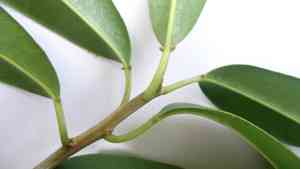
Bolivian rubber(Sapium glandulosum)

Bolivian rubber (Sapium glandulosum)

Also known as: Milk tree

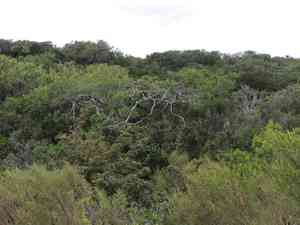
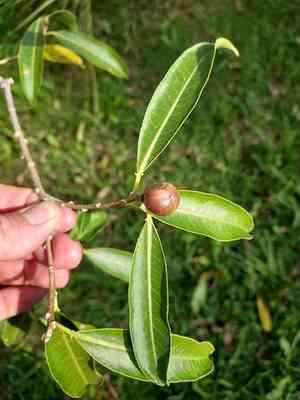
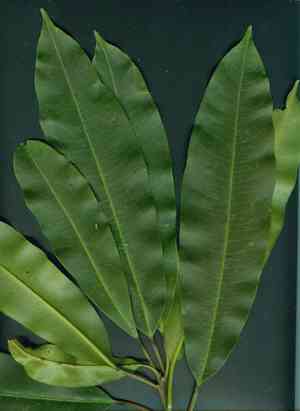
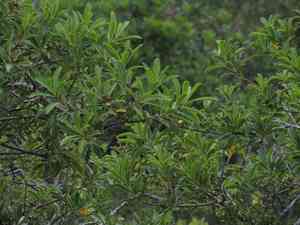
This tree species can grow up to 30 meters tall and often features buttress roots and multiple trunks. Smaller branches might have short, thick spines. The outer bark is thin, patchy, and peels off, often revealing scars. The inner bark is granular in texture. The tree produces a significant amount of milky latex. Its leaves are alternately arranged and can be oblong or oval, measuring up to 27 cm in length and 8 cm in width, with toothed edges. New leaves have gland-tipped teeth. The male flowers are tiny, rounded, and purple, measuring just over 1 mm. The fruit is a greenish-brown, rounded capsule up to 1 cm long, splitting into three segments, each containing a seed covered in a thin layer of red pulp.

Attributes of Bolivian rubber

Lifespan
Perennial
Plant Type
Tree, Shrub
Plant Height
15-20 meters
Spread
8-10 meters
Leaf Color
Green (turns yellow in autumn)
Flower Size
0.5 cm
Flower Color
Yellow Green

ForwardPlant - Identify plants with a snap

Identify and diagnose plants, get toxicity alerts, and explore safety guides for all types of fungi.

Try for Free

Images of Bolivian rubber

Bolivian rubber(Sapium glandulosum)

Quickly Identify Bolivian rubber

1
Identify Sapium glandulosum by its distinctive broad, oval leaves with wavy edges, milky sap, and small, inconspicuous greenish-white flowers that grow in clusters. The fruit is a three-lobed capsule that turns brown when mature.

Scientific Classification of Bolivian rubber

Phylum
Vascular plants
Class
Dicotyledons
Order
Malpighiales
Family
Spurge
Genus
Sapium
Species
Bolivian rubber

Planting and Growing of Bolivian rubber

Care Difficulty
Moderate
Watering Schedule
Every 3 days
Sunlight Requirements
Full sun
Sunshine Duration
6-10 hours
Ideal Temperature
65-85℉
Soil Type
Potting Mix, Peat Mix
Soil pH
5.5-7.5
Fertilizer Type
Balanced
Pruning Season
Spring, Summer
Pruning Area
Branches, Leaves
Pruning Frequency
2 times a year
Repotting Season
Spring
Pot Type
Plastic, Ceramic

water icon How to Water Bolivian rubber?

The watering amount for Sapium glandulosum should be approximately 500 ml per session. The goal is to ensure that the water reaches the root zone, which helps the plant absorb nutrients whilst avoiding waterlogging. A good rule of thumb is to water until you see a bit of moisture seeping out from the bottom of the pot.
What are the symptoms of an underwatered Bolivian rubber? ›
What should I do if my Bolivian rubber is not getting enough water? ›
What are the symptoms of an overwatered Bolivian rubber? ›
How to save an overwatered Bolivian rubber? ›

sunlight icon What Are the Sunlight Requirements for Bolivian rubber?

Sunlight Requirements: Full sun, Partial sun
Duration of light: 6-8 hours daily
Partial to full sun exposure promotes robust growth in Sapium glandulosum. Ideal light conditions encourage healthy photosynthesis, leading to lush foliage and vigorous development, enhancing the plant's overall vitality and appearance.
What is the ideal amount of sunlight for Sapium glandulosum? ›
What is the best time of day for Sapium glandulosum to receive sunlight? ›
How can I adjust the light exposure for my Sapium glandulosum? ›

temperature icon What Is the Ideal Temperature Range for Bolivian rubber?

Ideal Temperature: 65 ~ 85℉
The ideal temperature range for Sapium glandulosum is between 65°F and 85°F. This warm and consistent temperature range promotes healthy growth and development. Maintaining this range encourages optimal photosynthesis and helps the plant sustain its metabolic processes efficiently.

soil icon What Soil is Best for Bolivian rubber?

Soil type: Loam, Clay soil, Sandy loam
Soil PH: 5.5 ~ 7.5
Sapium glandulosum thrives in nutrient-rich soil that provides essential minerals for healthy growth. Access to ample nutrients supports robust foliage and enhances the plant's overall vigor. This plant requires well-drained soil to prevent waterlogging, which can lead to root rot. Ensuring good drainage helps maintain root health and promotes steady growth. Sapium glandulosum benefits from soil that retains some moisture but is not overly soggy. The right moisture balance aids in nutrient uptake and prevents stress from drought.

fertilize icon How to Fertilize Bolivian rubber?

Fertilizer type: Balanced
For Sapium glandulosum, applying fertilizer involves providing sufficient nutrients without overwhelming the plant. Use a balanced liquid fertilizer diluted to half-strength, around 100 ml per application for a mature plant. Always ensure even distribution and avoid direct contact with stems and leaves to prevent burning.

prune icon How to Prune Bolivian rubber?

Pruning Time: Summer, Autumn
Start by cleaning up the base of the Sapium glandulosum. Remove any dead or decaying leaves and debris that may have accumulated near the soil. This not only improves the plant's appearance but also reduces the risk of disease and pest infestation. Identify and cut back any dead or diseased branches. Doing so helps direct the plant's energy towards new, healthy growth, and improves air circulation, reducing the likelihood of fungal infections. Carefully trim back branches to shape the canopy to your desired form. Focus on maintaining a balanced structure and avoiding heavy cuts that could shock the plant. Use sharp, clean pruning shears to make precise cuts. More About Pruning Techniques→

propagate icon How to Propagate Bolivian rubber plant?

Propagate Time: Spring, Early summer
1
Collect mature seeds from a healthy Sapium glandulosum plant. Ensure the seeds are fully developed and dry before collection. Store them in a cool, dry place until you are ready to sow.
2
Select a healthy and disease-free branch from the parent plant. Use pruning shears to take 4-6 inch cuttings just below a node. Remove the leaves from the lower half of the cutting.
3
To perform grafting, select a compatible rootstock and scion. Ensure both have similar diameters. Use a grafting tape or wax to secure and protect the graft union after joining the scion and rootstock.

repot icon How to Repot Bolivian rubber plant?

Repotting frequency: Every two years
1
Recognizing the signals for repotting Sapium glandulosum is crucial. Look for roots protruding from drainage holes or a noticeable decline in growth. These are clear signs that your plant is outgrowing its current pot. Usually, it's time to repot when you see these indicators, typically every couple of years.
2
When selecting a pot for repotting, opt for one that is an inch or two larger in diameter than the current one. This allows the roots room to expand while avoiding excessive moisture retention, which can lead to root rot. Always ensure that the new pot has sufficient drainage holes for optimal water flow.
3
A well-draining, sandy loam soil is ideal for Sapium glandulosum. This type of soil provides excellent drainage and aeration, reducing the risk of root rot while supporting healthy root growth. Incorporating organic matter can also enhance soil fertility and water retention capacity.

ForwardPlant - Identify plants with a snap

Find the best spots for them to optimize their health, simply using your phone.

Try for Free

Toxicity

Ingestion of leaves, fruit, and latex

Identify toxic plants for your safety

Learn which plants are harmful to you and your pets, and make informed choices for a safer home!

Try for Free
WARNING
The judgment on toxicity and danger is for reference only. We DO NOT GUARANTEE any accuracy of such judgment. Therefore, you SHALL NOT rely on such judgment. It is IMPORTANT TO SEEK PROFESSIONAL ADVICE in advance when necessary.