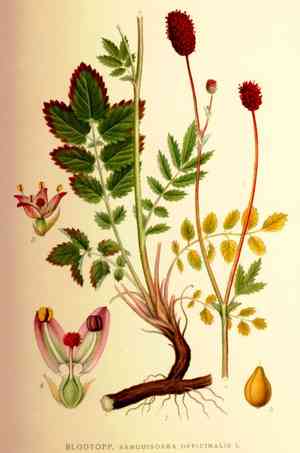
Menzies' burnet (Sanguisorba menziesii)
Also known as: Menzies' Burnet
Menzies' burnet (*Sanguisorba menziesii*) showcases striking deep purplish-red, feathery inflorescences, which brighten up meadows and streambanks where it naturally thrives. This perennial plant features dense gray-green, pinnate leaves at its base, from which tall flowering stems rise elegantly. It is well-adapted to different soil types and has a strong root system that helps prevent erosion. Additionally, it is cold-hardy and resilient in challenging climates.
In This Article
Attributes of Menzies' burnet
Lifespan
Perennial
Plant Type
Herb
Plant Height
75 cm
Spread
60 cm
Leaf Color
Green
Flower Size
1-2 cm
Flower Color
Deep Red to Purple
Images of Menzies' burnet
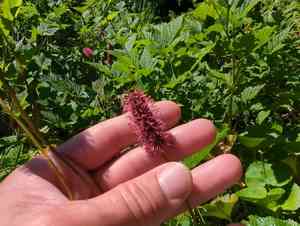
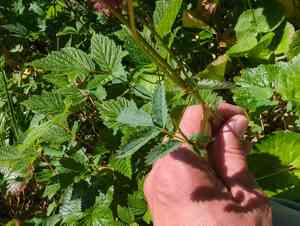
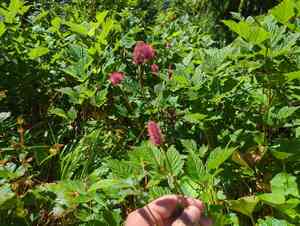

Quickly Identify Menzies' burnet
1
Identified by its feathery, cylindrical flower spikes that are typically deep red or purple. The leaves are pinnate with serrated edges.
Scientific Classification of Menzies' burnet
Phylum
Vascular plants
Class
Dicotyledons
Order
Rosales
Family
Rose
Genus
burnet
Species
Menzies' burnet
Planting and Growing of Menzies' burnet
Care Difficulty
Easy
Watering Schedule
Every 2 days
Sunlight Requirements
Full sun
Sunshine Duration
4-8 hours
Ideal Temperature
60-70℉
Soil Type
Potting Mix, Peat Mix
Soil pH
6.5-7.5
Fertilizer Type
Balanced
Pruning Season
Spring, Summer
Pruning Area
Branches, Leaves
Pruning Frequency
2 times a year
Repotting Season
Spring
Pot Type
Plastic, Ceramic
 How to Water Menzies' burnet?
Water Sanguisorba menziesii moderately, ensuring the soil is moist but not waterlogged. Typically, around 500 ml per session suffices, allowing the soil to dry slightly between waterings to prevent root rot.
What are the symptoms of an underwatered Menzies' burnet?
›
What should I do if my Menzies' burnet is not getting enough water?
›
What are the symptoms of an overwatered Menzies' burnet?
›
How to save an overwatered Menzies' burnet?
›
 What Are the Sunlight Requirements for Menzies' burnet?
Partial to full sunlight facilitates optimal growth for Sanguisorba menziesii, promoting strong stems, vibrant foliage, and abundant blooms by ensuring photosynthetic needs are adequately met.
What type of sunlight does it prefer?
›
How can you achieve these lighting conditions?
›
What are the benefits of ideal lighting?
›
 What Is the Ideal Temperature Range for Menzies' burnet?
The ideal temperature range for the growth of Sanguisorba menziesii is between 60°F and 70°F. This range provides the optimal conditions for the plant to thrive, ensuring robust health and growth. Within these temperatures, the plant can effectively carry out photosynthesis and other metabolic processes necessary for its development.
 What Soil is Best for Menzies' burnet?
Sanguisorba menziesii thrives in nutrient-rich soil, which provides essential minerals and nutrients, promoting healthy growth and vibrant flowers. Regularly enriching the soil with organic matter like compost can sustain the plant's vigorous life cycle. This plant favors well-drained conditions to prevent root rot. Ensuring gravel or sand is mixed into the soil can help facilitate drainage and avoid excess moisture, which is detrimental to plant roots. Consistent moisture without waterlogging is ideal for Sanguisorba menziesii. Mulching helps maintain these moisture levels, providing a stable environment for roots to absorb water efficiently.
 How to Fertilize Menzies' burnet?
Sanguisorba menziesii, known for its lush foliage and charming inflorescences, thrives with careful fertilization. Generally, a balanced, water-soluble fertilizer with an NPK ratio of 10-10-10 applied at half the recommended strength is optimal. Avoiding over-fertilization is crucial to prevent root burn and ensure healthier growth.
 How to Prune Menzies' burnet?
Start your pruning by deadheading spent flowers. This encourages a fresh flush of blooms and prevents unwanted self-seeding. Use garden scissors to snip off the flower heads just above a set of leaves. Next, focus on removing old or woody stems to stimulate new growth. Cut these stems back to the base of the plant, ensuring that new shoots have space to develop and flourish. Finally, gently shape the plant to maintain its desired form. If you prefer a tidy look, trim errant branches to create a uniform appearance. Be mindful not to disrupt the natural growth habit of Sanguisorba menziesii.
More About Pruning Techniques→
 How to Propagate Menzies' burnet plant?
1
To propagate Sanguisorba menziesii by seed, fill a seed tray with a well-draining potting mix. Sow the seeds lightly on the surface and cover them with a thin layer of soil. Keep the soil moist but not waterlogged. Place the tray in a bright area but out of direct sunlight.
2
In late spring to early summer, divide the mature clumps of Sanguisorba menziesii. Carefully dig up the plant and split it into smaller sections, ensuring each division has a healthy root system and foliage. Replant the divisions immediately in a suitable location.
3
Once seedlings have developed a couple of sets of true leaves, they are ready to be transplanted. Carefully move them into individual pots or directly into the garden, ensuring they have ample space to grow. Water them thoroughly after planting.
 How to Repot Menzies' burnet plant?
1
Sanguisorba menziesii should be repotted when its roots start to grow out of the drainage holes or when growth becomes stunted. Typically, during spring or autumn, the plant is less stressed, making it an ideal time to transition it to a new pot.
2
Select a pot that is one size larger than the current one, with adequate drainage holes. This ensures room for growth and prevents waterlogging, which can lead to root rot. A terracotta pot is ideal as it allows airflow to the roots.
3
Opt for a well-draining loamy soil that can retain some moisture while allowing excess water to flow out. This type of soil ensures that roots receive the necessary nutrients and oxygen, keeping the plant healthy.



