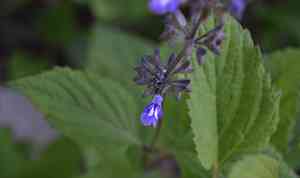
Nettleleaf sage (Salvia urticifolia)
Also known as: Nettleleaf Sage
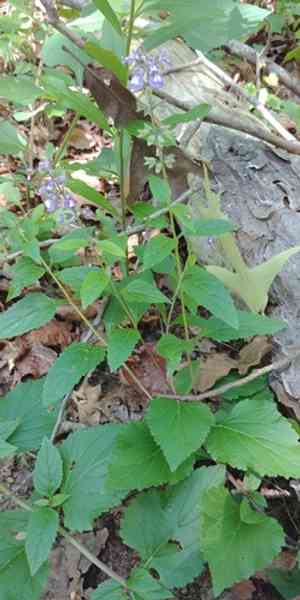
Nettleleaf sage, scientifically known as Salvia urticifolia, features leaves that resemble those of stinging nettle. This perennial herb typically showcases blue to violet flowers arranged in whorls, which are appealing to pollinators. It thrives in well-drained soils and is commonly found in open woodlands, meadows, and along stream banks. The plant prefers temperate climates and can grow in full sun to partial shade. Its hardy stems and textured foliage help it blend seamlessly into its natural habitat, supporting its ecological role.
In This Article
Attributes of Nettleleaf sage
Lifespan
Perennial
Plant Type
Herb
Plant Height
30 cm to 91 cm
Spread
30-60 cm (12-24 inches)
Leaf Color
Green
Flower Size
1-1.5 cm (0.4-0.6 inches)
Flower Color
Blue-violet
Images of Nettleleaf sage
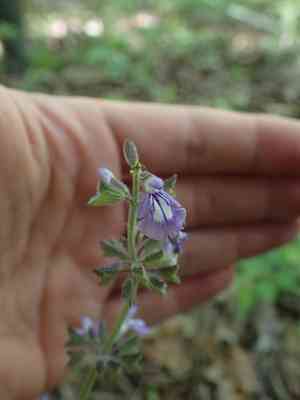
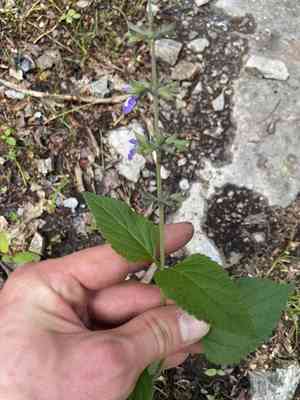
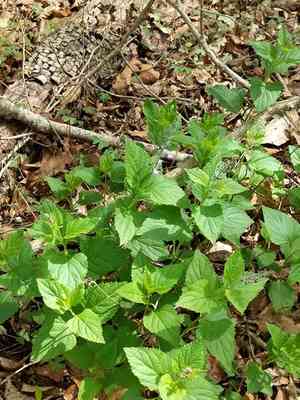
Quickly Identify Nettleleaf sage
1
Heart-shaped leaves without stinging, arranged oppositely on square stems.
2
Tall spikes with delicate, tubular flowers in purple and blue shades.
3
Sticky flowers in tiers with a lower lip having 2-3 lobes and white marks.
4
Fruit is a schizocarp divided into four small nutlets, firm and brown-gray.
5
Wedge-shaped leaves with coarse texture, medium to dark green color.
Scientific Classification of Nettleleaf sage
Phylum
Vascular plants
Class
Dicotyledons
Order
Lamiales
Family
Mint
Genus
Sages
Species
Nettleleaf sage
Planting and Growing of Nettleleaf sage
Care Difficulty
Easy
Watering Schedule
Every 3 days
Sunlight Requirements
Partial sun
Sunshine Duration
4-8 hours
Ideal Temperature
68-77℉
Soil Type
Potting Mix, Peat Mix
Soil pH
6.5-7.5
Fertilizer Type
Balanced
Pruning Season
Spring, Summer
Pruning Area
Branches, Leaves
Pruning Frequency
2 times a year
Repotting Season
Spring
Pot Type
Plastic, Ceramic
 How to Water Nettleleaf sage?
For Salvia urticifolia, water the soil until it's evenly moist but not soggy. Aim for about 250 milliliters of water per session to encourage deep root growth. This amount ensures that the entire root zone receives adequate moisture without risking waterlogging.
What are the symptoms of an underwatered Nettleleaf sage?
›
What should I do if my Nettleleaf sage is not getting enough water?
›
What are the symptoms of an overwatered Nettleleaf sage?
›
How to save an overwatered Nettleleaf sage?
›
 What Are the Sunlight Requirements for Nettleleaf sage?
Partial sunlight is essential, typically 3 to 6 hours per day. This balance maximizes the plant's photosynthetic efficiency, encouraging bushy growth and prolific flowering.
What is the ideal amount of sunlight for Salvia urticifolia?
›
How can Salvia urticifolia's lighting needs be met?
›
What are the benefits of the optimal lighting conditions for Salvia urticifolia?
›
 What Is the Ideal Temperature Range for Nettleleaf sage?
For optimal growth, Salvia urticifolia thrives in a temperature range of 68°F to 77°F. This range ensures the plant can photosynthesize efficiently and maintain robust vegetative growth.
 What Soil is Best for Nettleleaf sage?
Salvia urticifolia thrives in well-draining soils. Good drainage prevents water from accumulating around the roots, reducing the risk of root rot and plant stress. This plant benefits from soils rich in organic matter, which provides essential nutrients and promotes healthy growth, leading to more vigorous blooms. Adequate aeration in the soil allows the roots to access oxygen easily. This enhances root health and allows the plant to assimilate nutrients efficiently.
 How to Fertilize Nettleleaf sage?
When fertilizing Salvia urticifolia, use a balanced liquid fertilizer diluted to half-strength. Apply about 1/2 tablespoon per gallon of water. For slow-release fertilizers, apply around 1/4 to 1/2 teaspoon per plant, depending on size and soil conditions.
 How to Prune Nettleleaf sage?
Regularly deadhead faded flowers to prolong blooming and redirect the plant's energy toward new growth. Snip just above the nearest leaf node to remove the spent blooms effectively. To maintain a desired shape and manage excessive growth, trim back up to one-third of the plant's overall size. Focus on shaping the plant by cutting above a leaf pair to encourage branching.
More About Pruning Techniques→
 How to Propagate Nettleleaf sage plant?
1
Collect mature seeds from the plants during the correct season. Ensure the seeds are completely dry to prevent any mold formation and store them in a cool, dark place until ready for planting.
2
Use a mix of sand and peat moss for the soil. This combination offers good drainage and aeration, critical for preventing stem rot while the cuttings develop roots.
3
Dig up the entire plant in late spring. Carefully divide the root ball into sections, each with both roots and shoots, and replant them promptly to minimize stress.
 How to Repot Nettleleaf sage plant?
1
For Salvia urticifolia, ideal repotting times are indicated by roots protruding from drainage holes, slowed growth, or when the plant becomes root-bound. These signs typically mean the plant's roots have maxed out their current space, necessitating a roomier pot.
2
Opt for a pot that is 1-2 inches wider in diameter than the current one, ensuring it's not excessively large to prevent waterlogging. A slightly larger pot supports healthy growth while ensuring the soil stays appropriately moist, aiding in the plant’s health and development.
3
Select a well-draining potting mix, ideally one with components like perlite or vermiculite, which boost aeration and drainage. This type of soil prevents root rot and creates optimal conditions for nutrient absorption, promoting robust plant growth.
Toxicity
None
WARNING
The judgment on toxicity and danger is for reference only. We DO NOT GUARANTEE any accuracy of such judgment. Therefore, you SHALL NOT rely on such judgment. It is IMPORTANT TO SEEK PROFESSIONAL ADVICE in advance when necessary.



