Azure Blue Sage (Salvia azurea)
Also known as: Prairie Sage, Azure Sage, Big Blue Sage
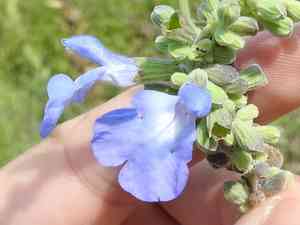
The plant you're referring to is Azure Blue Sage (Salvia azurea). This perennial features striking bright blue flowers that appear from summer to fall along its flower stems. The foliage releases a pleasant scent when touched. Ideal for wildflower gardens, it flourishes in full sun or partial shade and adapts well to sandy, clay, or loamy soil.
In This Article
Attributes of Azure Blue Sage
Lifespan
Perennial
Plant Type
Herb
Plant Height
91 cm to 1.5 m
Spread
60 cm to 1.2 m
Leaf Color
Green Gray
Flower Size
2.5 cm
Flower Color
Blue
Images of Azure Blue Sage
Quickly Identify Azure Blue Sage
1
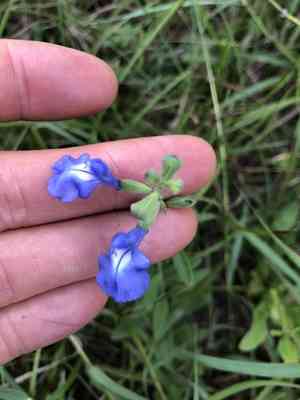
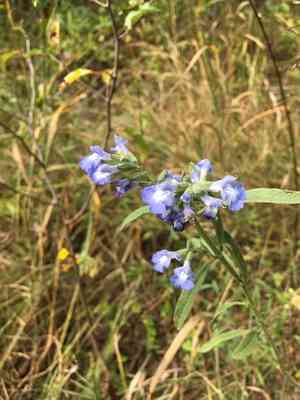
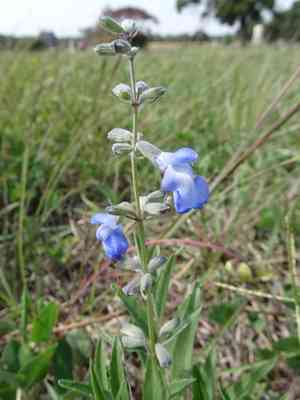
Sky-blue two-lipped tubular flowers attract pollinators.
2
Oblong, opposite leaves provide a lush green backdrop.
3
Stems are square in cross-section, characteristic of the mint family.
4
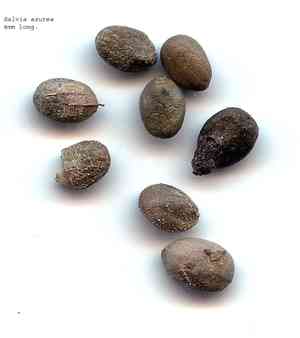
Granular, mottled nutlets resemble miniature eggs, about 2-3 mm in diameter.
5
Simple, linear leaves are gray-green, measuring 3 to 4 inches (7.5 to 10 cm).
Scientific Classification of Azure Blue Sage
Phylum
Vascular plants
Class
Dicotyledons
Order
Lamiales
Family
Mint
Genus
Sages
Species
Azure Blue Sage
Planting and Growing of Azure Blue Sage
Care Difficulty
Easy
Watering Schedule
Every 3 days
Sunlight Requirements
Full sun
Sunshine Duration
6-10 hours
Ideal Temperature
65-80℉
Soil Type
Potting Mix, Peat Mix
Soil pH
6.5-7.5
Fertilizer Type
Balanced
Pruning Season
Spring, Summer
Pruning Area
Branches, Leaves
Pruning Frequency
2 times a year
Repotting Season
Spring
Pot Type
Plastic, Ceramic
 How to Water Azure Blue Sage?
Salvia azurea prefers a moderate watering approach. Water it deeply until the soil is completely saturated, ensuring it reaches a depth of 15-20 cm. Allow the soil to dry out before the next watering. This promotes a healthy root system.
What are the symptoms of an underwatered Azure Blue Sage?
›
What should I do if my Azure Blue Sage is not getting enough water?
›
What are the symptoms of an overwatered Azure Blue Sage?
›
How to save an overwatered Azure Blue Sage?
›
 What Are the Sunlight Requirements for Azure Blue Sage?
Salvia azurea flourishes in full sun conditions. Consistent exposure to 6-8 hours of direct sunlight supports healthy growth and abundant flowering, strengthening the plant against adverse conditions.
More About Sunlight Requirements Techniques→
What are the ideal lighting conditions for Salvia azurea?
›
How can I ensure my plant receives the appropriate light?
›
What benefits can my plant gain from ideal lighting?
›
 What Is the Ideal Temperature Range for Azure Blue Sage?
Salvia azurea thrives in temperatures ranging from 65°F to 80°F. This range provides optimal conditions for photosynthesis, allowing the plant to maximize its growth potential. Within these temperatures, enzymatic activities necessary for growth and development are at their peak, ensuring robust health and blooming.
 What Soil is Best for Azure Blue Sage?
Salvia azurea thrives in well-draining soil as it prevents waterlogging, which could lead to root rot. A sandy or loamy composition ensures the roots get enough air, promoting healthy growth. This plant prefers a soil pH of 6.5 to 7.5, allowing optimal nutrient absorption. This pH range provides the best conditions for the plant’s roots to uptake essential minerals. While not overly demanding, Salvia azurea does best with moderate nutrient levels. Fertile soil with some organic matter, such as compost, helps support its flowering and resistance to pests.
 How to Fertilize Azure Blue Sage?
For Salvia azurea, a moderate amount of fertilizer should be used. It's crucial to avoid over-fertilizing as this can lead to poor growth or even harm the plant. For liquid fertilizers, use about half the recommended amount on the label per feeding, ensuring that the soil never becomes overly saturated with nutrients.
 How to Prune Azure Blue Sage?
While pruning is essential, over-pruning can stress Salvia azurea. Remove only up to one-third of the plant during any single pruning session to avoid hindering its growth and vitality. Before pruning, inspect your plant for signs of pests or disease. Cutting infected branches can help prevent the spread of issues to healthy parts of the plant, but clean your tools after each cut to avoid contamination.
More About Pruning Techniques→
 How to Propagate Azure Blue Sage plant?
1
Collect the seeds from mature Salvia azurea plants in the late summer or early autumn. Ensure that the seed pods are fully dry and brown before collection, as this indicates maturity and readiness for planting.
2
Select a healthy stem from the parent plant, and using pruning shears, cut a 4-6 inch segment below a node. Remove the lower leaves to reduce moisture loss and dip the cut end into rooting hormone for a higher success rate.
3
In spring, dig up a mature Salvia azurea plant. Use a sharp spade to split it into several sections, ensuring each has roots and shoots. Replant these divisions in well-draining soil to encourage healthy growth.
 How to Repot Azure Blue Sage plant?
1
The perfect time to consider repotting your Salvia azurea is when you notice the roots emerging from the drainage holes, slow growth, or an overall exhausted appearance of the plant. These signs suggest that the plant needs more space and refreshed nutrients to keep thriving.
2
Select a pot with drainage holes and larger than the current one by 1-2 inches in diameter. This offers roots more room to grow and ensures water doesn't accumulate, preventing root rot and keeping your Salvia azurea healthy and vigorous.
3
Opt for well-draining sandy loam mixed with a bit of compost. This ensures proper drainage while providing the nutrients necessary for Salvia azurea's optimal growth, mimicking its natural environment and supporting its aromatic blooms.



