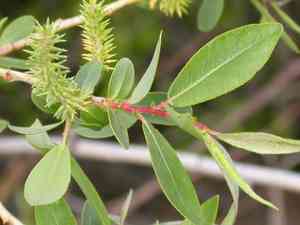
Yellow willow (Salix lutea)
Also known as: Yellow willow
In riparian habitat revegetation projects, willow species are widely utilized to combat erosion. These species primarily reproduce through vegetative means, such as sprouting from stem cuttings. Although they can also reproduce sexually by dispersing a large quantity of seeds carried by the wind, vegetative propagation is more commonly employed due to its efficiency and higher success rate in such restoration efforts.
In This Article
Attributes of Yellow willow
Lifespan
Perennial
Plant Type
Tree, Shrub
Plant Height
3 to 8 meters
Spread
2 to 4 meters
Leaf Color
Green
Flower Size
N/A (Willows do not have typical \'flowers\'; they have catkins)
Flower Color
N/A (Flowers appear as catkins and are usually yellowish)
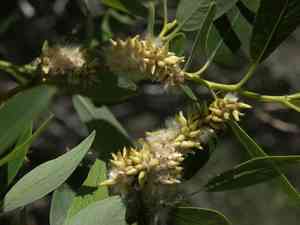
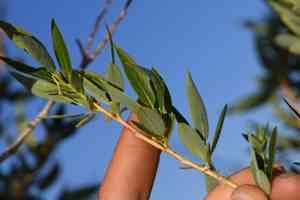
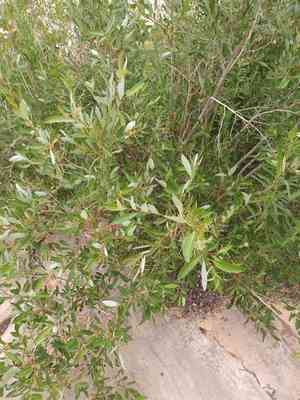
Images of Yellow willow

Quickly Identify Yellow willow
1
Salix lutea can be identified by its yellow to greenish branches, narrow lance-shaped leaves, and characteristic catkins (flowering spikes). The leaves have finely serrated edges and are usually lighter on the underside.
Scientific Classification of Yellow willow
Phylum
Vascular plants
Class
Dicotyledons
Order
Malpighiales
Family
Willow
Genus
Willows
Species
Yellow willow
Planting and Growing of Yellow willow
Care Difficulty
Easy
Watering Schedule
Every 4 days
Sunlight Requirements
Full sun
Sunshine Duration
4-6 hours
Ideal Temperature
50-77℉
Soil Type
Potting Mix, Peat Mix
Soil pH
6.5-7.5
Fertilizer Type
Balanced
Pruning Season
Spring, Summer
Pruning Area
Branches, Leaves
Pruning Frequency
2 times a year
Repotting Season
Spring
Pot Type
Plastic, Ceramic
 How to Water Yellow willow?
The optimal watering amount for Salix lutea is based on ensuring the soil remains consistently moist but not waterlogged. Water it with approximately 500 ml each session. This amount helps the soil to be adequately moist without causing the roots to sit in excess water, which can lead to rot.
What are the symptoms of an underwatered Yellow willow?
›
What should I do if my Yellow willow is not getting enough water?
›
What are the symptoms of an overwatered Yellow willow?
›
How to save an overwatered Yellow willow?
›
 What Are the Sunlight Requirements for Yellow willow?
Salix lutea prospers under full to partial sunlight, benefiting from these conditions through enhanced photosynthesis and growth. This ensures a robust structure and resistance to negative environmental impacts.
What kind of sunlight does Salix lutea prefer?
›
How can I ensure Salix lutea gets the ideal sunlight?
›
What are the benefits of providing Salix lutea with ideal sunlight?
›
 What Is the Ideal Temperature Range for Yellow willow?
Salix lutea, also known as the Yellow Willow, thrives best in temperatures ranging from 50°F to 77°F. This range allows the plant to photosynthesize efficiently, ensuring optimal growth and development. Maintaining these temperatures helps prevent stress, promoting vibrant foliage and robust health.
 What Soil is Best for Yellow willow?
Salix lutea thrives in soils that can retain adequate moisture. This is crucial for its growth as the plant is native to wetland areas. Such soil ensures the plant stays hydrated, preventing stress and promoting lush, healthy foliage. Soil rich in organic matter is essential for Salix lutea. The organic content supplies necessary nutrients that support robust growth and vibrant health, ensuring the plant has consistent access to essential elements like nitrogen and phosphorus. Well-aerated soil with good drainage is beneficial for Salix lutea. This maintains a balance by allowing roots to breathe, preventing rot and ensuring the plant grows vigorously without being waterlogged.
 How to Fertilize Yellow willow?
For Salix lutea, using a balanced fertilizer like 10-10-10 is recommended. Apply liquid fertilizer at a concentration of 1 tablespoon per gallon of water. When using slow-release fertilizers, apply approximately 1-2 pounds per 100 square feet of planting area.
 How to Prune Yellow willow?
Be cautious not to remove more than one-third of the plant at a time. Over-pruning can stress Salix lutea, leading to reduced growth and vulnerability to disease. Conduct major pruning activities in early spring before new growth begins, and less extensive shaping in autumn to prepare the willow for winter. Apply a suitable fungicidal solution on fresh cuts to prevent infections. Monitor the plant regularly after pruning for any signs of pest infestations or disease.
 How to Propagate Yellow willow plant?
1
Harvest the seeds from the plant in late autumn. Ensure they are dried and stored in a cool, dry place for winter until you're ready to sow them in early spring.
2
Use your pruning shears to cut a healthy stem about 6 to 8 inches long in early spring. The cutting should have at least a few leaves, but any flowers or buds should be removed.
3
Dip the cut end of your cutting in rooting hormone and plant it in a pot filled with a suitable potting mix. Keep the soil moist and cover the pot with a plastic bag to create a greenhouse effect.
 How to Repot Yellow willow plant?
1
Look for signs such as roots protruding from the drainage holes, soil taking longer to dry, or stunted growth. These indicate the need for a new pot, as the plant outgrows its space and requires more nutrients.
2
Select a pot that's one size larger than the current one with good drainage holes. This allows room for root expansion and prevents waterlogging, promoting healthier root development and overall plant vitality.
3
Using loamy, well-draining soil ensures that excess water does not remain in contact with the roots, preventing rot while providing adequate aeration and nutrient availability for robust growth.



