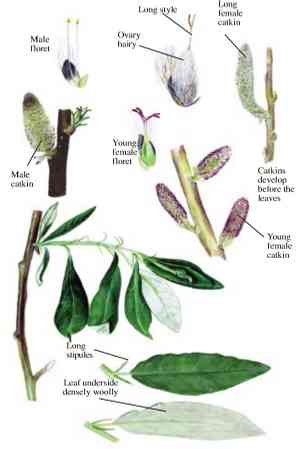
Alaska willow (Salix alaxensis)
Also known as: Alaska willow, Feltleaf willow
The Sitka alder is a plant native to cold climates, thriving in Alaska's varied ecosystems. This shrub or small tree is commonly seen along riverbanks and in moist areas. It features broad, serrated leaves and robust roots adapted for wet soils. During the short Arctic summer, its small, cone-like fruits and catkins attract a range of pollinators.
In This Article
Attributes of Alaska willow
Lifespan
Perennial
Plant Type
Tree
Plant Height
4 to 6 meters (13 to 20 feet)
Spread
3 to 5 meters (10 to 16 feet)
Leaf Color
Green (upper side) and Silvery-white (underside)
Flower Size
Catkins are 3 to 6 cm long
Flower Color
Yellowish-green
Images of Alaska willow
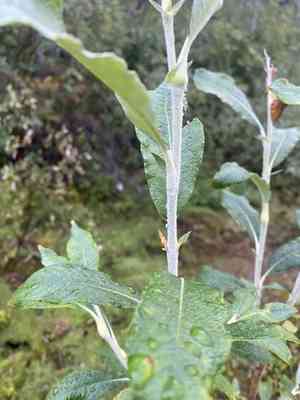
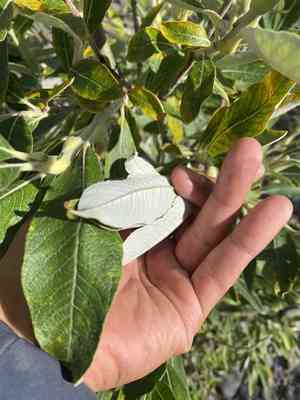
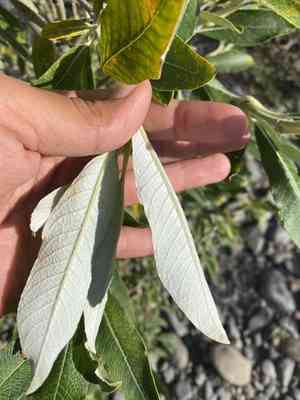
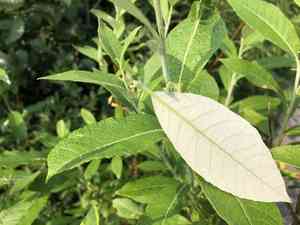
Quickly Identify Alaska willow
1
Salix alaxensis can be identified by its felt-like leaves which are green on the upper side and silvery-white on the underside. It usually has reddish-brown twigs and produces catkins in early spring.
Scientific Classification of Alaska willow
Phylum
Vascular plants
Class
Dicotyledons
Order
Malpighiales
Family
Willow
Genus
Willows
Species
Alaska willow
Planting and Growing of Alaska willow
Care Difficulty
Moderate
Watering Schedule
Every 4 days
Sunlight Requirements
Full sun
Sunshine Duration
6-10 hours
Ideal Temperature
60-70℉
Soil Type
Potting Mix, Peat Mix
Soil pH
6.5-7.5
Fertilizer Type
Balanced
Pruning Season
Spring, Summer
Pruning Area
Branches, Leaves
Pruning Frequency
2 times a year
Repotting Season
Spring
Pot Type
Plastic, Ceramic
 How to Water Alaska willow?
When watering Salix alaxensis, aim to saturate the soil thoroughly so that it reaches the root zone. Pour about 500 ml of water to ensure the soil remains evenly moist but not waterlogged. The key principle here is to maintain a balance—too dry and the plant struggles, too wet and the roots can rot.
What are the symptoms of an underwatered Alaska willow?
›
What should I do if my Alaska willow is not getting enough water?
›
What are the symptoms of an overwatered Alaska willow?
›
How to save an overwatered Alaska willow?
›
 What Are the Sunlight Requirements for Alaska willow?
The ideal light range for Salix alaxensis is from full sun to partial sun. Such conditions boost photosynthesis, encouraging lush growth and strong structural development, benefiting overall plant health.
What amount of sunlight is best for Salix alaxensis?
›
How can I ensure my plant gets this ideal light?
›
What benefits does optimal sunlight bring to this plant?
›
 What Is the Ideal Temperature Range for Alaska willow?
Salix alaxensis thrives best in a temperature range between 60°F to 70°F. At these temperatures, the plant can efficiently perform photosynthesis, which is optimal for its growth and development. Providing this moderate climate helps in maintaining the plant's physiological processes.
 What Soil is Best for Alaska willow?
Salix alaxensis thrives in soil that retains moisture well. Adequate moisture in the soil ensures that the plant maintains its lush foliage and supports vigorous growth, particularly in its natural riparian habitats. This plant requires soil rich in organic matter, which provides essential nutrients for optimal growth. Nutrient-rich soil supports strong root development and enhances the plant's resistance to diseases and environmental stressors. While it enjoys moist conditions, Salix alaxensis benefits from well-draining soil to prevent root rot. Soil with good drainage facilitates aeration around the roots and prevents waterlogging, which can be detrimental to plant health.
 How to Fertilize Alaska willow?
For Salix alaxensis, apply liquid fertilizer at a concentration of 1/4 of the recommended strength to prevent nutrient overload. For slow-release fertilizers, use about 1-2 tablespoons per planting hole or around the base of the plant to support sustained growth.
 How to Prune Alaska willow?
Start by removing any dead or diseased branches to prevent the spread of infection. Use clean, sharp tools and make cuts just above a healthy bud. Focus on opening up the center of the plant to increase airflow and light penetration. Prune selectively to shape the willow, aiming for a balanced structure with strong, well-spaced branches. Regularly step back to assess balance and symmetry as you prune. After addressing health and shape, consider cutting back young stems by one-third to stimulate vigorous new growth. This approach encourages a bushier appearance and promotes a thicker canopy. Be gentle with young plants to avoid over-pruning and inhibiting their development.
More About Pruning Techniques→
 How to Propagate Alaska willow plant?
1
Choose a healthy stem from a vigorous Salix alaxensis plant. Ensure the stem is about 10-20 cm long with at least two leaf nodes, which are critical points for rooting.
2
Prepare a well-draining soil mix, preferably with peat and perlite, to enhance root development. This mix provides adequate aeration and moisture retention, which are crucial for young cuttings and seeds.
3
Place the seeds or cuttings into the prepared soil, ensuring that seeds are lightly covered and cuttings are sufficiently submerged to cover the nodes. Consistent moisture is key but avoid waterlogging.
 How to Repot Alaska willow plant?
1
Salix alaxensis should be repotted when its roots start to circle the inside of the pot or when growth slows significantly. These are indicators that the plant needs more space for root expansion and nutrient uptake.
2
Choose a pot 2-3 inches larger in diameter than the current one with proper drainage holes. This ensures adequate space for root growth and prevents waterlogging, protecting the roots from rot.
3
Opt for a mix that retains moisture yet drains well, such as a mixture of loamy soil, peat, and sand. This composition prevents the soil from becoming too compacted and allows the roots to breathe.



