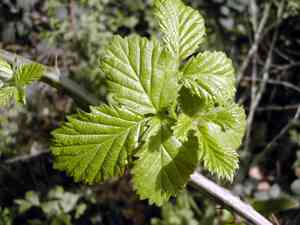
Elmleaf blackberry (Rubus ulmifolius)
Also known as: Abraham's bush, Elm-leaved bramble
Elmleaf blackberry (Rubus ulmifolius) is a bramble native to Europe and North Africa. It typically thrives in calcareous soils found in hedgerows and woodland margins. This plant produces dark purple drupes as its fruit.
In This Article
Attributes of Elmleaf blackberry
Lifespan
Perennial
Plant Type
Vine, Shrub
Plant Height
3 m to 5 m
Spread
2.5 m to 3 m
Leaf Color
Green Yellow White
Flower Size
5 mm to 1.2 cm
Flower Color
White Pink
Images of Elmleaf blackberry
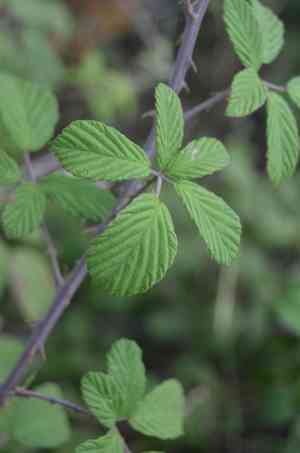
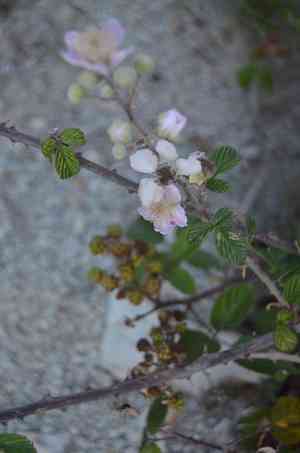
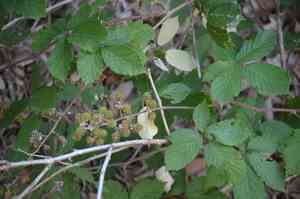
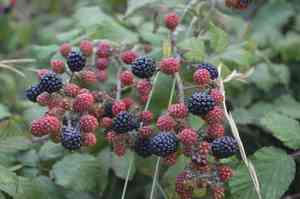
Quickly Identify Elmleaf blackberry
1
To identify Rubus ulmifolius, look for its woody, thorny vines, serrated leaves that resemble those of an elm tree, clusters of white or pale pink flowers, and blackberries that turn from green to red to black as they ripen.
Scientific Classification of Elmleaf blackberry
Phylum
Vascular plants
Class
Dicotyledons
Order
Rosales
Family
Rose
Genus
Brambles
Species
Elmleaf blackberry
Planting and Growing of Elmleaf blackberry
Care Difficulty
Easy
Watering Schedule
Every 4 days
Sunlight Requirements
Partial sun
Sunshine Duration
4-8 hours
Ideal Temperature
60-75℉
Soil Type
Potting Mix, Peat Mix
Soil pH
6.5-7.5
Fertilizer Type
Balanced
Pruning Season
Spring, Summer
Pruning Area
Branches, Leaves
Pruning Frequency
2 times a year
Repotting Season
Spring
Pot Type
Plastic, Terracotta
 How to Water Elmleaf blackberry?
Rubus ulmifolius, commonly known as the elm-leaved blackberry, thrives with a balanced watering routine. You should aim for approximately 500 milliliters per session. Ensure the soil becomes moist but avoid over-saturation that could lead to waterlogging. The soil should feel slightly damp to the touch, yet not overly soggy.
More About Watering Techniques→
What are the symptoms of an underwatered Elmleaf blackberry?
›
What should I do if my Elmleaf blackberry is not getting enough water?
›
What are the symptoms of an overwatered Elmleaf blackberry?
›
How to save an overwatered Elmleaf blackberry?
›
 What Are the Sunlight Requirements for Elmleaf blackberry?
Rubus ulmifolius thrives under partial sun conditions, ideally receiving 3 to 6 hours of dappled sunlight daily. This balance of light is crucial for vigorous growth and fruitful yield while minimizing stress.
More About Sunlight Requirements Techniques→
What is the ideal lighting condition for Rubus ulmifolius?
›
How can I ensure Rubus ulmifolius gets optimal light?
›
What benefits arise from providing proper lighting?
›
 What Is the Ideal Temperature Range for Elmleaf blackberry?
The ideal temperature range for Rubus ulmifolius, commonly known as the Elm-leaved Blackberry, is between 60°F and 75°F. This range allows the plant to thrive with optimal growth and fruit production. Maintaining temperatures within this range supports active photosynthesis and proper enzymatic activity.
 What Soil is Best for Elmleaf blackberry?
Rubus ulmifolius thrives in well-drained soil to prevent root rot. Ensuring good drainage helps the plant access air pockets in the soil, promoting root health and vigorous growth. This plant prefers nutrient-rich soil to support its growth and fruit production. Incorporating organic matter improves nutrient availability, leading to healthier foliage and better yields. A balanced loam with the right proportion of sand, silt, and clay supports the structural integrity and nutrient retention this plant requires for robust health and productivity.
More About Soil→
 How to Fertilize Elmleaf blackberry?
Rubus ulmifolius, commonly known as the elm-leaf blackberry, requires a balanced approach to fertilization. Aim to use a 10-10-10 NPK fertilizer for a robust growth phase in spring. For liquid fertilizers, dilute according to package instructions to avoid overconcentration, applying about 1 to 2 liters per square meter for optimal nutrient absorption.
More About Fertilizing Techniques→
 How to Prune Elmleaf blackberry?
When pruning Rubus ulmifolius, make your cuts about 1/4 inch above a bud facing outwards. This positioning encourages outward growth and prevents crowding in the plant's center. Always remove any branches that appear diseased, damaged, or dead. This should be your top priority when pruning to ensure the plant remains healthy and robust. Trim back long shoots that stray from the desired shape or space. This is especially important if you are growing Rubus ulmifolius in a smaller garden where space is limited.
More About Pruning Techniques→
 How to Propagate Elmleaf blackberry plant?
1
Begin by selecting a well-draining soil mix that retains some moisture but also allows excess water to escape. Amend the soil with organic matter for improved fertility before beginning any propagation method.
2
Select healthy stems with several leaf nodes and cut about 4-6 inches below a node. Remove any sets of lower leaves and dip the base in rooting hormone to encourage root development before planting.
3
Find a low-growing stem, remove leaves 12 inches from the tip, and bend it down to the soil. Secure the stem into the soil with a U-shaped pin, ensuring a node is in contact with the soil for rooting.
 How to Repot Elmleaf blackberry plant?
1
Repot Rubus ulmifolius when you notice roots growing out of the drainage holes or if the plant's growth seems stunted. This is usually during early Spring when the plant begins its active growing phase. Repotting during this time minimizes stress and encourages robust growth.
2
Select a pot that is slightly larger than the current one, ideally about 2-3 inches wider. The new pot should have drainage holes to prevent waterlogged conditions. A slightly larger pot provides space for root expansion without promoting excessive moisture retention, which is beneficial for the plant's health.
3
Opt for a loamy, well-draining soil mix, possibly incorporating some sand or perlite for improved drainage. This type of soil prevents water from stagnating at the roots and provides the necessary aeration, promoting healthy root growth and preventing root rot.
Toxicity
Ingestion
WARNING
The judgment on toxicity and danger is for reference only. We DO NOT GUARANTEE any accuracy of such judgment. Therefore, you SHALL NOT rely on such judgment. It is IMPORTANT TO SEEK PROFESSIONAL ADVICE in advance when necessary.



