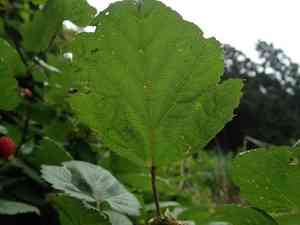
Hawthorn-leaved bramble (Rubus crataegifolius)
Also known as: Hawthorn raspberry
The Korean raspberry, native to East Asia, serves multiple purposes. It is harvested in the wild for food and traditional medicinal uses. Occasionally, it is cultivated for its fruit and also appreciated as an ornamental plant.
In This Article
Attributes of Hawthorn-leaved bramble
Lifespan
Perennial
Plant Type
Shrub
Plant Height
1 m to 3 m
Spread
Approximately 1-2 meters
Leaf Color
Green
Flower Size
1 cm to 1.5 cm
Flower Color
White
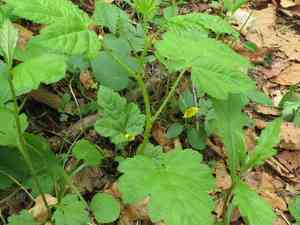
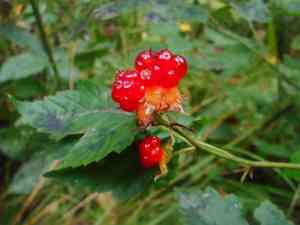
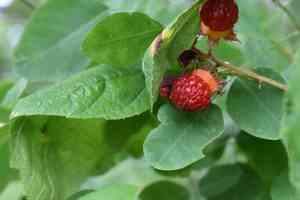
Images of Hawthorn-leaved bramble
Quickly Identify Hawthorn-leaved bramble
1
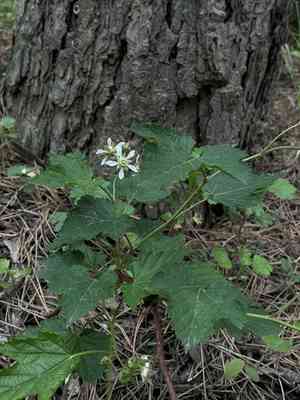
This plant can be identified by its thorny stems, lobed leaves resembling those of hawthorn, and small white to pinkish flowers. The fruits are small, black, and composed of many drupelets.
Scientific Classification of Hawthorn-leaved bramble
Phylum
Vascular plants
Class
Dicotyledons
Order
Rosales
Family
Rose
Genus
Brambles
Species
Hawthorn-leaved bramble
Planting and Growing of Hawthorn-leaved bramble
Care Difficulty
Easy
Watering Schedule
Every 3 days
Sunlight Requirements
Partial sun
Sunshine Duration
6-10 hours
Ideal Temperature
60-75℉
Soil Type
Potting Mix, Peat Mix
Soil pH
6-7.5
Fertilizer Type
Balanced
Pruning Season
Spring, Summer
Pruning Area
Branches, Leaves
Pruning Frequency
2 times a year
Repotting Season
Spring
Pot Type
Plastic, Ceramic
 How to Water Hawthorn-leaved bramble?
Rubus crataegifolius thrives best when the soil is consistently moist but not waterlogged. It's advisable to water it with approximately 500 ml of water per session, allowing the water to reach deep into the root system. This ensures that the root zone is evenly moist while preventing standing water which could cause root rot. Use a well-draining soil to enhance moisture management.
What are the symptoms of an underwatered Hawthorn-leaved bramble?
›
What should I do if my Hawthorn-leaved bramble is not getting enough water?
›
What are the symptoms of an overwatered Hawthorn-leaved bramble?
›
How to save an overwatered Hawthorn-leaved bramble?
›
 What Are the Sunlight Requirements for Hawthorn-leaved bramble?
Partial sun allows Rubus crataegifolius to develop healthy foliage while reducing the risks of sun damage. Adequate sunlight is essential for photosynthesis, supporting optimal growth and fruiting.
More About Sunlight Requirements Techniques→
Solution
›
Specific Measures
›
Achieving Effects
›
 What Is the Ideal Temperature Range for Hawthorn-leaved bramble?
The ideal temperature range of 60 to 75 degrees Fahrenheit ensures optimal growth and development for Rubus crataegifolius. This temperature supports the plant's physiological processes, such as photosynthesis, respiration, and nutrient absorption, by providing a balanced environment that mimics its natural habitat. Maintaining this range can promote healthy foliage, robust flowering, and fruit production.
 What Soil is Best for Hawthorn-leaved bramble?
Rubus crataegifolius thrives in soils with good drainage. Proper drainage prevents root rot, a common problem with poor-draining soils, ensuring healthy root development and optimal nutrient uptake. This plant prefers moderately fertile soil. Such soils provide sufficient nutrients without overwhelming the plant, leading to balanced growth and improved fruit production. While drainage is important, the soil should also retain adequate moisture. A loamy soil best balances these needs, providing the plant with enough water and reducing the frequency of watering.
 How to Fertilize Hawthorn-leaved bramble?
Rubus crataegifolius, also known as the Korean raspberry, requires a balanced approach to fertilization. For liquid fertilizers, use a diluted formula at one-quarter strength, applying about 200-300 ml per plant during each session. Ensure the fertilizer contains an even ratio of Nitrogen, Phosphorus, and Potassium (20-20-20). For slow-release fertilizers, a granulated form with similar nutrient ratio should be applied at a rate of approximately 30-50 grams per plant, depending on its size and soil conditions. Proper fertilization helps the plant to produce abundant, sweet fruit, enhancing both growth and fruit quality.
 How to Prune Hawthorn-leaved bramble?
Begin by assessing the plant for any dead, damaged, or diseased stems, which should be removed first as they can harbor pests and diseases. Follow up by thinning out crowded sections to improve air circulation, which helps reduce disease risk and promotes robust growth. Use sharp, clean tools to make precise cuts just above a healthy bud, angling away from it to allow water to drain easily. To maintain an attractive shape, focus on selective pruning by cutting back longer canes that disrupt the plant's overall form. Control the size by trimming overly long branches back to a side shoot or to just above a bud, ensuring a tidy and compact appearance throughout the growing season.
More About Pruning Techniques→
 How to Propagate Hawthorn-leaved bramble plant?
1
Collect seeds from mature fruits in autumn. Clean them thoroughly and store in a cool, dry place until spring planting.
2
Choose healthy, non-flowering stems in late spring. Cut sections about 6 inches long, remove the lower leaves, and treat with rooting hormone.
3
In spring, bend a low-growing stem to the ground, wound it slightly, and cover with soil, leaving the tip exposed. Roots should develop over several months.
 How to Repot Hawthorn-leaved bramble plant?
1
Rubus crataegifolius should be repotted when you notice its roots starting to grow out of the drainage holes or the plant showing signs of stunted growth. Spring is ideal as the plant is gearing up for an active growth phase.
2
Select a pot that is slightly larger than the current one, with excellent drainage to prevent water from pooling and causing root rot. A well-chosen pot encourages healthier root growth and overall plant vigor.
3
Opt for a well-draining loamy mix that retains enough moisture but doesn't become waterlogged. This type of soil helps mimic the plant's natural habitat, ensuring it receives adequate aeration and nutrients.



