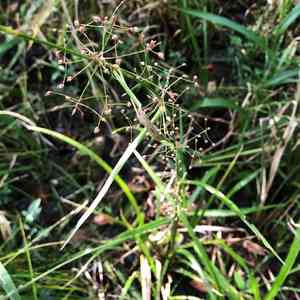
Millet beaksedge (Rhynchospora miliacea)
Also known as: None
Millet beaksedge (Rhynchospora miliacea) exhibits several distinctive features and adaptations suited for wetland habitats:
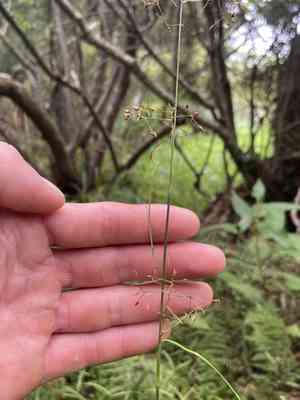
1. **Grass-like Appearance**: This perennial plant has slender, upright stems and narrow leaves, giving it a grass-like look.
2. **Flower Structure**: It produces white or pale green flowers arranged in cone-shaped clusters, making it easily recognizable in wetland areas.
3. **Fibrous Root System**: Its extensive fibrous roots anchor the plant in marshy soils, providing stability against fluctuating water levels.
4. **Adaptation to Wet Soils**: The plant is well-adapted to thrive in saturated, waterlogged soils typical of marshes and swamps.
These adaptations enable millet beaksedge to effectively establish and flourish in wetland environments.
Attributes of Millet beaksedge
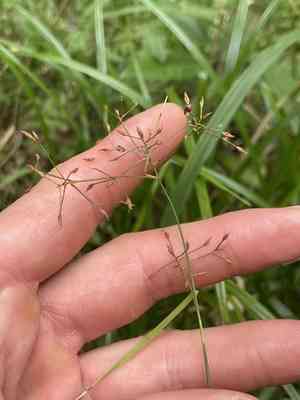
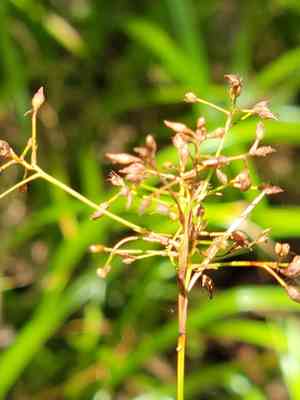
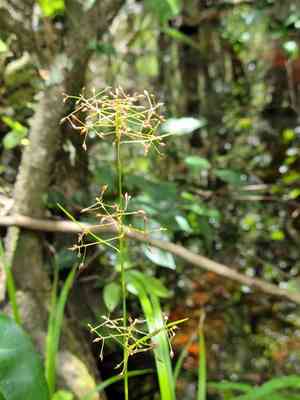
Images of Millet beaksedge
 How to Water Millet beaksedge?
 What Are the Sunlight Requirements for Millet beaksedge?
 What Is the Ideal Temperature Range for Millet beaksedge?
 What Soil is Best for Millet beaksedge?
 How to Fertilize Millet beaksedge?
 How to Prune Millet beaksedge?
 How to Propagate Millet beaksedge plant?
 How to Repot Millet beaksedge plant?



