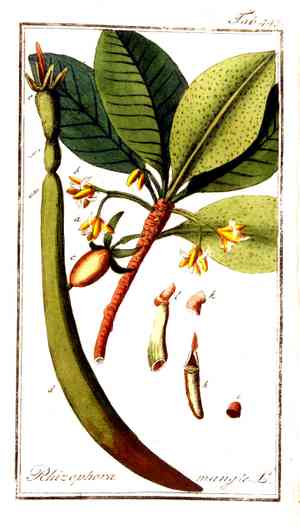
Red Mangrove (Rhizophora mangle)
Also known as: Red Mangrove, Mangrove, American Mangrove
The Red Mangrove (Rhizophora mangle) is a perennial tree that can reach heights of up to 9 meters. It thrives in environments with brackish water and swampy salt marshes. Notably, it is a self-pollinating species whose seeds mature into complete plants while still attached to the tree. Once they drop, these seedpods float on the water until they find suitable ground to begin growing. The Red Mangrove plays a crucial environmental role in regions like Florida, Louisiana, and Texas.
In This Article
Attributes of Red Mangrove
Lifespan
Perennial
Plant Type
Shrub
Plant Height
6 m to 23 m
Spread
6 m to 9 m
Leaf Color
Green
Flower Size
2.5 cm
Flower Color
White Yellow
Images of Red Mangrove
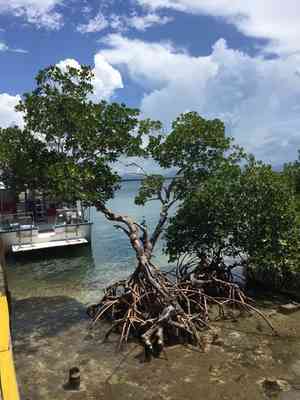
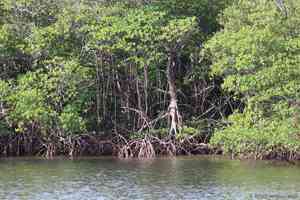
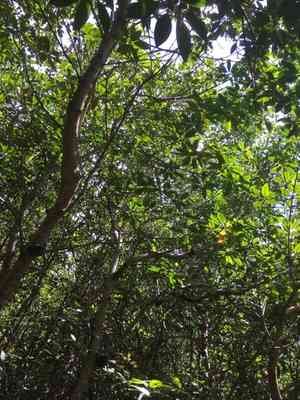
Quickly Identify Red Mangrove
1
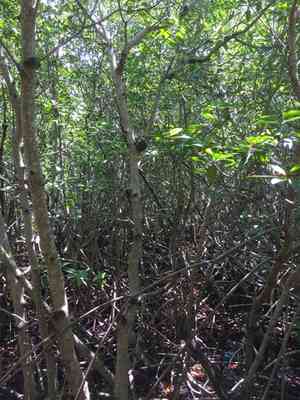
Look for distinctive stilt roots and propagules (long, green seedlings) hanging from the branches. Leaves are leathery and dark green with a pointed tip.
Scientific Classification of Red Mangrove
Phylum
Vascular plants
Class
Dicotyledons
Order
Nances, spurges, willows and allies
Family
Red mangrove
Genus
True mangroves
Species
Red Mangrove
Planting and Growing of Red Mangrove
Care Difficulty
Hard
Watering Schedule
Every 8 days
Sunlight Requirements
Full sun
Sunshine Duration
6-10 hours
Ideal Temperature
72-86℉
Soil Type
Potting Mix, Peat Mix
Soil pH
6.5-7.5
Fertilizer Type
Balanced
Pruning Season
Spring, Summer
Pruning Area
Branches, Leaves
Pruning Frequency
2 times a year
Repotting Season
Spring
Pot Type
Plastic, Ceramic
 How to Water Red Mangrove?
Rhizophora mangle has unique watering needs due to its native habitat in mangroves. It thrives in consistently moist conditions but requires well-drained soil to prevent root rot. Water until the soil is thoroughly moist yet not waterlogged, ensuring around 300ml per watering session.
What are the symptoms of an underwatered Red Mangrove?
›
What should I do if my Red Mangrove is not getting enough water?
›
What are the symptoms of an overwatered Red Mangrove?
›
How to save an overwatered Red Mangrove?
›
 What Are the Sunlight Requirements for Red Mangrove?
Rhizophora mangle prospers under full sun, ideally receiving over 6 hours of direct sunlight. Such exposure optimizes photosynthetic processes, encouraging robust growth, healthier foliage, and enhancing its natural habitat resilience.
More About Sunlight Requirements Techniques→
What is the ideal lighting condition for Rhizophora mangle?
›
How can you ensure Rhizophora mangle gets the ideal light?
›
What benefits does Rhizophora mangle get from ideal lighting?
›
 What Is the Ideal Temperature Range for Red Mangrove?
Rhizophora mangle thrives best within a temperature range of 72°F to 86°F. This range provides optimal growth conditions where the plant can efficiently photosynthesize and perform other vital physiological processes. Maintained within this range, the plants are less stressed and can develop a strong structure and a healthy root system. Deviations from this ideal can slow down growth or cause potential stress, making it essential to aim for consistency within this temperature boundary.
 What Soil is Best for Red Mangrove?
Rhizophora mangle thrives in waterlogged conditions, which the soil must accommodate. This is vital for their role as a habitat for aquatic life and for preventing erosion by stabilizing coastal lines. This mangrove species benefits from a nutrient-rich environment. Nutrient availability ensures vigorous growth and enhances their ability to sequester carbon, which is integral to combating climate change. Though flourishing in waterlogged soil, Rhizophora mangle needs proper aeration at the roots, often found in intertidal zones. This promotes gas exchange necessary for plant respiration and health, despite inundation.
 How to Fertilize Red Mangrove?
For Rhizophora mangle, it's crucial to use fertilizers sparingly due to its tolerance of poor-nutrient conditions. Generally, for liquid fertilizers, aim for a concentration of 50 parts per million (ppm) of nitrogen for each application.
 How to Prune Red Mangrove?
Before you start pruning Rhizophora mangle, ensure that you have sharp, clean tools. Pruners, loppers, and saws should be sterilized to prevent infection spread among the branches you cut. Focus on removing dead, damaged, or crossing branches. Prune the branches that are blocking air circulation or the sunlight necessary for vibrant growth of the mangrove plant. Make your cuts just above a bud or branch joint. This supports growth stimulation in the right direction. Make sure your cuts are clean to assist with quick healing and minimize plant stress. After completing pruning, clean up the removed branches and leaves. Disposing of them properly can minimize the risk of any disease being harbored in the surrounding area.
More About Pruning Techniques→
 How to Propagate Red Mangrove plant?
1
Collect mature propagules from healthy Rhizophora mangle plants during early summer when they naturally detach from the parent plant.
2
Select healthy branches and cut them into desired lengths using pruning shears, making sure each cutting has at least one node where roots will develop.
3
Place seeds in the propagation tray filled with a moist and well-draining substrate. For cuttings, insert them into the same substrate ensuring that the node is buried.
 How to Repot Red Mangrove plant?
1
Rhizophora mangle, commonly known as the red mangrove, needs repotting when its roots outgrow the pot, visible through drainage holes or crowded at the top. Another signal is if the growth has slowed significantly despite appropriate care—this indicates that the plant may be root-bound. Observing roots that appear to be spiraling can also mean it's time to relocate to a larger home, ensuring better air and nutrient access.
2
Select a pot for the red mangrove that is slightly larger—about 1-2 inches wider in diameter than the current pot—to allow for root expansion without overwhelming the plant with space. A pot with multiple drainage holes is vital as mangroves thrive best in well-draining environments to prevent waterlogging, ensuring the roots remain healthy and have ample aeration.
3
For soil, choose a mix that mimics their natural coastal habitats. A sandy, well-draining blend is ideal for red mangroves. This medium ensures that excess water drains away briskly and that air circulates freely around the roots, which is crucial for maintaining the plant’s natural moisture balance and preventing root rot problems.



