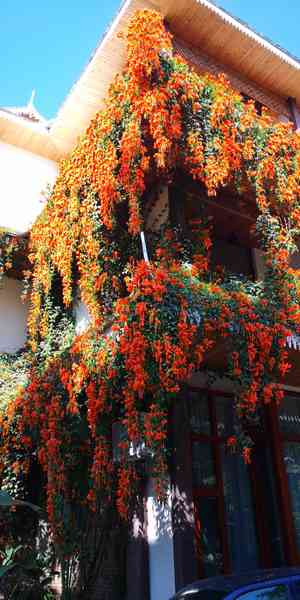
Flamevine (Pyrostegia venusta)
Also known as: Orange Trumpet Creeper
Originating from South America, this climbing vine is known for its stunning blooms. It grows rapidly and demands frequent pruning to manage its growth. The Flamevine, which has spread to various regions globally, has the potential to turn into an invasive weed.
In This Article
Attributes of Flamevine
Lifespan
Perennial
Plant Type
Vine
Plant Height
23 m
Spread
1.8 m to 2.5 m
Leaf Color
Green
Flower Size
5 cm to 8 cm
Flower Color
Orange Yellow Red
Images of Flamevine
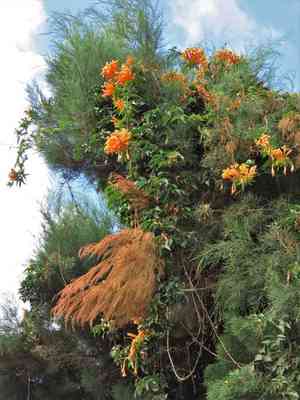
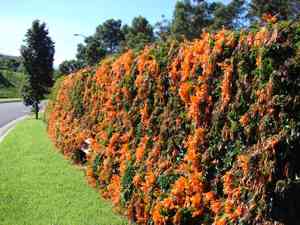
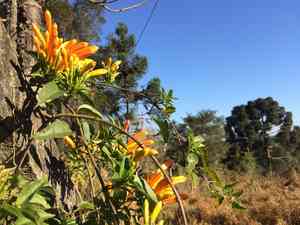
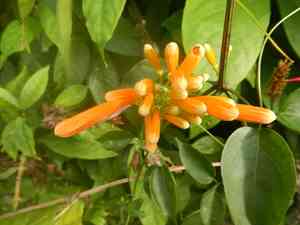
Quickly Identify Flamevine
1
Vibrant orange tubular flowers, 3 inches (7.6 cm) long, in clusters of 15-20.
2
Trifoliate leaves with ovate leaflets and a 3-branched twining tendril.
3
Dry capsule fruit, about 1 foot (30 cm) long, with wind-dispersed winged seeds.
4
Fast-growing tendrils for climbing surfaces and dense foliage that can be pruned.
5
Distinctive bright orange tubular flowers attracting hummingbirds, blooming predominantly in winter.
Scientific Classification of Flamevine
Phylum
Vascular plants
Class
Dicotyledons
Order
Mints plantains olives and allies
Family
Bignonia
Genus
Pyrostegia
Species
Flamevine
Planting and Growing of Flamevine
Care Difficulty
Easy
Watering Schedule
Every 12 days
Sunlight Requirements
Full sun
Sunshine Duration
6-10 hours
Ideal Temperature
60-80℉
Soil Type
Potting Mix, Peat Mix
Soil pH
6.5-7.5
Fertilizer Type
Balanced
Pruning Season
Spring, Summer
Pruning Area
Branches, Leaves
Pruning Frequency
2 times a year
Repotting Season
Spring
Pot Type
Plastic, Ceramic
 How to Water Flamevine?
For Pyrostegia venusta, ensure that the soil is saturated but not waterlogged. Water until the top inch of the soil is thoroughly moist, which usually requires around 500 milliliters per session. It's crucial to let the soil partially dry between waterings to avoid root rot, creating a balance between moisture and dryness.
What are the symptoms of an underwatered Flamevine?
›
What should I do if my Flamevine is not getting enough water?
›
What are the symptoms of an overwatered Flamevine?
›
How to save an overwatered Flamevine?
›
 What Are the Sunlight Requirements for Flamevine?
Ideal light ensures healthy growth and an abundance of vibrant flowers. Full to partial sun provides basic energy needs, fostering structural resilience and extensive blooming.
More About Sunlight Requirements Techniques→
Does Pyrostegia venusta prefer full or partial sun?
›
What is the solution for achieving ideal light conditions?
›
What effects does the ideal lighting have on Pyrostegia venusta?
›
 What Is the Ideal Temperature Range for Flamevine?
Pyrostegia venusta thrives best in temperatures ranging from 60°F to 80°F. This range ensures optimal growth by providing a balance of warmth that is neither too hot nor too cold. Within this temperature range, the plant can effectively carry out its physiological processes like photosynthesis and respiration, leading to vibrant blooms and healthy foliage.
 What Soil is Best for Flamevine?
Pyrostegia venusta thrives in well-draining soils that prevent waterlogging, which can lead to root rot. Loamy soils provide excellent drainage and support the healthy growth of this vigorous vine, ensuring it blooms profusely. This plant benefits from soils rich in organic matter and nutrients, which support its rapid growth and abundant flowering. Nutrient-rich loam or amended sandy soils help in sustaining the lush foliage and intense flowering displays. Moderate to slightly acidic soils, with a pH range from 6.5 to 7.5, are ideal for Pyrostegia venusta. This pH range ensures optimal nutrient uptake, which enhances the plant's vitality and floral extravagance.
 How to Fertilize Flamevine?
For Pyrostegia venusta, the fertilizer amount should be moderate. Over-fertilization can lead to excessive foliage growth at the expense of flowers. Use approximately 10 grams per square meter of water-soluble fertilizer every 2 weeks during the growing season.
 How to Prune Flamevine?
Focus on removing any dead, damaged, or crossing branches first. This will open up the plant, allowing for better air circulation. Trim back to a healthy bud to encourage new growth and maintain an attractive shape. Prune back stems that have finished flowering to stimulate new growth for the next blooming cycle. This strategic pruning not only tidies the vine but also boosts the chances of more profuse flowering in the coming season.
More About Pruning Techniques→
 How to Propagate Flamevine plant?
1
To propagate Pyrostegia venusta from seeds, collect seeds from mature pods during autumn. Ensure seeds are dry and free from any disease. It's crucial to handle seeds gently to avoid any damage.
2
Choose healthy stems from your plant and cut a section around 10-15 cm in length. Remove any lower leaves to prevent decay when planting the cutting.
3
For both seeds and cuttings, plant them in a well-draining soil mix. Maintain a warm environment and keep the soil moist but not wet, as excess water can lead to rot.
 How to Repot Flamevine plant?
1
Pyrostegia venusta, also known as Flame Vine, usually signals the need for repotting when its roots begin to grow through the drainage holes, or you observe a noticeable slowdown in its growth rate. Another sign is if it becomes difficult to keep the plant hydrated due to depleted soil nutrients. Repotting should ideally occur in early spring or autumn when the plant is not in active bloom.
2
Select a pot for your Pyrostegia venusta that is one size larger than its current home, with ample drainage holes to prevent waterlogging. Terra cotta pots are often a good choice as they allow for better airflow, which can help prevent root rot. The right-sized pot allows for healthy root expansion without excessive soil moisture, safeguarding the plant's health.
3
For repotting, a well-draining potting mix is crucial for Pyrostegia venusta. A mixture containing peat, perlite, and sand offers excellent drainage while retaining enough moisture to prevent dehydration. This blend ensures your Flame Vine’s roots remain healthy, preventing issues like root rot and promoting robust growth.
Learn More About Flamevine Diseases
Anthracnose
Bacterial Leaf Spot
Black Spot
Chemical Injury
Crown Gall
Damping-off
Downy Mildew
Drought Stress
Fusarium Wilt
Gray Mold
Leaf Curl
Leaf Spot
Mosaic
Nutrient Deficiency
Nutrient Toxicity
Powdery Mildew
Root Rot
Root-knot Nematode
Rusts
Sooty Mold
Spider Mites
Temperature Stress
Thrips Damage
White Mold



