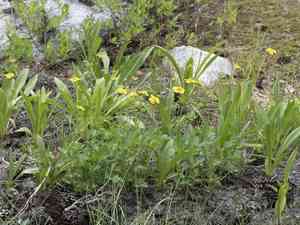
High mountain cinquefoil (Potentilla flabellifolia)
Also known as: Fanleaf cinquefoil
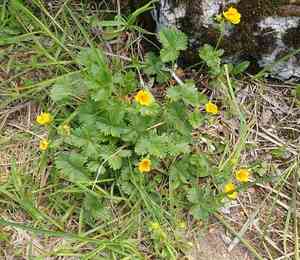
The leaves are ternate, consisting of three leaflets each. The basal leaves are the largest and are supported by long petioles. Each leaflet is oval-shaped, up to 3 cm in length, and features deep, blunt teeth. The plant's inflorescence is a cyme containing one or more flowers. The flowers typically have five yellow petals, each up to 1 cm long, surrounded by pointed sepals and narrower, pointed bractlets.
In This Article
Attributes of High mountain cinquefoil
Lifespan
Perennial
Plant Type
Herb
Plant Height
15 cm to 30 cm
Spread
N/A
Leaf Color
Green
Flower Size
1.3 cm to 2 cm
Flower Color
Yellow
Images of High mountain cinquefoil
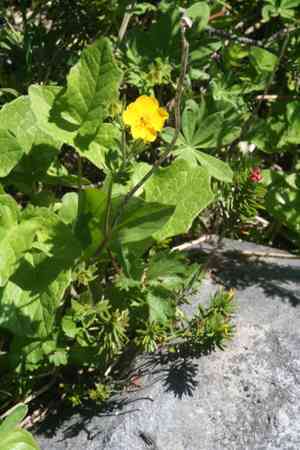
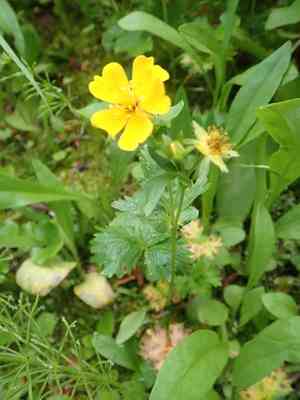
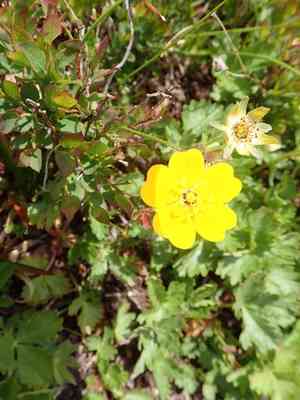
Quickly Identify High mountain cinquefoil
1
Potentilla flabellifolia can be identified by its distinctive fan-shaped leaves, which are divided into several toothed leaflets. The plant typically produces bright yellow, five-petaled flowers that are about an inch in diameter. It grows close to the ground and spreads through stolons.
Scientific Classification of High mountain cinquefoil
Phylum
Vascular plants
Class
Dicotyledons
Order
Rosales
Family
Rose
Genus
Cinquefoils
Species
High mountain cinquefoil
Planting and Growing of High mountain cinquefoil
Care Difficulty
Easy
Watering Schedule
Every 3 days
Sunlight Requirements
Full sun
Sunshine Duration
4-8 hours
Ideal Temperature
55-65℉
Soil Type
Potting Mix, Peat Mix
Soil pH
6.5-7.5
Fertilizer Type
Balanced
Pruning Season
Spring, Summer
Pruning Area
Branches, Leaves
Pruning Frequency
2 times a year
Repotting Season
Spring
Pot Type
Plastic, Ceramic
 How to Water High mountain cinquefoil?
For Potentilla flabellifolia, ensure that the soil remains moist but not waterlogged. Aiming for about 250 milliliters per watering usually suffices. Water until it's visible draining from the pot's base, ensuring roots are adequately supplied but not drowning.
What are the symptoms of an underwatered High mountain cinquefoil?
›
What should I do if my High mountain cinquefoil is not getting enough water?
›
What are the symptoms of an overwatered High mountain cinquefoil?
›
How to save an overwatered High mountain cinquefoil?
›
 What Are the Sunlight Requirements for High mountain cinquefoil?
Full sun allows Potentilla flabellifolia to flourish. This plant benefits from continuous exposure to sunlight, which heightens flowering intensity and leaf vibrancy, contributing to overall robust health.
Optimal Sun Exposure
›
Sunlight Direction Consideration
›
Balancing Shade in High Heat
›
 What Is the Ideal Temperature Range for High mountain cinquefoil?
For optimal growth, Potentilla flabellifolia thrives in temperatures ranging from 55°F to 65°F. This range ensures that the plant has sufficient warmth to sustain photosynthesis and cellular activities while avoiding heat stress. Maintaining these temperatures can help the plant develop healthier foliage and robust blooms.
 What Soil is Best for High mountain cinquefoil?
Potentilla flabellifolia thrives in well-draining soil, which prevents water from pooling around the roots, reducing the risk of root rot. This soil type encourages healthy root growth, leading to a more robust and resilient plant. The plant prefers soil with moderate fertility levels. This provides adequate nutrients without overwhelming the roots, which can support vibrant foliage and a profusion of blooms. Soil should retain moisture without becoming waterlogged. Maintaining a balance of moisture and aeration keeps the roots healthy and supports continuous growth.
 How to Fertilize High mountain cinquefoil?
For Potentilla flabellifolia, fertilizer should be applied sparingly. A general guideline is to apply a balanced liquid fertilizer at a concentration of 20-20-20, diluted to half strength for young plants and full strength for mature plants.
 How to Prune High mountain cinquefoil?
Before you start pruning, take a good look at the plant's overall structure. Identify dead, damaged, and crossing branches that need to be removed to promote better airflow and sunlight penetration. Start by removing any branches that are dead, diseased, or broken. Cut these stems back to a healthy part of the plant or to the base, ensuring a clean cut to prevent further damage. Trim back excessively long stems to shape the plant. Make cuts just above a leaf bud or a branching point to encourage new, healthy growth in the desired direction, enhancing the plant's bushy appearance.
More About Pruning Techniques→
 How to Propagate High mountain cinquefoil plant?
1
Fill a seed tray with a well-draining potting mix, scatter the Potentilla flabellifolia seeds evenly on the surface, and cover lightly with more mix. Keep the soil moist but not waterlogged.
2
Select a healthy stem and cut a 4-6 inch piece below a leaf node. Remove the lower leaves, dip the cut end in rooting hormone, and plant in a pot with moist potting mix.
3
Carefully dig up the mature plant from the soil, and gently separate the root ball into smaller sections with your hands or a sharp knife. Replant the divisions immediately in prepared soil.
 How to Repot High mountain cinquefoil plant?
1
Potentilla flabellifolia shows it’s ready for repotting when roots protrude from the drainage holes or its growth seems stunted. Early spring is the best time as the plant is entering its active growth phase, making it resilient and quick to adapt to the new pot.
2
Select a pot that is one size larger than the current one, equipped with adequate drainage holes. This helps in preventing waterlogging, which is advantageous for Potentilla flabellifolia as it detests sitting in waterlogged conditions, thereby reducing root rot risks.
3
Opt for a well-draining, sandy loam soil mix. This type of soil ensures proper aeration and drainage, preventing root rot and encouraging healthy root development. A mixture with some organic matter further supports nutrient availability.



