Large-leaf pondweed(Potamogeton amplifolius)

Large-leaf pondweed (Potamogeton amplifolius)

Also known as: Large-leaved pondweed

Large-leaf pondweed (Potamogeton amplifolius) is an aquatic plant commonly found in lakes, ponds, and slow-moving streams. It features broad, oval leaves that are typically submerged and can grow up to 20 cm long. These leaves, attached to sturdy, branching stems, are designed to optimize light absorption for photosynthesis. This plant serves several crucial ecological functions:

1. **Habitat and Shelter**: It creates a habitat and provides shelter for fish, invertebrates, and other aquatic organisms.
2. **Food Source**: The leaves and seeds are a food source for herbivorous fish, waterfowl, and other wildlife.
3. **Water Quality Improvement**: By stabilizing sediments and reducing erosion, large-leaf pondweed helps maintain clear water and prevent algal blooms.
4. **Oxygen Production**: It releases oxygen into the water through photosynthesis, supporting diverse aquatic life.

Overall, large-leaf pondweed is essential for maintaining the health and balance of freshwater ecosystems.

Attributes of Large-leaf pondweed

Lifespan
Perennial
Plant Type
Herb
Plant Height
Generally remains submerged, but can reach up to 2 meters in length if the water depth allows.
Spread
Does not have a crown; spreads horizontally across water bodies.
Leaf Color
Leaves are green, with floating leaves being darker and submerged leaves lighter in color.
Flower Size
The flowers are tiny and inconspicuous, typically less than 1 cm in diameter.
Flower Color
Greenish or brownish.

ForwardPlant - Identify plants with a snap

Identify and diagnose plants, get toxicity alerts, and explore safety guides for all types of fungi.

Try for Free

Images of Large-leaf pondweed

Large-leaf pondweed(Potamogeton amplifolius)

Quickly Identify Large-leaf pondweed

1
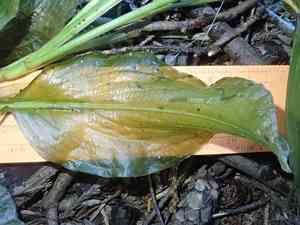
Identification can be done by observing the broad, oblong to oval floating leaves which are usually 5-15 cm long and 3-8 cm wide. The submerged leaves are often broader and lighter green.

Scientific Classification of Large-leaf pondweed

Phylum
Vascular plants
Class
Monocotyledons
Order
Alismatales
Family
Pondweed
Genus
pondweeds
Species
Large-leaf pondweed

Planting and Growing of Large-leaf pondweed

Care Difficulty
Easy
Watering Schedule
Every 3 days
Sunlight Requirements
Partial sun
Sunshine Duration
10-12 hours
Ideal Temperature
65-75℉
Soil Type
Potting Mix, Peat Mix
Soil pH
6.5-7.5
Fertilizer Type
Balanced
Pruning Season
Spring, Summer
Pruning Area
Branches, Leaves
Pruning Frequency
2 times a year
Repotting Season
Spring
Pot Type
Plastic, Ceramic

water icon How to Water Large-leaf pondweed?

For Potamogeton amplifolius, you should water it thoroughly each time, ensuring the soil is saturated. A good rule is to provide about 500ml of water per watering session. This plant thrives in wet conditions similar to its natural aquatic habitat, so keep the soil consistently moist but not waterlogged.
What are the symptoms of an underwatered Large-leaf pondweed?
What should I do if my Large-leaf pondweed is not getting enough water?
What are the symptoms of an overwatered Large-leaf pondweed?
How to save an overwatered Large-leaf pondweed?

sunlight icon What Are the Sunlight Requirements for Large-leaf pondweed?

Sunlight Requirements: Partial sun
Duration of light: 4 to 6 hours daily
Partial sun is ideal for Potamogeton amplifolius. This range ensures the plant receives adequate light for photosynthesis while protecting it from excessive exposure. Sufficient light promotes vigorous foliage growth, enhances oxygen production, and supports the plant’s ecological role in its aquatic habitat.
What is the ideal amount of sunlight for Potamogeton amplifolius?
How can I achieve the ideal lighting for Potamogeton amplifolius?
What are the benefits of providing Potamogeton amplifolius with ideal lighting?

temperature icon What Is the Ideal Temperature Range for Large-leaf pondweed?

Ideal Temperature: 65 ~ 75℉
The ideal temperature range for Potamogeton amplifolius is crucial as it supports optimal growth and metabolic activities. Maintaining temperatures between 65°F and 75°F ensures the plant thrives, providing conditions that mimic its natural habitat. Such temperatures support healthy photosynthesis and nutrient uptake, which are vital for the plant's overall health and development. Avoiding temperatures outside this range can prevent stress, promote vigorous growth, and minimize the risk of diseases.

soil icon What Soil is Best for Large-leaf pondweed?

Soil type: Loam, Sandy loam
Soil PH: 6.5 ~ 7.5
Potamogeton amplifolius thrives in nutrient-rich loam as it supports robust growth and vibrant leaves. Adequate levels of nutrients ensure proper photosynthesis which keeps the plant healthy in aquatic settings. While Potamogeton amplifolius is an aquatic plant, its roots benefit from loamy substrate that drains well. Proper drainage prevents stagnation and root rot, promoting vigorous growth and stability. A consistent moisture level in loamy soil is crucial for Potamogeton amplifolius as it relies on submerged conditions to absorb nutrients. This leads to optimum plant vitality in its habitat.

fertilize icon How to Fertilize Large-leaf pondweed?

Fertilizer type: Balanced
Potamogeton amplifolius requires careful attention to fertilizer quantity. Generally, a moderate application of liquid fertilizer—using a balanced formula—is advisable for this aquatic plant. Apply approximately 5 ml of liquid fertilizer per 10 liters of water to promote healthy growth.

prune icon How to Prune Large-leaf pondweed?

Pruning Time: Spring, Summer, Autumn
Begin by identifying and removing any dead or decaying leaves, which helps reduce the plant's vulnerability to diseases. Next, thin out dense areas to improve light penetration and water circulation, cutting back to about a third of the plant's length. Be sure to prune in a manner that enhances the natural shape of the plant. More About Pruning Techniques

propagate icon How to Propagate Large-leaf pondweed plant?

Propagate Time: Spring, Early spring, Late spring
1
Begin by soaking Potamogeton amplifolius seeds overnight in warm water to soften the seed coat. This helps promote quicker germination. After soaking, plant seeds in seed-starting trays filled with a suitable aquatic plant soil mix.
2
Carefully dig out the mature plants from their container or aquatic environment. Use clean pruning shears to separate root clumps, ensuring that each section has both roots and shoots. Replant the divisions in suitable aquatic conditions.
3
Ensure that the newly sown seeds or plant divisions are placed in water temperatures that are suitable for aquatic plants, ideally between 18-24°C. Maintain optimal light exposure and ensure the water is clean and free of pollutants.
More About Propagating Techniques

repot icon How to Repot Large-leaf pondweed plant?

Repotting frequency: Every 2-3 years
1
Potamogeton amplifolius signals it's time for a new pot when its roots overflow or it shows reduced growth. Ideally, repot during warmer months for optimal recovery and growth.
2
Look for a larger pot that allows extensive root expansion and ensures stability underwater. This not only fosters healthy growth but also guards against potential toppling.
3
Opt for a rich aquatic compost that can retain adequate moisture and supply essential nutrients. Such soil encourages robust growth by mimicking the plant's natural aquatic habitat.

ForwardPlant - Identify plants with a snap

Find the best spots for them to optimize their health, simply using your phone.

Try for Free