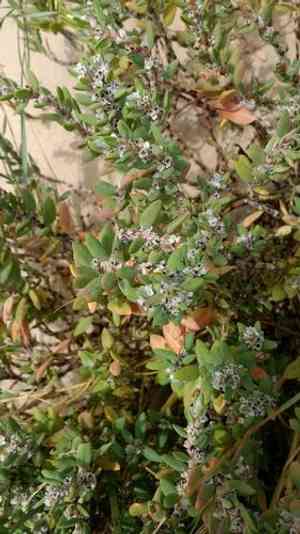
Sea knotgrass (Polygonum maritimum)
Also known as: Ray's knotgrass
Sea knotgrass is a coastal perennial commonly found on sandy and pebbly beaches. Its Latin name, "Polygonum maritimum," combines "Polygonum," meaning "many joints," highlighting the plant’s characteristic jointed stems, and "maritimum," indicating its seaside habitat. This name aptly describes both its physical structure and its typical environment.
In This Article
Attributes of Sea knotgrass
Lifespan
Perennial
Plant Type
Shrub
Plant Height
10 cm to 50 cm
Spread
30-50 cm (12-20 inches)
Leaf Color
Green
Flower Size
2-5 mm
Flower Color
White Green
Images of Sea knotgrass
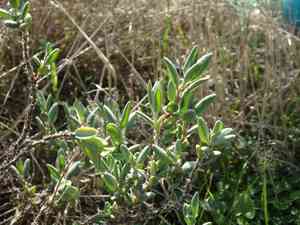
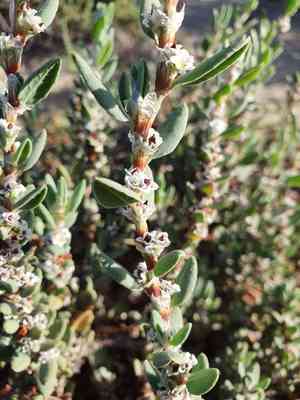
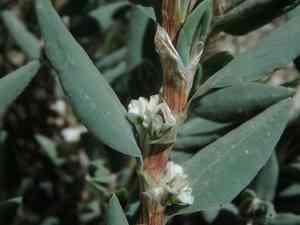
Quickly Identify Sea knotgrass
1
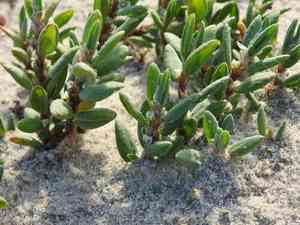
Sea knotgrass can be identified by its sprawling habit, small oval leaves, and tiny pink or white flowers that grow in compact clusters. The plant often forms dense mats on sandy soils.
Scientific Classification of Sea knotgrass
Phylum
Vascular plants
Class
Dicotyledons
Order
Caryophyllales
Family
Buckwheat
Genus
Knotweeds
Species
Sea knotgrass
Planting and Growing of Sea knotgrass
Care Difficulty
Easy
Watering Schedule
Every 2 days
Sunlight Requirements
Full sun
Sunshine Duration
4-8 hours
Ideal Temperature
60-75℉
Soil Type
Potting Mix, Peat Mix
Soil pH
6.5-7.5
Fertilizer Type
Balanced
Pruning Season
Spring, Summer
Pruning Area
Branches, Leaves
Pruning Frequency
2 times a year
Repotting Season
Spring
Pot Type
Plastic, Ceramic
 How to Water Sea knotgrass?
For Polygonum maritimum, the watering amount should be sufficient to moisten the top soil layer, approximately 200 ml. Adjust your watering volume to ensure the soil is damp but not waterlogged, mimicking the plant's natural seaside habitat.
What are the symptoms of an underwatered Sea knotgrass?
›
What should I do if my Sea knotgrass is not getting enough water?
›
What are the symptoms of an overwatered Sea knotgrass?
›
How to save an overwatered Sea knotgrass?
›
 What Are the Sunlight Requirements for Sea knotgrass?
Semi-direct bright light is ideal, offering the benefits of full sun without the risk of burning. Adequate lighting increases photosynthesis, boosting growth and bloom production.
Optimal Sunlight Duration
›
Solution for Ideal Lighting
›
Benefits of Ideal Lighting
›
 What Is the Ideal Temperature Range for Sea knotgrass?
The ideal temperature range for growing Polygonum maritimum is between 60°F and 75°F. In this range, the plant can efficiently perform its physiological processes such as photosynthesis, transpiration, and nutrient uptake. Maintaining this temperature range helps in promoting optimal growth and development, making the plant more resilient to pests and diseases. Adequate temperature ensures the plant's metabolic rate is at its best, leading to healthy foliage and potentially better flowering outcomes.
 What Soil is Best for Sea knotgrass?
Polygonum maritimum thrives in well-draining soil to prevent waterlogging and root rot. This characteristic ensures that the roots receive sufficient oxygen, promoting robust growth and vitality. The plant prefers soil with moderate fertility. While it does not require rich soil, a moderate amount of nutrients supports its growth and flowering without overwhelming it with excessive nutrients. Given its natural habitat near coastal areas, Polygonum maritimum requires soil that can withstand saline conditions. The ability to tolerate salty soil ensures its survival in its native environment.
 How to Fertilize Sea knotgrass?
For Polygonum maritimum, a light application of balanced fertilizer is sufficient. Use about 1 tablespoon of granular fertilizer per plant or a diluted liquid fertilizer, mixing 1 teaspoon per gallon of water, to avoid overfeeding.
 How to Prune Sea knotgrass?
Begin by removing any dead or diseased stems at the base with clean cuts. Focus on thinning out crowded areas to promote airflow and prevent fungal infections. For shaping, cut just above a node to encourage branching. After pruning, water the plant to help it recover from the stress and consider applying a balanced fertilizer to provide necessary nutrients. Monitor for any signs of distress or disease.
More About Pruning Techniques→
 How to Propagate Sea knotgrass plant?
1
Choose high-quality seeds from a reliable source to ensure good germination rates. Check that the seeds are not expired and are free from damages. Seeds collected from mature plants offer the best success for propagation.
2
For cuttings, choose healthy, non-flowering stems. Using clean pruners, cut a piece about 4-6 inches long. Remove the lower leaves, leaving a couple at the top. This will help the cutting focus energy on forming roots rather than supporting leaves.
3
Plant seeds or cuttings in moist soil or a potting mix. For seeds, cover them lightly with soil; for cuttings, insert them into the soil about 2 inches deep. Place them in a warm, bright area with indirect sunlight and keep the soil consistently moist but not soggy.
 How to Repot Sea knotgrass plant?
1
Monitor the roots of Polygonum maritimum; if they start to circle the pot or emerge from drainage holes, it's high time to repot. These signs indicate that the plant has no more space to grow, which can stifle its development and overall health.
2
Choose a pot that is one size larger than the current one to accommodate future growth. Select a pot with ample drainage to prevent waterlogging. This helps to prevent root rot and ensures the roots have room to expand, supporting healthier plant growth.
3
Opt for well-draining, sandy soil that mimics the plant's natural coastal habitat. This type of soil allows excess water to easily escape, reducing the risk of root rot while providing a stable anchoring medium for the plant.
Learn More About Sea knotgrass Diseases
Anthracnose
Bacterial Leaf Spot
Bacterial Soft Rot
Bacterial Wilt
Chemical Injury
Crown Gall
Cyst Nematode
Damping-off
Downy Mildew
Drought Stress
Fusarium Wilt
Gray Mold
Leaf Spot
Mosaic
Nutrient Deficiency
Nutrient Toxicity
Powdery Mildew
Root Rot
Root-knot Nematode
Rusts
Sooty Mold
Spider Mites
Temperature Stress
Thrips Damage
White Mold



