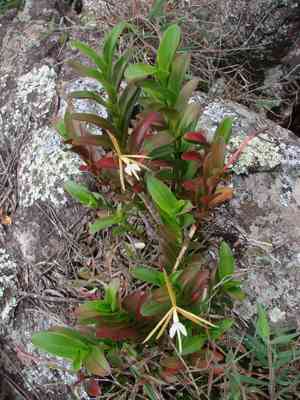
Waxy bonnet orchid (Pleurothallis pruinosa)
Also known as: None
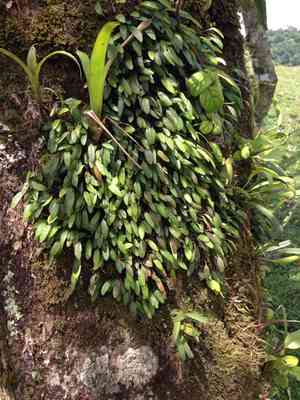
The waxy bonnet orchid, known for its velvety texture, is commonly found in humid forest environments where it often grows on tree trunks. This orchid features small, lush leaves that cluster closely together, with subtle flowers that merge seamlessly with the foliage. Adapted to life in the forest canopy, it flourishes under the dappled light that filters through the treetops, showcasing its elegant adaptability.
In This Article
Attributes of Waxy bonnet orchid
Lifespan
Perennial
Plant Type
Herb
Plant Height
2-6 inches
Spread
2-4 inches
Leaf Color
Green
Flower Size
0.5-1 cm
Flower Color
Cream-colored with purplish hue
Images of Waxy bonnet orchid
Quickly Identify Waxy bonnet orchid
1
Identify Pleurothallis pruinosa by its thin, elongated leaves and small, cream-colored flowers with a purplish hue. The flowers often have a slight waxy or frosted appearance.
Scientific Classification of Waxy bonnet orchid
Phylum
Vascular plants
Class
Monocotyledons
Order
Asparagales
Family
Orchid
Genus
Bonnet orchid
Species
Waxy bonnet orchid
Planting and Growing of Waxy bonnet orchid
Care Difficulty
Hard
Watering Schedule
Every 4 days
Sunlight Requirements
Partial sun
Sunshine Duration
4-8 hours
Ideal Temperature
60-75℉
Soil Type
Potting Mix, Peat Mix
Soil pH
6.5-7.5
Fertilizer Type
Balanced
Pruning Season
Spring, Summer
Pruning Area
Branches, Leaves
Pruning Frequency
2 times a year
Repotting Season
Spring
Pot Type
Plastic, Ceramic
 How to Water Waxy bonnet orchid?
Pleurothallis pruinosa prefers consistent moisture but not waterlogging. Watering with about 100 ml each time allows the roots to absorb moisture efficiently without over-saturating the soil. Check that water penetrates evenly, keeping the medium slightly damp rather than wet.
What are the symptoms of an underwatered Waxy bonnet orchid?
›
What should I do if my Waxy bonnet orchid is not getting enough water?
›
What are the symptoms of an overwatered Waxy bonnet orchid?
›
How to save an overwatered Waxy bonnet orchid?
›
 What Are the Sunlight Requirements for Waxy bonnet orchid?
Partial sun with dappled sunlight is ideal, allowing for robust growth and flowering. Providing this light range ensures healthier plant development and a stronger bloom production cycle.
Best Light Environment
›
Preferred Light Intensity
›
Adjusting Seasons
›
 What Is the Ideal Temperature Range for Waxy bonnet orchid?
The ideal temperature range for Pleurothallis pruinosa is between 60°F and 75°F. This temperature range provides a favorable environment that mimics the plant's natural habitat. These conditions encourage optimal growth, flowering, and general health. Adequate ventilation and humidity should accompany this temperature to ensure the plant thrives.
 What Soil is Best for Waxy bonnet orchid?
Pleurothallis pruinosa requires soil that retains adequate moisture without becoming waterlogged. A loam or sandy loam soil type is ideal because it holds moisture yet drains excess water effectively. This balance is crucial for preventing root rot while keeping the plant hydrated. Rich in organic matter, the soil should provide essential nutrients to support healthy growth. Regular addition of compost can help in maintaining the nutrient balance, which encourages robust flowering and healthy foliage development in Pleurothallis pruinosa. The soil must be well-aerated to allow roots to breathe. This is typically achieved with a loose, crumbly soil structure like loam, which supports the rhizome system of Pleurothallis pruinosa, facilitating better nutrient uptake and overall plant health.
 How to Fertilize Waxy bonnet orchid?
When fertilizing Pleurothallis pruinosa, use a balanced liquid fertilizer diluted to half-strength. Apply approximately 1 teaspoon (5 ml) of this diluted solution per quart (1 liter) of water. For slow-release fertilizers, use about a quarter of an ounce (7 grams) per pot.
 How to Prune Waxy bonnet orchid?
Begin by gently removing any dead leaves or stems from the base. Ensure you cut as close to the main stem as possible without harming healthy tissue. This encourages new growth and helps maintain plant vitality. While pruning is beneficial, ensure you do not remove more than one-third of the plant at once. Excessive pruning can stress the plant, leading to poor growth or even plant death.
More About Pruning Techniques→
 How to Propagate Waxy bonnet orchid plant?
1
Carefully remove Pleurothallis pruinosa from its pot, gently shaking off excess soil to expose the roots. Inspect and identify natural divisions to separate.
2
Using a sterilized knife, slice through the rhizomes between sections of the plant, ensuring each division has healthy roots and pseudobulbs for optimal regrowth.
3
Place each division into a pot filled with a suitable growth medium, ensuring stability and adequate space for root expansion. Lightly water to settle the medium.
 How to Repot Waxy bonnet orchid plant?
1
Repot Pleurothallis pruinosa when you notice roots growing vigorously through the drainage holes or when the potting mix starts to break down. Spring and autumn offer optimal conditions as the plant experiences less stress and can adjust to new conditions readily.
2
Select a pot that is just a size larger than the current one, offering the roots some room to expand. This plant enjoys a snug fit, reducing root disturbance and encouraging better growth and stability.
3
Use an orchid potting mix comprising fine bark and perlite, offering excellent drainage while retaining necessary moisture. This prevents waterlogging and promotes healthy root development, crucial for Pleurothallis pruinosa.



