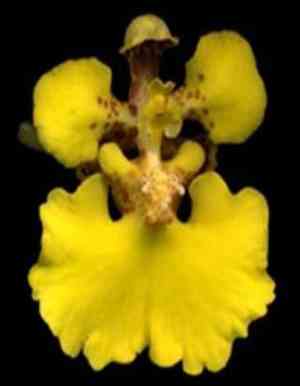
Slender bog orchid (Platanthera stricta)
Also known as: Slender Bog Orchid
This plant develops a tall, slender flowering stem that can reach approximately 80 cm in height. The inflorescence features green flowers that are often spaced out along the stem, occasionally showing hints of red or purple hues. Each flower is distinguished by a club-shaped spur.
In This Article
Attributes of Slender bog orchid
Lifespan
Perennial
Plant Height
20 cm to 97 cm
Spread
N/A
Leaf Color
Green
Flower Size
0.5-1 cm
Flower Color
Greenish-white
Images of Slender bog orchid
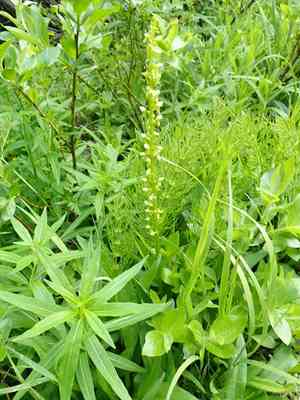
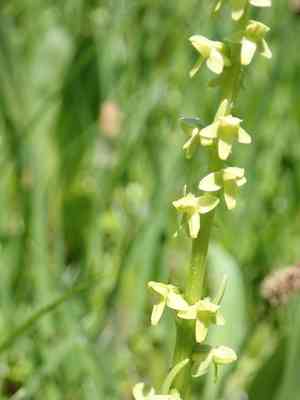
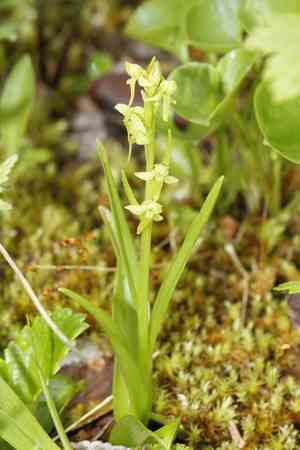
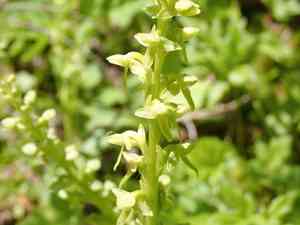
Quickly Identify Slender bog orchid
1
Look for tall, slender stems up to 100 cm in height, with narrow, lance-shaped leaves. The flower spike consists of small, greenish-white, fragrant flowers.
Scientific Classification of Slender bog orchid
Phylum
Vascular plants
Class
Monocotyledons
Order
Asparagales
Family
Orchid
Genus
Bog orchids
Species
Slender bog orchid
Planting and Growing of Slender bog orchid
Care Difficulty
Hard
Watering Schedule
Every 3 days
Sunlight Requirements
Partial sun
Sunshine Duration
8-12 hours
Ideal Temperature
55-75℉
Soil Type
Potting Mix, Peat Mix
Soil pH
6.5-7.5
Fertilizer Type
Balanced
Pruning Season
Spring, Summer
Pruning Area
Branches, Leaves
Pruning Frequency
2 times a year
Repotting Season
Spring
Pot Type
Ceramic, Plastic
 How to Water Slender bog orchid?
When watering Platanthera stricta, aim to provide approximately 250 milliliters per session. The soil should be moist to touch but not over-saturated. Ensure that the water drains well to avoid root rot, as these orchids thrive in moist yet well-drained conditions.
What are the symptoms of an underwatered Slender bog orchid?
›
What should I do if my Slender bog orchid is not getting enough water?
›
What are the symptoms of an overwatered Slender bog orchid?
›
How to save an overwatered Slender bog orchid?
›
 What Are the Sunlight Requirements for Slender bog orchid?
Platanthera stricta prefers partial sun, meaning 3 to 6 hours of sunlight daily. This range maintains leaf health, supports adequate flower production, and harmonizes plant biological rhythms with environmental conditions.
Is Platanthera stricta a sun-loving plant?
›
How can I provide optimal light conditions for this plant?
›
What benefits arise from ideal lighting conditions?
›
 What Is the Ideal Temperature Range for Slender bog orchid?
For healthy growth, Platanthera stricta thrives best between 55°F and 75°F. Within this temperature range, the plant can efficiently carry out photosynthesis and maintain its metabolic activities. This range ensures the orchid does not experience thermal stress, which can lead to improved flower production and robust growth.
 What Soil is Best for Slender bog orchid?
Platanthera stricta thrives in well-drained soil conditions, ensuring that the roots are not sitting in water, which can prevent root rot and promote healthy growth. This plant species prefers consistently moist soil, which mimics its natural habitat in meadows and wetlands, allowing it to absorb nutrients effectively. Moderately fertile soils are ideal for this plant, providing the necessary nutrients without overwhelming growth, which helps in maintaining its natural stature and flowering ability.
 How to Fertilize Slender bog orchid?
For Platanthera stricta, it's essential to use a balanced fertilizer with an NPK ratio of 10-10-10. Use about half a teaspoon of liquid fertilizer per plant per session to ensure adequate nutrient supply without overwhelming the plant's natural growth processes.
 How to Prune Slender bog orchid?
For Platanthera stricta, often known as the slender bog orchid, pruning is relatively minimal. Use sterilized scissors to remove dead or weak stems in early spring before new growth appears. This allows the plant to focus its energy on healthy growth. Be gentle to avoid damping off or damaging the root system.
More About Pruning Techniques→
 How to Propagate Slender bog orchid plant?
1
Use a well-draining orchid mix or a combination of sphagnum moss and perlite. Sterilize the soil to eliminate any pathogens that could harm the seeds or seedlings.
2
Evenly sprinkle the seeds onto the prepared soil surface. Do not cover them with soil as orchid seeds require light for germination.
3
Maintain a temperature of around 20-25°C and high humidity. Use a mini greenhouse or a clear plastic cover to create a suitable microclimate.
 How to Repot Slender bog orchid plant?
1
Repotting Platanthera stricta is typically required when roots become visible at the pot's surface or the soil seems compact. Signs like yellowing leaves or slowed growth may also indicate the need to repot. Ideally, choose early spring or summer when outdoor conditions support active growth and recovery.
2
Select a pot that is one size larger than the current one, offering extra space for root expansion without overwhelming the plant. Ensure the pot has good drainage holes; this prevents waterlogging, facilitating healthy root development and avoiding root rot. A stable pot material like terracotta can offer added breathability.
3
Choose a well-draining orchid mix that mimics the plant’s natural habitat. This type of soil ensures that moisture is retained for root sustenance while avoiding water accumulation. Organic matter in the mix aids in providing necessary nutrients, ensuring sturdy growth and vibrant blooms.
Learn More About Slender bog orchid Diseases
Anthracnose
Bacterial Leaf Spot
Bacterial Soft Rot
Bacterial Wilt
Chemical Injury
Crown Gall
Cyst Nematode
Damping-off
Downy Mildew
Drought Stress
Fusarium Wilt
Gray Mold
Leaf Spot
Mosaic
Nutrient Deficiency
Nutrient Toxicity
Powdery Mildew
Root Rot
Root-knot Nematode
Rusts
Sooty Mold
Spider Mites
Temperature Stress
Thrips Damage
White Mold



