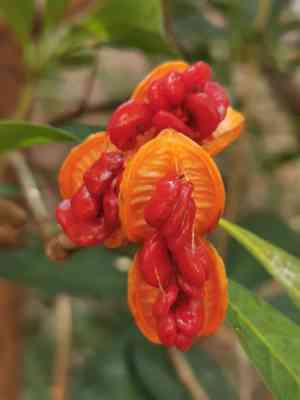
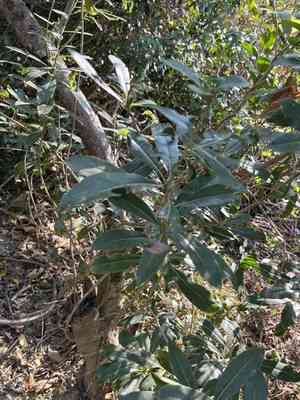
Taiwanese cheesewood (Pittosporum pentandrum)
Also known as: Taiwan Cheesewood, Five-leaved Pittosporum
Pittosporums are a diverse genus of about 200 species of flowering plants within the Pittosporaceae family. Originating possibly from the ancient supercontinent Gondwana, these plants are now found in regions including Australasia, Oceania, eastern Asia, and parts of Africa. Known commonly as pittosporums or cheesewoods, they range from small shrubs to trees that can reach up to 30 meters in height. Their leaves are simple, either spirally arranged or whorled, and can have entire, wavy, or occasionally lobed margins.
The flowers of pittosporums are typically fragrant and can appear singly or in clusters like umbels or corymbs. Each flower consists of five sepals and five petals. The fruit is a woody capsule that splits open upon ripening to release many seeds, which are covered in a sticky, resinous substance—a trait from which the genus gets its name, derived from Greek for "pitch-seed."
Several species are popular in ornamental horticulture, such as the New Zealand natives Tarata (P. eugenioides) and Kohuhu (P. tenuifolium), as well as the Japanese cheesewood (P. tobira). These plants can also be cultivated indoors as bonsai. Additionally, the petroleum nut (P. resiniferum) is noted for its oil, which is considered for biofuel due to its high n-heptane content.
Despite their resilience, ornamental pittosporums are susceptible to certain pests and diseases. Common pests include:
1. **Aphids**: These small insects extract sap from new growth, causing deformations.
2. **Scale Insects**: They adhere to stems and leaves, feeding on sap and exuding honeydew, which can result in sooty mold.
3. **Spider Mites**: These tiny creatures cause leaf stippling and discoloration.
Diseases that affect pittosporums include:
1. **Root Rot**: Typically resulting from overwatering or poor drainage, leading to wilted and yellowing leaves.
2. **Leaf Spot**: Fungal infections that create dark spots on leaves, causing them to fall prematurely.
3. **Sooty Mold**: A black fungus that grows on the honeydew produced by pests like aphids and scales.
Regular care and monitoring are essential for keeping these plants healthy and pest-free.
Attributes of Taiwanese cheesewood
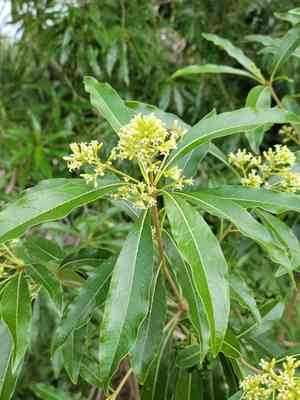
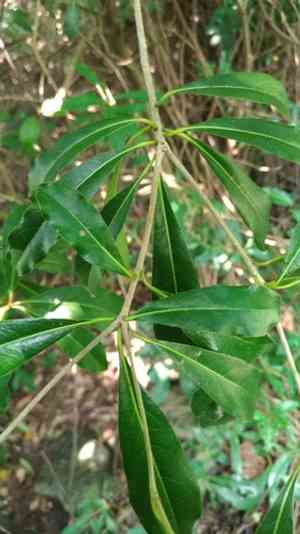
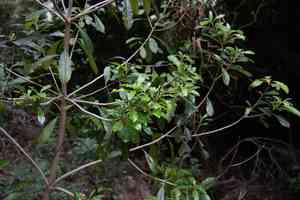
Images of Taiwanese cheesewood
 How to Water Taiwanese cheesewood?
 What Are the Sunlight Requirements for Taiwanese cheesewood?
 What Is the Ideal Temperature Range for Taiwanese cheesewood?
 What Soil is Best for Taiwanese cheesewood?
 How to Fertilize Taiwanese cheesewood?
 How to Prune Taiwanese cheesewood?
 How to Propagate Taiwanese cheesewood plant?
 How to Repot Taiwanese cheesewood plant?



