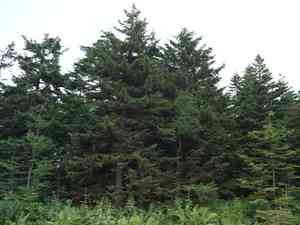
Sakhalin spruce (Picea glehnii)
Also known as: Glehn's spruce
Sure, here’s a revised version with significant differences:
The tree features robust, pyramid-shaped branches. Its trunk measures approximately 62 to 73 cm in diameter and is covered with rough bark. Buds are generally 3 to 7 mm in length and about 5 mm in width, adopting a conical or oval shape. The needles are somewhat curved and quadrangular. Mature needles are blunt, whereas younger ones are pointed and exhibit a bluish-green hue. The cones are oblong or oval with a nearly flat base, ranging from 2 to 4 cm in thickness and 3.5 to 9 cm in length.
In This Article
Attributes of Sakhalin spruce
Lifespan
Perennial
Plant Type
Tree
Plant Height
24 m to 30 m
Spread
4-6 meters
Leaf Color
Bluish-green
Flower Size
N/A - Does not flower in traditional sense
Flower Color
N/A - Does not flower in traditional sense
Images of Sakhalin spruce
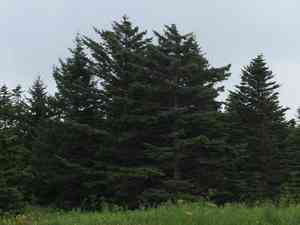
Quickly Identify Sakhalin spruce
1
Identification can be done through its slender cones, which are about 3-6 cm in length, and its needle-like leaves that are bluish-green on the upper side and blue-white on the lower side.
Scientific Classification of Sakhalin spruce
Phylum
Vascular plants
Class
Conifers
Order
Pinales
Family
Pine
Genus
Spruces
Species
Sakhalin spruce
Planting and Growing of Sakhalin spruce
Care Difficulty
Hard
Watering Schedule
Every 2 days
Sunlight Requirements
Partial sun
Sunshine Duration
6-10 hours
Ideal Temperature
50-68℉
Soil Type
Potting Mix, Peat Mix
Soil pH
4.5-6
Fertilizer Type
Balanced
Pruning Season
Spring, Summer
Pruning Area
Branches, Leaves
Pruning Frequency
2 times a year
Repotting Season
Spring
Pot Type
Plastic, Terracotta
 How to Water Sakhalin spruce?
When watering Picea glehnii, ensure the soil is deeply soaked to mimic natural conditions. Water thoroughly so that moisture reaches deep roots, approximately 300ml each time, ensuring soil is moist but not flooded. Proper drainage is crucial.
What are the symptoms of an underwatered Sakhalin spruce?
›
What should I do if my Sakhalin spruce is not getting enough water?
›
What are the symptoms of an overwatered Sakhalin spruce?
›
How to save an overwatered Sakhalin spruce?
›
 What Are the Sunlight Requirements for Sakhalin spruce?
Partial sun conditions offer optimal light balance. Regular sunlight ensures vigorous growth and energy production for photosynthesis, supporting overall plant health, resilience, and a lush visual appearance.
Optimal Light Duration
›
Ideal Sun Intensity
›
Sun Orientation
›
 What Is the Ideal Temperature Range for Sakhalin spruce?
Picea glehnii thrives in a cool climate where temperatures range between 50°F and 68°F. Maintaining these temperatures promotes healthy growth and optimal development for this species. Conditions outside this range may stress the plant and affect its health.
 What Soil is Best for Sakhalin spruce?
Picea glehnii thrives in well-drained soils because they prevent waterlogging, which can be detrimental to the root system. Ensuring proper drainage is essential to avoid rot and promote healthy growth. This species requires soil that retains some moisture, allowing it to access water between rains. Sandy loam offers a balance of drainage and moisture retention, supporting sustained growth. Picea glehnii benefits from a nutrient-rich soil, which can be achieved through the incorporation of organic matter. This enhances soil fertility and aids in the plant’s overall health and vigor.
 How to Fertilize Sakhalin spruce?
For Picea glehnii, apply a moderate amount of fertilizer to avoid over-fertilization. Use approximately 100 grams of slow-release granules spread evenly around the base of the tree, avoiding direct contact with the trunk.
 How to Prune Sakhalin spruce?
Keep an eye out for signs of pest infestations, as these can further damage freshly pruned areas. Appropriate treatment is essential if infestation is found. Be cautious not to remove more than one-third of the tree’s foliage at any pruning session. Over-pruning can stress the tree and hinder its growth.
More About Pruning Techniques→
 How to Propagate Sakhalin spruce plant?
1
Collect seeds from mature cones, clean them to remove any debris, and stratify them in a refrigerator for at least a month to break dormancy before planting.
2
Select healthy branches for cuttings, ideally semi-hardwood, from the current or previous year's growth. Use sharp shears to cut sections that are about 6-8 inches long.
3
Select compatible rootstock and scion. Ensure both are healthy and make a slanting cut on each to create maximum contact surface for successful grafting.
 How to Repot Sakhalin spruce plant?
1
Picea glehnii shows signs it needs repotting when its roots begin circling the pot or protruding from the drainage holes. Additionally, when the soil no longer retains moisture well or the tree appears stunted in growth, it's time for a new pot.
2
Select a pot that is slightly larger than the current one, with ample drainage holes. Opting for a pot that is too large can lead to excessive soil moisture, which might harm the roots. The right-sized pot facilitates balanced growth and prevents root rot.
3
Pick a soil mixture specifically designed for conifers, emphasizing proper aeration and drainage. Such soil ensures that Picea glehnii's roots breathe well and aren't waterlogged, promoting healthier growth and reducing fungal infections.



