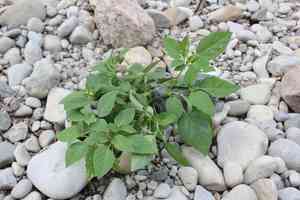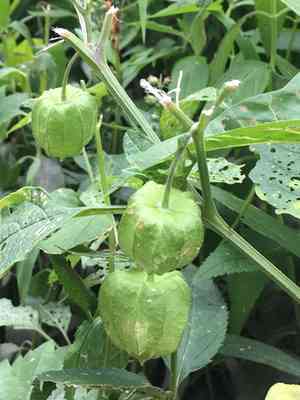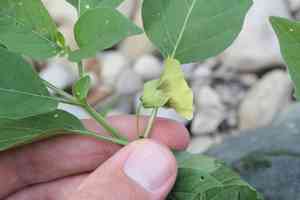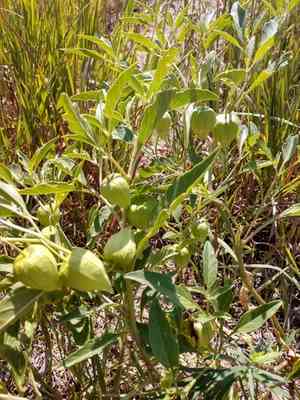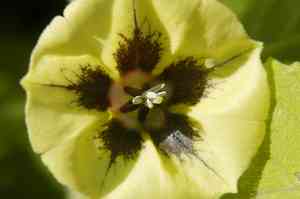
Longleaf groundcherry(Physalis longifolia)

Longleaf groundcherry (Physalis longifolia)

Also known as: Wild tomatillo

The Longleaf Groundcherry (Physalis longifolia), commonly called the "Wild Tomatillo," produces yellowish-green fruit that tastes similar to an unripe strawberry. This plant is native to North America.

Attributes of Longleaf groundcherry

Lifespan
Perennial
Plant Type
Herb
Plant Height
30 cm to 1.02 m
Spread
30 cm
Leaf Color
Green
Flower Size
1.3 cm to 1.9 cm
Flower Color
Yellow

ForwardPlant - Identify plants with a snap

Identify and diagnose plants, get toxicity alerts, and explore safety guides for all types of fungi.

Try for Free

Images of Longleaf groundcherry

Longleaf groundcherry(Physalis longifolia)

Quickly Identify Longleaf groundcherry

1
Physalis longifolia can be identified by its leaves which are long and elliptical, yellow bell-shaped flowers with five lobes, and distinctive lantern-like husks that encase its berries. The plant often grows in disturbed soils and reaches a height of 30-60 cm.

Scientific Classification of Longleaf groundcherry

Phylum
Vascular plants
Class
Dicotyledons
Order
Solanales
Family
Nightshade
Genus
Physalis
Species
Longleaf groundcherry

Planting and Growing of Longleaf groundcherry

Care Difficulty
Easy
Watering Schedule
Every 4 days
Sunlight Requirements
Full sun
Sunshine Duration
6-10 hours
Ideal Temperature
68-86℉
Soil Type
Potting Mix, Peat Mix
Soil pH
6.5-7.5
Fertilizer Type
Balanced
Pruning Season
Spring, Summer
Pruning Area
Branches, Leaves
Pruning Frequency
2 times a year
Repotting Season
Spring
Pot Type
Plastic, Terracotta

water icon How to Water Longleaf groundcherry?

For Physalis longifolia, water it deeply until the soil is evenly moist but not waterlogged. Ideally, you should allow the top 2 inches of soil to dry out a bit before the next watering session. This approach ensures that the roots have ample access to water while preventing root rot.
What are the symptoms of an underwatered Longleaf groundcherry? ›
What should I do if my Longleaf groundcherry is not getting enough water? ›
What are the symptoms of an overwatered Longleaf groundcherry? ›
How to save an overwatered Longleaf groundcherry? ›

sunlight icon What Are the Sunlight Requirements for Longleaf groundcherry?

Sunlight Requirements: Full sun, Partial sun
Duration of light: 6-8 hours daily
Physalis longifolia's ideal light exposure falls under full sun to partial sun conditions. Consistent and adequate light ensures robust growth, abundant flowering, and vibrant foliage, contributing to a healthy and thriving plant.
How much light does Physalis longifolia need? ›
What is the best location for Physalis longifolia? ›
Can Physalis longifolia tolerate shade? ›

temperature icon What Is the Ideal Temperature Range for Longleaf groundcherry?

Ideal Temperature: 68 ~ 86℉
Physalis longifolia, also known as longleaf groundcherry, thrives best within a temperature range of 68 to 86 °F. This range fosters optimum photosynthesis while ensuring healthy growth and fruiting. Consistent temperatures within this range prevent stress, allowing the plant to concentrate its energies on fruit production.

soil icon What Soil is Best for Longleaf groundcherry?

Soil type: Sandy soil, Loam, Clay soil
Soil PH: 6.5 ~ 7.5
Physalis longifolia thrives in well-drained soil that allows water to pass through easily without retaining excess moisture. This prevents root rot and promotes healthy growth by providing roots with necessary oxygen. A nutrient-rich soil boosts the growth of Physalis longifolia by supplying essential nutrients such as nitrogen, phosphorus, and potassium. This results in lush foliage and vibrant fruit production. While sandy soils provide drainage, Physalis longifolia also benefits from moderate moisture retention found in loam. This balance ensures the plant stays hydrated without being waterlogged.

fertilize icon How to Fertilize Longleaf groundcherry?

Fertilizer type: Balanced
For Physalis longifolia, use a balanced fertilizer with an N-P-K ratio of 10-10-10. When applying liquid fertilizer, mix 1 tablespoon per gallon of water. For solid, use 1/2 cup per plant base.

prune icon How to Prune Longleaf groundcherry?

Pruning Time: Spring, Summer, Autumn, Winter
Start by identifying and removing any stems that appear dry, dead, or damaged. This helps improve the plant's appearance and redirects energy to healthier parts of the plant. Identify areas where the stems are overcrowded. Thin these sections out by removing some of the less vigorous stems to improve air circulation and light penetration. Once the dead and overcrowded stems are removed, focus on shaping the plant to your desired form. This can involve cutting back excessively tall or sprawling shoots to maintain a tidier appearance. Regularly pinch back new growth tips to encourage a bushier plant. This practice not only promotes a fuller shape but also increases fruit production.

propagate icon How to Propagate Longleaf groundcherry plant?

Propagate Time: Spring, Early summer, Late spring
1
Begin by selecting high-quality seeds from a reputable source. Ensure that seeds are healthy and free from any signs of disease or damage.
2
Prepare a well-draining soil mix by combining equal parts of garden soil, peat, and sand. This mixture provides the essential nutrients and aeration needed for seedling development.
3
Plant the seeds at a shallow depth, approximately twice their size. Water gently to ensure the soil remains moist but not waterlogged, as this can lead to seed rot.

repot icon How to Repot Longleaf groundcherry plant?

Repotting frequency: Every 1-2 years
1
If you notice that Physalis longifolia has roots growing out of the drainage holes or if its growth seems stunted, it's likely time to repot. These signs usually mean the plant is becoming root-bound, which can hinder proper nutrient absorption.
2
Opt for a pot that is approximately 2 inches larger in diameter than the current one. Ensure it has good drainage holes to prevent root rot. A terracotta pot is ideal because it allows excess moisture to evaporate more easily, which is beneficial for Physalis longifolia.
3
Use well-draining potting soil enriched with organic matter. This choice facilitates efficient drainage and ensures the roots do not stay too wet, preventing root rot and promoting healthy growth. Amend with perlite or sand to enhance aeration as needed.

ForwardPlant - Identify plants with a snap

Find the best spots for them to optimize their health, simply using your phone.

Try for Free

Toxicity of Longleaf groundcherry

Is Longleaf groundcherry toxic to humans?

The longleaf groundcherry is toxic when consumed, primarily due to its solanine content, a harmful compound. Like numerous other members of the nightshade family, this plant has toxins present in its leaves and unripe fruit, which can lead to gastrointestinal disturbances such as diarrhea, vomiting, and abdominal discomfort, along with a burning sensation in the throat, dizziness, headaches, as well as joint inflammation and pain. In extreme cases, particularly if a significant amount of solanine is ingested or if children consume longleaf groundcherry, symptoms might escalate to include hallucinations, paralysis, jaundice, fever, hyperthermia, and may even result in death. It's crucial to understand that even moderate consumption can lead to lethal outcomes.

Identify toxic plants for your safety

Learn which plants are harmful to you and your pets, and make informed choices for a safer home!

Try for Free
WARNING
The judgment on toxicity and danger is for reference only. We DO NOT GUARANTEE any accuracy of such judgment. Therefore, you SHALL NOT rely on such judgment. It is IMPORTANT TO SEEK PROFESSIONAL ADVICE in advance when necessary.
More About Toxic Techniques→