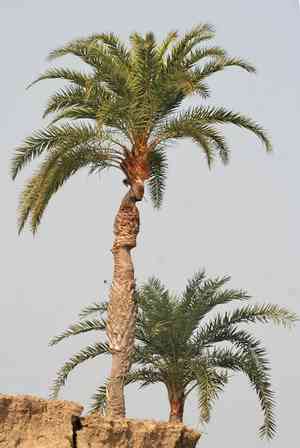
Wild date palm (Phoenix sylvestris)
Also known as: Silver date palm, East indian wine palm
Phoenix sylvestris, also known as the Wild Date Palm or Silver Date Palm, typically reaches a height of 4 to 15 meters and a trunk diameter of about 40 cm. Although it is not as large as the Canary Island Date Palm, it bears a similar appearance. The leaves can grow up to 3 meters long with 1-meter petioles that have spines near the base. The leaf crown can expand up to 10 meters in width and 7.5 to 10 meters in height, containing up to 100 leaves. The inflorescence extends up to 1 meter and produces white, unisexual flowers, which develop into large, hanging clusters of purple-red fruits with single seeds.
In This Article
Attributes of Wild date palm
Lifespan
Perennial
Plant Type
Tree
Plant Height
4 m to 15 m
Spread
3 m to 4.5 m
Leaf Color
Green
Flower Size
5 cm to 8 cm
Flower Color
White
Images of Wild date palm
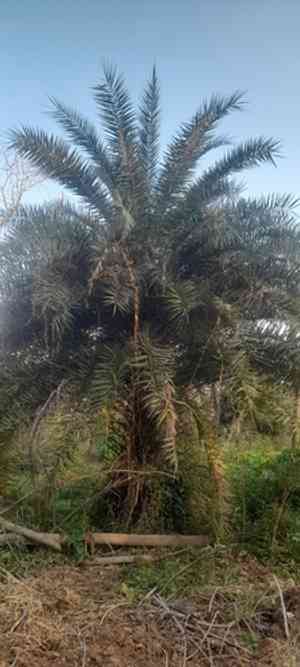
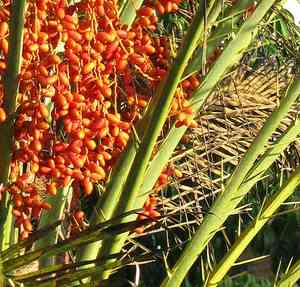

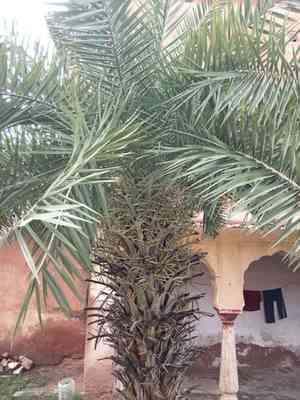
Quickly Identify Wild date palm
1
Identification of Phoenix sylvestris can be done by noting its solitary trunk that is grayish to brown with regular, diamond-shaped leaf scars. The leaves are pinnate and arching with blueish-green leaflets. It produces small, yellowish-white flowers and oval, orange to reddish-brown fruits.
Scientific Classification of Wild date palm
Phylum
Vascular plants
Class
Monocotyledons
Order
Palms, bullanocks, and allies
Family
Palm
Genus
Date palms
Species
Wild date palm
Planting and Growing of Wild date palm
Care Difficulty
Easy
Watering Schedule
Every 2 days
Sunlight Requirements
Full sun
Sunshine Duration
6-10 hours
Ideal Temperature
65-85℉
Soil Type
Potting Mix, Peat Mix
Soil pH
6.5-7.5
Fertilizer Type
Balanced
Pruning Season
Spring, Summer
Pruning Area
Branches, Leaves
Pruning Frequency
2 times a year
Repotting Season
Spring
Pot Type
Plastic, Ceramic
 How to Water Wild date palm?
For Phoenix sylvestris, ensure the soil is moistened sufficiently each time you water. Aim for an amount that allows moisture to penetrate to about 6 inches deep, which is typically around 1000 ml per watering session. This ensures the root system receives adequate moisture but avoids saturation.
What are the symptoms of an underwatered Wild date palm?
›
What should I do if my Wild date palm is not getting enough water?
›
What are the symptoms of an overwatered Wild date palm?
›
How to save an overwatered Wild date palm?
›
 What Are the Sunlight Requirements for Wild date palm?
Phoenix sylvestris thrives in full sun to partial sun environments. Ideal lighting ensures the plant's lush growth and development, providing energy for photosynthesis that sustains its vibrant foliage.
More About Sunlight Requirements Techniques→
What is the ideal lighting condition for Phoenix sylvestris?
›
How can you achieve ideal lighting for Phoenix sylvestris?
›
What are the benefits of ideal lighting for Phoenix sylvestris?
›
 What Is the Ideal Temperature Range for Wild date palm?
The ideal temperature range for Phoenix sylvestris, also known as the Indian Date Palm, is between 65°F to 85°F. This range provides balanced conditions that allow for optimal photosynthesis, growth, and overall health of the plant. Ensuring the plant stays within this narrow band helps it flourish, avoiding any potential stress or slowdown in growth due to temperature fluctuations.
 What Soil is Best for Wild date palm?
Phoenix sylvestris thrives in well-draining soils which prevent root rot. Such soils ensure excess water drains away, keeping the roots healthy and oxygenated, promoting robust growth. A nutrient-rich substrate is vital for Phoenix sylvestris to flourish. It provides essential minerals and nutrients that facilitate vibrant foliage and overall plant health. While well-draining, the soil should retain enough moisture to support Phoenix sylvestris during dry spells. This balance prevents drought stress and ensures continuous growth.
 How to Fertilize Wild date palm?
For Phoenix sylvestris, it's best to use a balanced, water-soluble fertilizer with equal parts nitrogen, phosphorus, and potassium. Apply approximately 50-100 grams of liquid fertilizer per plant, ensuring even coverage.
 How to Prune Wild date palm?
Begin by identifying dead or brown fronds that need removal. Wear protective gloves to avoid injury from sharp edges. Use clean, sharp pruning shears to cut each frond as close to the trunk as possible, ensuring a smooth cut. Focus on removing only the dead or damaged fronds and avoid over-pruning as this can stress the palm.
More About Pruning Techniques→
 How to Propagate Wild date palm plant?
1
Collect seeds from mature Phoenix sylvestris fruits. Clean the seeds thoroughly to remove pulp and debris, which can inhibit germination. Ensure seeds are dry before storing or planting.
2
Before planting, soak the seeds in warm water for 24-48 hours. This process helps to soften the seed coat, enhancing germination rates. Change the water periodically to keep it fresh.
3
Plant seeds in pots filled with the potting mix at approximately 1-inch depth. Position the pots in a warm, bright area with indirect sunlight to stimulate germination. Maintain consistent soil moisture without overwatering.
 How to Repot Wild date palm plant?
1
Phoenix sylvestris generally signals its need for a new pot when its roots start to circle around the surface or protrude from the bottom of the container. This palm tree thrives in well-draining conditions, so ensure the pot isn't waterlogged. With optimal spring and summer growth periods, these seasons are ideal times to repot, providing the plant with enough warmth and sunlight to recover quickly.
2
Select a pot that is 2-4 inches larger in diameter than the current one. This gives the roots ample space to expand without being too large, which could lead to water retention and root rot. Additionally, ensure the pot has sufficient drainage holes to prevent any waterlogging issues, crucial for palm health.
3
Opt for a well-draining potting mix specifically formulated for palms and other tropical plants. This type of mix often contains sand or perlite, promoting proper drainage and preventing root rot. By facilitating aeration, this mix supports robust root health and vigorous plant growth.



