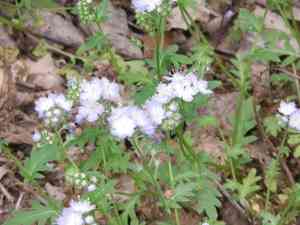
Miami mist (Phacelia purshii)
Also known as: Miami Mist
Miami mist (Phacelia purshii) is an annual plant known for its small, delicate blue to lavender flowers with fringed edges. Native to the eastern United States, blooming colonies create a mist-like, ethereal effect on the forest floor, which is how it gets its name.
In This Article
Attributes of Miami mist
Lifespan
Annual
Plant Type
Herb
Plant Height
50 cm
Spread
Variable, typically forms a spreading habit but doesn\'t have a defined crown
Leaf Color
Green
Flower Size
1.5 cm
Flower Color
White Purple
Images of Miami mist
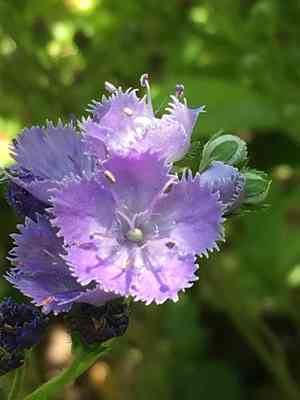
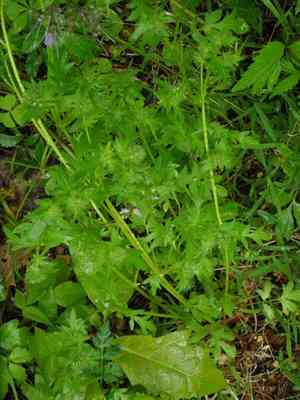
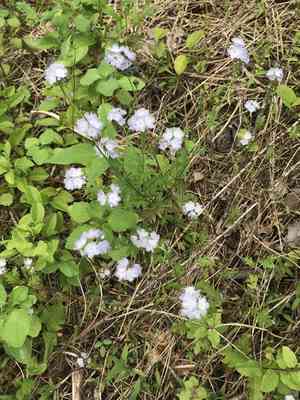
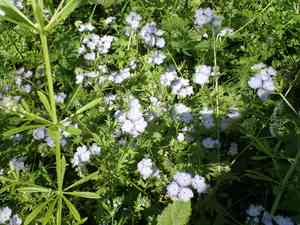
Quickly Identify Miami mist
1
Clustered light purple to blue bell-like flowers.
2
Deeply-lobed, fern-like green leaves.
3
Stems reaching up to 3 feet (91 cm) in height.
4
Branching stems covered in short appressed hairs.
5
Elliptic to oblong leaves with 3-7 lobes or pinnae.
Scientific Classification of Miami mist
Phylum
Vascular plants
Class
Dicotyledons
Order
Boraginales
Family
Waterleaf
Genus
Heliotrope
Species
Miami mist
Planting and Growing of Miami mist
Care Difficulty
Easy
Watering Schedule
Every 4 days
Sunlight Requirements
Partial sun
Sunshine Duration
4-8 hours
Ideal Temperature
60-75℉
Soil Type
Potting Mix, Peat Mix
Soil pH
6-7.5
Fertilizer Type
Balanced
Pruning Season
Spring, Summer
Pruning Area
Branches, Leaves
Pruning Frequency
2 times a year
Repotting Season
Spring
Pot Type
Plastic, Ceramic
 How to Water Miami mist?
For Phacelia purshii, aim to water about 250 milliliters each time. The goal is to keep the soil evenly moist but not soggy. Ensure the soil is well-drained to prevent waterlogging. The amount might vary slightly depending on the weather and the pot size, but it should always be enough to reach the root zone without drowning the plant.
What are the symptoms of an underwatered Miami mist?
›
What should I do if my Miami mist is not getting enough water?
›
What are the symptoms of an overwatered Miami mist?
›
How to save an overwatered Miami mist?
›
 What Are the Sunlight Requirements for Miami mist?
Phacelia purshii ideally enjoys partial sun, where it receives a mix of sun and shade throughout the day. This balance enhances its growth by optimizing energy intake for photosynthesis and reducing the hazards of sun exposure.
What is the ideal lighting condition for Phacelia purshii?
›
How can one achieve the ideal lighting conditions for Phacelia purshii?
›
What benefits does Phacelia purshii gain from ideal lighting?
›
 What Is the Ideal Temperature Range for Miami mist?
Phacelia purshii thrives best in a moderate temperature range between 60°F and 75°F. This range allows for optimal photosynthesis and nutrient absorption, promoting vigorous growth and healthy plant development. Ensuring that temperatures remain within this range helps avoid stress and potential damage to the plant tissues.
 What Soil is Best for Miami mist?
Phacelia purshii thrives best in well-draining soil, ensuring its roots get ample oxygen. This prevents waterlogging, reducing the risk of root rot and promoting healthy growth. The soil should be rich in organic matter, providing essential nutrients for robust plant health. Compost or well-rotted manure is beneficial, boosting growth and flowering. Maintaining a balance in moisture retention is crucial. While drainage is necessary, the soil should retain enough moisture to keep the plant hydrated during warm spells.
 How to Fertilize Miami mist?
Phacelia purshii generally requires light to moderate fertilization. For liquid fertilizers, diluting them to half strength is advised as it prevents over-fertilization. When applying slow-release fertilizers, around 1 teaspoon per plant base is adequate, ensuring nutrients are supplied evenly over time.
 How to Prune Miami mist?
Phacelia purshii, commonly known as Purple Phacelia, thrives in temperate regions and showcases a vigorous growth pattern during the spring and summer. Identifying periods of rapid growth helps in determining the optimal times for pruning. Begin by sterilizing your pruning tools to prevent disease. Trim dead or damaged branches first to stimulate healthy growth. Focus on thinning out overcrowded areas to allow for better air circulation and sunlight penetration. For aesthetic purposes, you can slightly trim the tips of branches to maintain a bushy appearance. Regular shaping not only enhances visual appeal but also encourages more blossoms.
More About Pruning Techniques→
 How to Propagate Miami mist plant?
1
Fill the seed tray with potting soil, leaving about a 1/2 inch space at the top. This allows room for water without overfilling and drowning the seeds. Gently compact the soil to provide a firm base for sowing the seeds.
2
Evenly distribute Phacelia purshii seeds over the soil surface. Cover the seeds lightly with a thin layer of additional soil, approximately 1/8 inch thick. Avoid burying the seeds too deep as it can hinder germination by obstructing light penetration.
3
Using a spray bottle, mist the soil surface to avoid dislodging the seeds. Cover the tray with a clear plastic lid or wrap to maintain humidity, creating a greenhouse effect until germination occurs. Ensure the soil remains moist but not waterlogged.
 How to Repot Miami mist plant?
1
Phacelia purshii should be repotted when you notice its roots starting to circle the pot or growing out of the drainage holes, indicating it's outgrown its current container. Additionally, if the soil seems compacted or the plant appears to be stunted, these are signs it’s time for a change. Spring or early summer is ideal, giving the plant the warm growing season to settle in.
2
Select a pot that is 1-2 inches larger in diameter than the current one, ensuring there are drainage holes at the bottom. A slightly larger size avoids waterlogging and gives the roots space to grow without being too oversized, which can lead to root rot. Materials like terracotta are excellent as they help wick away excess moisture.
3
Opt for a well-draining loamy soil mix, enriched with a bit of organic matter to support healthy growth. This type of soil holds enough moisture to sustain the plant without becoming waterlogged, promoting effective aeration and root development - key for a thriving Phacelia purshii.
Toxicity
Ingestion
WARNING
The judgment on toxicity and danger is for reference only. We DO NOT GUARANTEE any accuracy of such judgment. Therefore, you SHALL NOT rely on such judgment. It is IMPORTANT TO SEEK PROFESSIONAL ADVICE in advance when necessary.



