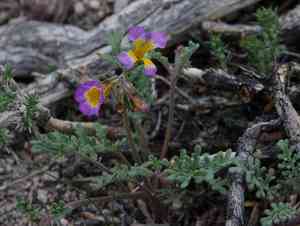
Twocolor phacelia (Phacelia bicolor)
Also known as: Two-colored phacelia
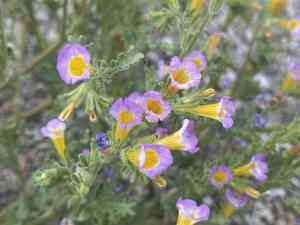
Twocolor phacelia, recognized for its distinct two-toned flowers—typically purple on top and white beneath—thrives in open, dry environments. This moderate-sized annual herb leverages its bright colors to attract pollinators. With fern-like foliage providing a gentle contrast to its striking blooms, it flourishes in coastal sage scrub and chaparral habitats, particularly in well-drained, sandy or rocky soils. Its blooming period in warmer months highlights its adaptability to seasonal variations.
In This Article
Attributes of Twocolor phacelia
Lifespan
Annual
Plant Type
Herb
Plant Height
30-60 cm
Spread
N/A
Leaf Color
Green
Flower Size
1-2 cm
Flower Color
Blue to purple
Images of Twocolor phacelia
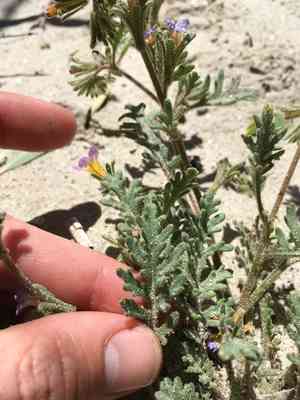
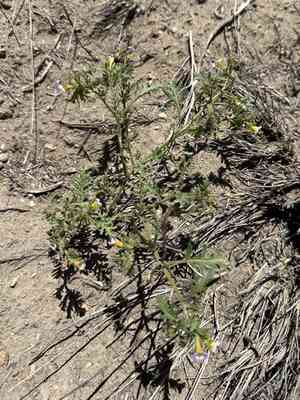
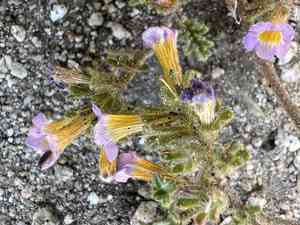
Quickly Identify Twocolor phacelia
1
Phacelia bicolor can be identified by its deeply lobed leaves and distinctive blue to purple, bell-shaped flowers which grow in coiled inflorescences. Look for the hairy stems and leaves which give the plant a somewhat fuzzy appearance.
Scientific Classification of Twocolor phacelia
Phylum
Vascular plants
Class
Dicotyledons
Order
Boraginales
Family
Waterleaf
Genus
Heliotrope
Species
Twocolor phacelia
Planting and Growing of Twocolor phacelia
Care Difficulty
Easy
Watering Schedule
Every 4 days
Sunlight Requirements
Full sun
Sunshine Duration
4-8 hours
Ideal Temperature
55-70℉
Soil Type
Potting Mix, Peat Mix
Soil pH
6-7.5
Fertilizer Type
Balanced
Pruning Season
Spring, Summer
Pruning Area
Branches, Leaves
Pruning Frequency
2 times a year
Repotting Season
Spring
Pot Type
Plastic, Ceramic
 How to Water Twocolor phacelia?
Phacelia bicolor, a resilient plant, requires moderate watering. Each time, give it about 250 milliliters. The soil should be moistened thoroughly but not waterlogged. The key is to allow the top inch of soil to dry out between waterings, ensuring that the plant's roots are not sitting in water.
What are the symptoms of an underwatered Twocolor phacelia?
›
What should I do if my Twocolor phacelia is not getting enough water?
›
What are the symptoms of an overwatered Twocolor phacelia?
›
How to save an overwatered Twocolor phacelia?
›
 What Are the Sunlight Requirements for Twocolor phacelia?
Phacelia bicolor thrives in an environment with 4-8 hours of light. This balance encourages healthy leaf development and maximizes flowering potential, contributing to a robust plant structure.
What is the ideal light exposure for Phacelia bicolor?
›
How can I provide the optimal lighting conditions for Phacelia bicolor?
›
What benefits will Phacelia bicolor gain from ideal lighting conditions?
›
 What Is the Ideal Temperature Range for Twocolor phacelia?
Phacelia bicolor thrives best in temperatures between 55°F and 70°F. This range allows for optimal growth and physiological functioning. Maintaining this range helps ensure that the plant can complete its life cycle effectively, from seed germination to flowering. If temperatures remain consistent within this ideal range, the plant is more likely to exhibit healthy foliage and vibrant blooms.
 What Soil is Best for Twocolor phacelia?
Phacelia bicolor thrives in nutrient-rich soil that provides essential minerals for healthy growth. Rich soil ensures vibrant blooms and robust plant structure by supplying adequate nutrition and preventing nutrient deficiencies. This plant prefers well-drained soil that prevents waterlogging, allowing roots to breathe and reducing the risk of root rot. Proper drainage is crucial for maintaining plant health and promoting optimal growth. Soil with moderate moisture retention is ideal, as it keeps the plant hydrated without oversaturating it. This balance helps prevent stress and promotes a lush, green appearance, ensuring the plant remains in peak condition.
 How to Fertilize Twocolor phacelia?
For Phacelia bicolor, it's essential to provide a balanced and moderate amount of fertilizer. Typically, a 5-10-5 NPK ratio works well, applied according to the manufacturer's instructions. This ensures healthy growth without overwhelming the plant.
 How to Prune Twocolor phacelia?
Prune in spring to encourage dense foliage and summer blooming. Early summer pruning after the first bloom can enhance the plant's aesthetics and encourage a second flowering. Always wear gloves to protect your hands from potential irritants or thorns. Keep tools out of reach of children and pets to prevent accidents. Avoid pruning during wet conditions as moisture can spread fungal spores. Choose a dry day to ensure the best conditions for pruning.
More About Pruning Techniques→
 How to Propagate Twocolor phacelia plant?
1
Fill the seed tray with a well-draining potting mix. Ensure it's evenly spread and lightly pack it down to remove air pockets, providing a consistent surface for seed sowing.
2
Place the Phacelia bicolor seeds on the surface of the soil and gently press them in, without burying them too deep. Lightly cover them with a thin layer of soil or perlite.
3
Water the seed tray gently using a spray bottle or fine mist setting on a watering can. This ensures the seeds are moistened without being displaced by heavy water flow.
 How to Repot Twocolor phacelia plant?
1
Phacelia bicolor should be repotted when you notice roots emerging from the drainage holes or if the soil becomes compacted. Early signs such as slow growth or the plant being top-heavy indicate it's time for a larger pot.
2
Choose a pot that is 1 to 2 inches larger in diameter than the current one. Ensure it has sufficient drainage holes to prevent waterlogging, which can lead to root rot. A slightly larger pot supports healthy root development.
3
Opt for a well-draining loamy mix to ensure Phacelia bicolor thrives. A soil mix with ample perlite or sand is ideal, promoting sufficient aeration and preventing water retention, which could damage the roots.
Learn More About Twocolor phacelia Diseases
Anthracnose
Bacterial Leaf Spot
Bacterial Soft Rot
Bacterial Wilt
Chemical Injury
Cyst Nematode
Damping-off
Downy Mildew
Drought Stress
Fusarium Wilt
Gray Mold
Leaf Spot
Mosaic
Nutrient Deficiency
Nutrient Toxicity
Powdery Mildew
Root Rot
Root-knot Nematode
Rusts
Sooty Mold
Spider Mites
Temperature Stress
Thrips Damage
White Mold



