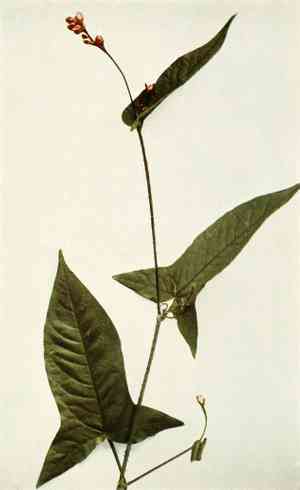
Halberd-leaf tearthumb (Persicaria arifolia)
Also known as: Halberd-leaf Tearthumb, Arrowleaf Tear-thumb
The halberd-leaf tearthumb (Persicaria arifolia) thrives in moist environments such as marshes, swamps, and along the edges of water bodies. It is predominantly found in the northeastern and midwestern regions of North America. The plant favors wet, undisturbed areas and is known for its prickly stems that can easily cause minor cuts. Its flowering period spans from summer to fall.
In This Article
Attributes of Halberd-leaf tearthumb
Lifespan
Annual
Plant Type
Vine
Plant Height
30 cm to 61 cm
Spread
N/A (generally grows in a vine form)
Leaf Color
Green
Flower Size
3 mm
Flower Color
White Red
Images of Halberd-leaf tearthumb
Quickly Identify Halberd-leaf tearthumb
1
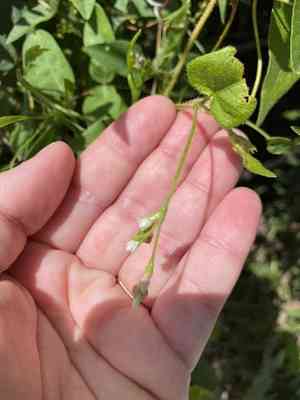
This plant can be identified by its arrow-shaped leaves and prickly stem. The stems have small, backward-facing spines that can easily tear your skin, hence the name \'tearthumb.\' The pink to white flower spikestands out and are clustered at the tip of the stalk.
Scientific Classification of Halberd-leaf tearthumb
Phylum
Vascular plants
Class
Dicotyledons
Order
Caryophyllales
Family
Buckwheat
Genus
Persicaria
Species
Halberd-leaf tearthumb
Planting and Growing of Halberd-leaf tearthumb
Care Difficulty
Easy
Watering Schedule
Every 8 days
Sunlight Requirements
Partial sun
Sunshine Duration
6-10 hours
Ideal Temperature
60-75℉
Soil Type
Potting Mix, Peat Mix
Soil pH
6.5-7.5
Fertilizer Type
Balanced
Pruning Season
Spring, Summer
Pruning Area
Branches, Leaves
Pruning Frequency
2 times a year
Repotting Season
Spring
Pot Type
Plastic, Terracotta
 How to Water Halberd-leaf tearthumb?
For Persicaria arifolia, ensure the soil is consistently moist but not soggy. Aim for around 200 milliliters each time to maintain adequate soil moisture without causing waterlogging. This amount ensures the roots receive enough water to stay hydrated while also allowing excess water to drain, preventing root rot.
What are the symptoms of an underwatered Halberd-leaf tearthumb?
›
What should I do if my Halberd-leaf tearthumb is not getting enough water?
›
What are the symptoms of an overwatered Halberd-leaf tearthumb?
›
How to save an overwatered Halberd-leaf tearthumb?
›
 What Are the Sunlight Requirements for Halberd-leaf tearthumb?
Partial sun to full shade are ideal. This light range promotes vibrant leaf color and lush foliage, mimicking natural understory conditions where growth is optimal with diffused light.
How much light is needed?
›
What are the solutions for ideal lighting?
›
What benefits come from ideal lighting?
›
 What Is the Ideal Temperature Range for Halberd-leaf tearthumb?
For optimal growth, Persicaria arifolia thrives in a temperature range of 60°F to 75°F. This allows the plant to maintain its metabolic processes efficiently, ensuring vibrant foliage and healthy growth. Consistent temperatures within this range are crucial as fluctuations can stress the plant.
 What Soil is Best for Halberd-leaf tearthumb?
Persicaria arifolia thrives in soil that retains moisture well. This ensures the plant receives consistent hydration without waterlogging. Loam and peat soils are ideal for providing these conditions, supporting robust growth and vibrant foliage. Rich, well-fertilized soil with organic matter enhances the growth of Persicaria arifolia. Such conditions are essential for vibrant leaf growth and overall plant health, ensuring long-lived and flourishing greenery. While moisture is vital, adequate drainage prevents excess water from suffocating the roots. Sandy loam offers a perfect balance, avoiding the pitfalls of overly compacted soil which can hinder root development and oxygenation.
 How to Fertilize Halberd-leaf tearthumb?
For Persicaria arifolia, fertilizer application should be balanced and mindful of the plant's needs. A general guideline is to use liquid fertilizer at a concentration of one teaspoon per gallon of water, and apply it evenly across the root zone. For slow-release fertilizers, follow manufacturer instructions, typically using about 1 pound per 100 square feet.
 How to Prune Halberd-leaf tearthumb?
Start by removing any dead or yellowing leaves. Cut back to the main stem or just above a node for best results. Avoid cutting too much at once to reduce plant stress. To maintain its shape, trim the stems to the desired height. Focus on keeping a natural look while ensuring equal light distribution throughout the plant by removing overly dense areas.
More About Pruning Techniques→
 How to Propagate Halberd-leaf tearthumb plant?
1
Begin by choosing a well-drained location with sufficient sunlight. Loosen the soil using a garden fork and remove any weeds or debris. This ensures the seeds have ample space and ideal conditions to germinate and grow.
2
Scatter the seeds over the prepared soil, ensuring an even distribution. Lightly press the seeds into the soil but do not bury them too deeply, as they need sunlight to germinate effectively.
3
Water the seeded area gently to avoid disturbing the seeds. Keep the soil consistently moist but not waterlogged. Be observant for signs of pests or diseases and take necessary actions promptly.
 How to Repot Halberd-leaf tearthumb plant?
1
The ideal time to repot Persicaria arifolia is when you notice the roots starting to come out of the drainage holes, or if the plant’s growth appears stunted. These are signs that your plant needs more space and fresh nutrients.
2
Select a pot that is just a bit larger than the current one to avoid overwatering issues. A pot with drainage holes is ideal, as this helps prevent root rot. Using the right pot ensures adequate growth and healthy roots.
3
The soil choice is crucial; it should be well-draining but nutrient-rich. A mix that includes peat moss, perlite, and organic compost ensures good fertility and drainage, keeping the roots healthy.



