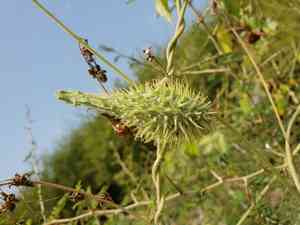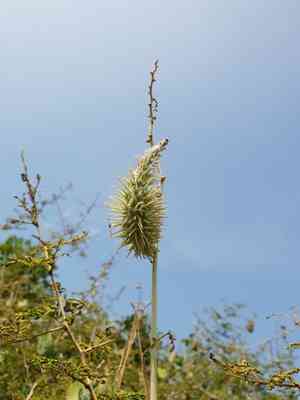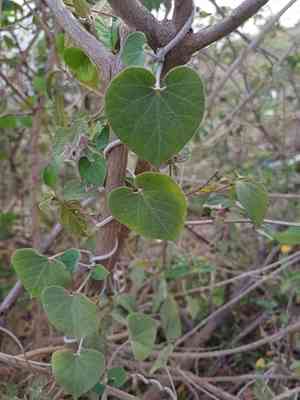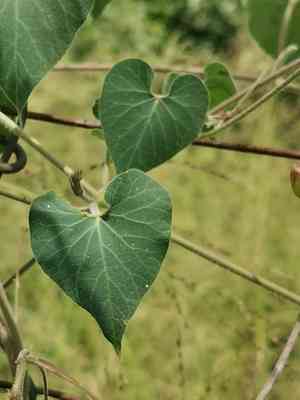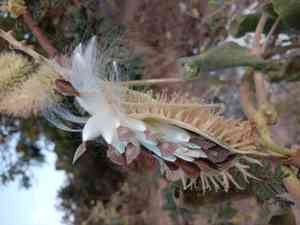
Pergularia(Pergularia daemia)

Pergularia (Pergularia daemia)

Also known as: Treasure of the Desert, Milk Weed, Pot Pearl, Yergami

Pergularia, also known as Pergularia daemia, is a vigorous climbing herb. Distinct features include:

- **Leaves**: Hairy, broad, and heart-shaped.
- **Flowers**: Small, greenish-yellow, and aromatic, typically appearing in clusters.
- **Sap**: Milky sap exudes from broken stems and leaves.

### Optimal Growing Conditions:

1. **Climate**: Prefers warm, tropical, and subtropical regions.
2. **Soil**: Adapts well to well-drained, sandy or loamy soils.
3. **Water**: Needs moderate watering but is relatively drought-tolerant once established.
4. **Light**: Grows best in full sun to partial shade.
5. **Propagation**: Can be propagated through seeds or cuttings.

Pergularia is suitable for natural fencing or trellises and is recognized for its medicinal uses.

Attributes of Pergularia

Lifespan
Perennial
Plant Type
Vine
Plant Height
1-3 meters (as a vine)
Spread
Not applicable (as a vine)
Leaf Color
Green
Flower Size
5-10 mm
Flower Color
Greenish-yellow to greenish-white

ForwardPlant - Identify plants with a snap

Identify and diagnose plants, get toxicity alerts, and explore safety guides for all types of fungi.

Try for Free

Images of Pergularia

Pergularia(Pergularia daemia)

Quickly Identify Pergularia

1
Identifying Pergularia daemia involves looking for a twining vine with milky latex, heart-shaped leaves with a slightly wavy margin, and clusters of greenish-yellow or greenish-white flowers. The plant also exudes a characteristic unpleasant odor when leaves are crushed.

Scientific Classification of Pergularia

Phylum
Vascular plants
Class
Dicotyledons
Order
Gentianales
Family
Dogbane
Genus
Pergularia
Species
Pergularia

Planting and Growing of Pergularia

Care Difficulty
Moderate
Watering Schedule
Every 4 days
Sunlight Requirements
Full sun
Sunshine Duration
4-8 hours
Ideal Temperature
77-86℉
Soil Type
Potting Mix, Peat Mix
Soil pH
6.5-7.5
Fertilizer Type
Balanced
Pruning Season
Spring, Summer
Pruning Area
Branches, Leaves
Pruning Frequency
2 times a year
Repotting Season
Spring
Pot Type
Plastic, Ceramic

water icon How to Water Pergularia?

Pergularia daemia prefers its soil to be moderately moist. Water until the first 2-3 inches of soil feel comfortably moist. A rough guideline is to water with about 500 ml of water, providing enough to soak the soil thoroughly but ensuring it remains well-drained.
What are the symptoms of an underwatered Pergularia? ›
What should I do if my Pergularia is not getting enough water? ›
What are the symptoms of an overwatered Pergularia? ›
How to save an overwatered Pergularia? ›

sunlight icon What Are the Sunlight Requirements for Pergularia?

Sunlight Requirements: Full sun, Partial sun
Duration of light: 4-6 hours daily
Ideal lighting for Pergularia daemia is full sun to partial sun, ensuring about 4-6 hours of daily light. Benefiting the plant through photosynthesis, it maximizes growth, flowering, and general health.
What are the ideal light conditions for Pergularia daemia? ›
How can I provide ideal sunlight for Pergularia daemia? ›
What benefits does ideal sunlight offer to Pergularia daemia? ›

temperature icon What Is the Ideal Temperature Range for Pergularia?

Ideal Temperature: 77 ~ 86℉
Pergularia daemia thrives best within a temperature range of 77°F to 86°F. This range supports optimal photosynthesis and biochemical processes, ensuring healthy growth and development.

soil icon What Soil is Best for Pergularia?

Soil type: Sandy loam, Loam, Sandy soil
Soil PH: 6.5 ~ 7.5
Pergularia daemia thrives in well-drained soils which prevent waterlogging and root rot. The drainage helps to maintain optimal moisture levels, promoting healthy growth and robust foliage. A nutrient-rich soil provides essential minerals and organic matter that feed Pergularia daemia, promoting lush growth and enhancing the plant's natural defenses against pests and diseases. The soil should have moderate moisture retention capabilities to ensure consistent hydration without oversaturation. This balance encourages steady growth and aids in maintaining the plant's metabolic processes efficiently.

fertilize icon How to Fertilize Pergularia?

Fertilizer type: Balanced
For Pergularia daemia, use a balanced liquid fertilizer diluted to half strength, applying approximately 100 ml per plant per session. For slow-release fertilizers, a handful of granules around the base of each plant will suffice per application seasonally.

prune icon How to Prune Pergularia?

Pruning Time: Spring, Summer, Autumn
Begin by removing any dead or damaged stems at the base of the plant. Focus on thinning overcrowded areas to improve air circulation. Cut at a 45-degree angle above a leaf node to encourage new growth. To maintain a desirable shape, trim long, wandering vines back to a main support structure. This keeps the plant tidy and enhances its aesthetic appeal while preventing it from overshadowing neighboring plants. More About Pruning Techniques→

propagate icon How to Propagate Pergularia plant?

Propagate Time: Spring,Early summer
1
Collect mature seeds from the plant and sow them in a well-draining seed mix. Cover lightly with soil and water gently to initiate germination.
2
Select healthy Pergularia daemia stems and cut sections 4-6 inches long. Remove lower leaves to prevent rotting when planted in soil.
3
Place prepared cuttings in a pot filled with moist potting mix. Ensure cuttings are firm in the soil and keep them in a warm, humid environment to encourage rooting.
More About Propagating Techniques→

repot icon How to Repot Pergularia plant?

Repotting frequency: Every two years
1
You should consider repotting Pergularia daemia when you notice roots growing out of the drainage holes, or when the growth appears stunted. The best time to repot is during early spring or late autumn when the plant is not in its active growing phase.
2
Select a pot that is one size larger than the current one. It should have ample drainage holes to prevent waterlogging, which can suffocate the root system. Using the right pot size ensures better stability and nutrient availability.
3
Opt for a well-draining potting mix that replicates the plant's native environment. A mix with sand and organic material promotes healthy root growth by preventing water retention while providing adequate nutrients.

ForwardPlant - Identify plants with a snap

Find the best spots for them to optimize their health, simply using your phone.

Try for Free

Toxicity

Ingestion

Identify toxic plants for your safety

Learn which plants are harmful to you and your pets, and make informed choices for a safer home!

Try for Free
WARNING
The judgment on toxicity and danger is for reference only. We DO NOT GUARANTEE any accuracy of such judgment. Therefore, you SHALL NOT rely on such judgment. It is IMPORTANT TO SEEK PROFESSIONAL ADVICE in advance when necessary.