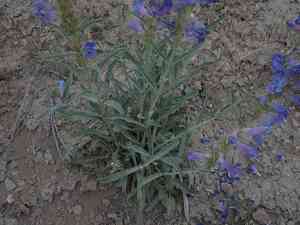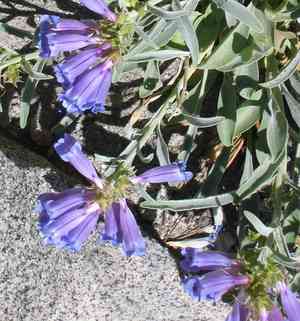
Royal penstemon(Penstemon speciosus)

Royal penstemon (Penstemon speciosus)

Also known as: Showy Penstemon

Royal penstemon (Penstemon speciosus) is a stunning perennial known for its light-blue to lavender blooms, making it a striking addition to any garden. Native to the western United States, it adapts well to various habitats. Here are the ideal growing conditions for this plant in your garden:

1. **Sunlight**: Prefers full sun for optimal growth.
2. **Soil**: Thrives in well-drained, sandy, or gravelly soils.
3. **Watering**: Requires moderate watering; it is drought-tolerant once established.
4. **Climate**: Best suited for USDA zones 4-9.
5. **Spacing**: Ensure plants are 12-18 inches apart for good air circulation.

Additionally, royal penstemon is excellent for attracting butterflies and other beneficial insects to your garden.

Attributes of Royal penstemon

Lifespan
Perennial
Plant Type
Herb
Plant Height
15 cm to 76 cm
Spread
30 cm
Leaf Color
Green
Flower Size
2.5 cm to 5 cm
Flower Color
Blue Purple

ForwardPlant - Identify plants with a snap

Identify and diagnose plants, get toxicity alerts, and explore safety guides for all types of fungi.

Try for Free

Images of Royal penstemon

Royal penstemon(Penstemon speciosus)

Quickly Identify Royal penstemon

1
To identify Penstemon speciosus, look for upright stems with narrowly lance-shaped leaves. The flowers are tubular and occur in a variety of vibrant blue to purple hues, arranged in a spike-like inflorescence. The plant typically grows in dry, well-drained soils.

Scientific Classification of Royal penstemon

Phylum
Vascular plants
Class
Dicotyledons
Order
Lamiales
Family
Plantain
Genus
Penstemon
Species
Royal penstemon

Planting and Growing of Royal penstemon

Care Difficulty
Easy
Watering Schedule
Every 2 days
Sunlight Requirements
Full sun
Sunshine Duration
6-12 hours
Ideal Temperature
60-75℉
Soil Type
Potting Mix, Peat Mix
Soil pH
6.5-7.5
Fertilizer Type
Balanced
Pruning Season
Spring, Summer
Pruning Area
Branches, Leaves
Pruning Frequency
2 times a year
Repotting Season
Spring
Pot Type
Plastic, Ceramic

water icon How to Water Royal penstemon?

Penstemon speciosus thrives when watered thoroughly but allowed to dry out slightly between waterings. The general principle is to soak the soil deep enough so that it reaches the root zone, yet does not leave the roots waterlogged. A watering amount of about 500ml per session is typically sufficient for an average-sized plant.
What are the symptoms of an underwatered Royal penstemon?
What should I do if my Royal penstemon is not getting enough water?
What are the symptoms of an overwatered Royal penstemon?
How to save an overwatered Royal penstemon?

sunlight icon What Are the Sunlight Requirements for Royal penstemon?

Sunlight Requirements: Full sun, Partial sun
Duration of light: 6-8 hours daily
Penstemon speciosus thrives best in full to partial sun, receiving 6 to 8 hours of sunlight daily. Ideal light exposure promotes vigorous growth and enhances the plant's flowering potential.
How much sunlight does Penstemon speciosus need?
Why is full sun important for Penstemon speciosus?
How can I provide ideal sunlight conditions?
More About Sunlight Requirements Techniques

temperature icon What Is the Ideal Temperature Range for Royal penstemon?

Ideal Temperature: 60 ~ 75℉
The ideal temperature range for Penstemon speciosus ensures optimal growth and blooming. A temperature between 60°F and 75°F allows the plant to thrive by providing enough warmth for photosynthesis while preventing heat stress.

soil icon What Soil is Best for Royal penstemon?

Soil type: Sandy loam, Loam
Soil PH: 6.5 ~ 7.5
Penstemon speciosus thrives in well-drained soil that allows excess water to escape easily. This prevents root rot and ensures that roots can access necessary oxygen. The plant prefers moderately fertile soils. Too much fertility can lead to excessive foliage growth, while too little can stunt plant development. A sandy texture is optimal as it ensures proper drainage. This texture helps the plant establish a strong root system, leading to robust growth.

fertilize icon How to Fertilize Royal penstemon?

Fertilizer type: Balanced
For Penstemon speciosus, it's important to use a balanced fertilizer diluted to half the strength recommended for general use. Applying approximately 1-2 tablespoons of liquid fertilizer per gallon of water per month can provide adequate nourishment during the growing season.

prune icon How to Prune Royal penstemon?

Pruning Time: Spring, Summer, Autumn
Start by locating any dead, damaged, or diseased stems. These should be removed first to prevent the spread of disease and to redirect energy into healthy growth. Trim back overgrown stems to maintain a neat shape and encourage compact growth. Cut just above a leaf node to stimulate new branches, leading to a fuller plant appearance. More About Pruning Techniques

propagate icon How to Propagate Royal penstemon plant?

Propagate Time: Spring,Early spring
1
Collect seeds from a mature Penstemon speciosus plant and allow them to dry naturally. For best results, stratify the seeds by placing them in a plastic bag with moist sand in the refrigerator for about 8 weeks. This mimics natural winter conditions and increases germination rates.
2
Choose healthy stems for cuttings, ideally around 3-4 inches long, from the parent Penstemon speciosus plant. Ensure the selected stem includes a node, a vital part for root development. It is best to collect these cuttings in early spring when plant energy is primarily focused on growth.
3
For seeds, sow them in the prepared seed tray filled with a well-draining soil mix and water gently. For cuttings, dip the cut end in rooting hormone and insert it into a sand-peat mix. Ensure the planting medium remains consistently moist but not waterlogged for optimal growth.
More About Propagating Techniques

repot icon How to Repot Royal penstemon plant?

Repotting frequency: Every 2-3 years
1
Penstemon speciosus needs repotting when you notice roots emerging from the drainage holes or the plant appears to outgrow its container. Spring and autumn are ideal times as the plant can recover quicker during these periods. Check for roots circling tightly inside the pot as another sign for repotting.
2
Select a pot that is one size larger than the current one, ensuring it has good drainage. A pot that is too large can lead to excessive soil moisture, which can cause root rot. Choose a pot made from breathable materials like terra cotta to promote better air circulation around the roots.
3
A well-draining sandy soil mix is optimal for Penstemon speciosus. This ensures that water does not stagnate at the root level, reducing the risk of root rot. The sandy texture also helps support proper aeration, which is beneficial for healthy root growth.

ForwardPlant - Identify plants with a snap

Find the best spots for them to optimize their health, simply using your phone.

Try for Free