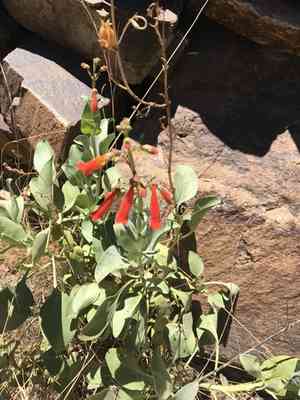
Big bend beardtongue (Penstemon havardii)
Also known as: Havard's beardtongue
The plant you're referring to is likely Big Bend beardtongue, a striking perennial known for its tall spikes of tubular flowers in shades of bright pink to red-purple. These vibrant blooms attract hummingbirds and stand out against lance-shaped, bluish-green leaves. Adapted to rocky or sandy soils, Big Bend beardtongue thrives in arid environments, with deep roots that search for moisture and nutrients, showcasing its resilience in tough conditions.
In This Article
Attributes of Big bend beardtongue
Lifespan
Perennial
Plant Type
Herb
Plant Height
91 cm to 1.8 m
Spread
20-40 cm
Leaf Color
Green
Flower Size
2-3 cm
Flower Color
Pink, Purple
Images of Big bend beardtongue
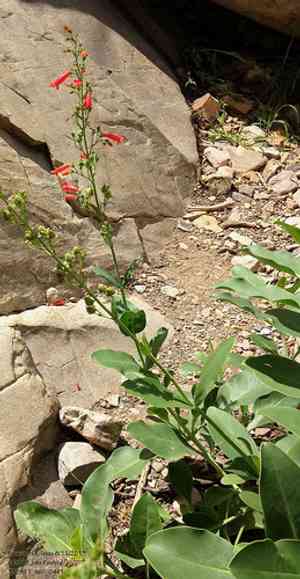
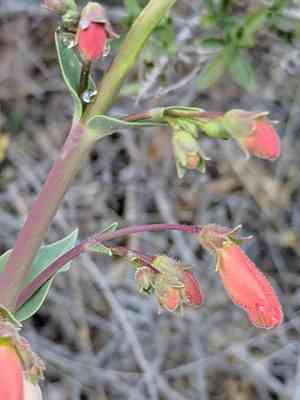
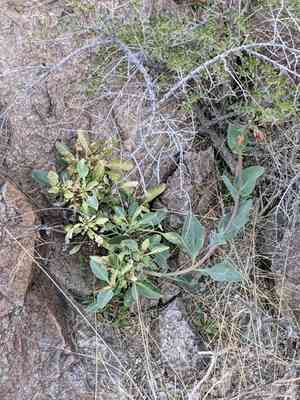
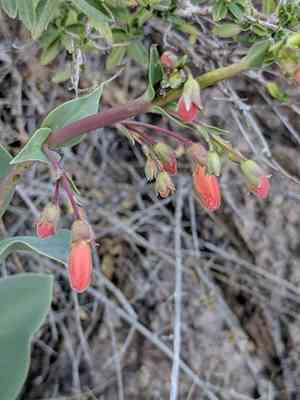
Quickly Identify Big bend beardtongue
1
Penstemon havardii can be identified by its tubular flowers, narrow leaves, and its growth habit which typically forms clumps. Look for the distinctive beard-like staminode inside the flower.
Scientific Classification of Big bend beardtongue
Phylum
Vascular plants
Class
Dicotyledons
Order
Lamiales
Family
Plantain
Genus
Penstemon
Species
Big bend beardtongue
Planting and Growing of Big bend beardtongue
Care Difficulty
Moderate
Watering Schedule
Every 2 days
Sunlight Requirements
Full sun
Sunshine Duration
4-8 hours
Ideal Temperature
60-75℉
Soil Type
Potting Mix, Peat Mix
Soil pH
6.5-7.5
Fertilizer Type
Balanced
Pruning Season
Spring, Summer
Pruning Area
Branches, Leaves
Pruning Frequency
2 times a year
Repotting Season
Spring
Pot Type
Plastic, Ceramic
 How to Water Big bend beardtongue?
For Penstemon havardii, the watering amount should be 300 milliliters per session. This plant prefers well-drained soil, so ensure the water seeps through and never stands on the surface or at the roots. A good soak is better than frequent shallow watering.
What are the symptoms of an underwatered Big bend beardtongue?
›
What should I do if my Big bend beardtongue is not getting enough water?
›
What are the symptoms of an overwatered Big bend beardtongue?
›
How to save an overwatered Big bend beardtongue?
›
 What Are the Sunlight Requirements for Big bend beardtongue?
Ideal light conditions for Penstemon havardii involve full sun exposure. This ensures the plant receives the maximum energy for robust growth and vibrant blooms. Full sun promotes healthier leaf color and overall vitality compared to shaded conditions.
How much light does Penstemon havardii need daily?
›
What are ideal solutions for optimizing Penstemon havardii's light conditions?
›
What benefits does Penstemon havardii gain from ideal lighting?
›
 What Is the Ideal Temperature Range for Big bend beardtongue?
The ideal temperature for cultivating Penstemon havardii is between 60°F and 75°F. This range allows the plant to maintain optimal growth conditions, ensuring proper metabolic activity and growth. It's important to monitor temperatures closely and make necessary adjustments to maintain these ideal conditions, especially in controlled environments like greenhouses.
 What Soil is Best for Big bend beardtongue?
Penstemon havardii thrives in well-draining soil that prevents waterlogging. It ensures adequate oxygen reaches the roots, preventing root rot and promoting healthy plant growth. The plant requires soil with moderate nutrients to encourage blooms without causing excessive foliage growth. This balance boosts flower production and maintains the plant's natural size. Penstemon havardii prefers a slightly alkaline soil environment with a pH closer to 7.0, which optimizes nutrient availability and supports robust vegetative growth.
 How to Fertilize Big bend beardtongue?
For Penstemon havardii, use about half the recommended dose listed on your liquid fertilizer product to avoid over-fertilizing. Typically, 1/4 to 1/2 teaspoon per gallon is adequate. When using slow-release granules, apply it at the rate recommended on the package, often 1 to 2 tablespoons distributed evenly around the base of the plant.
 How to Prune Big bend beardtongue?
Start by removing any dead or damaged stems. These are often dry, brittle, and can be identified by their lack of foliage. Cutting these off encourages new, healthy growth. Make your cuts at a 45-degree angle just above a healthy pair of leaves or buds. This angle promotes water runoff, reducing the risk of rot while enhancing the plant's natural aesthetic.
More About Pruning Techniques→
 How to Propagate Big bend beardtongue plant?
1
Before sowing, it's important to prepare the seeds by soaking them in warm water for 24 hours. This step helps to soften the seed coat and enhance germination rates.
2
Evenly spread the seeds across the surface of the seed tray filled with potting mix. Cover them lightly with a thin layer of soil, ensuring they are not buried too deep.
3
After sowing, water the seeds gently to avoid dislodging them. Maintain consistent moisture levels, taking care to avoid overwatering which can cause seed rot.
 How to Repot Big bend beardtongue plant?
1
Repotting should occur when you notice that the roots have filled the pot or are circling the bottom. Another sign is if water takes time to drain during watering. These signals indicate it's time to give your Penstemon havardii a new home.
2
Select a pot that is one to two inches larger in diameter than the current one. Ensure it has drainage holes to prevent waterlogging. The right pot will help support root expansion and prevent root rot, promoting healthy plant growth.
3
Opt for a well-draining, sandy soil mix enriched with some perlite. This composition encourages proper drainage, preventing root rot and allowing sufficient air circulation which benefits root health and encourages vigorous growth.
Toxicity
ingestion
WARNING
The judgment on toxicity and danger is for reference only. We DO NOT GUARANTEE any accuracy of such judgment. Therefore, you SHALL NOT rely on such judgment. It is IMPORTANT TO SEEK PROFESSIONAL ADVICE in advance when necessary.
Learn More About Big bend beardtongue Diseases
Anthracnose
Bacterial Leaf Spot
Bacterial Wilt
Crown Gall
Cyst Nematode
Damping-off
Downy Mildew
Drought Stress
Fusarium Wilt
Gray Mold
Leaf Spot
Mosaic
Nutrient Deficiency
Nutrient Toxicity
Powdery Mildew
Root Rot
Root-knot Nematode
Rusts
Sooty Mold
Spider Mites
Temperature Stress
Thrips Damage
White Mold
Chemical Injury



