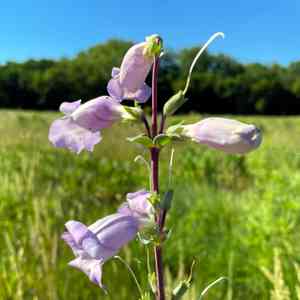
Large beardtongue (Penstemon grandiflorus)
Also known as: Large-Flowered Penstemon, Beardtongue penstemon, Large penstemon, Shell leaf penstemon
The large-flowered beardtongue (Penstemon grandiflorus) is a perennial plant that is considered endangered in certain regions of the United States, making it a rare sight in the wild. This plant produces striking large, tubular flowers in shades of pink or purple during late spring. It is known for its drought resistance and its ability to attract both bumblebees and hummingbirds.
In This Article
Attributes of Large beardtongue
Lifespan
Perennial
Plant Type
Herb
Plant Height
40 cm to 1.2 m
Spread
30 cm to 60 cm
Leaf Color
Green Blue
Flower Size
2.5 cm
Flower Color
Pink Purple Blue
Images of Large beardtongue
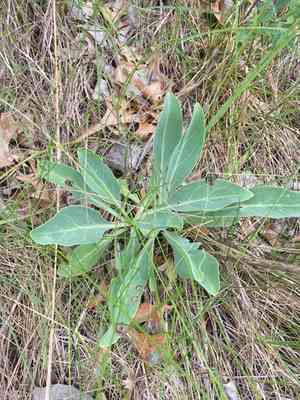
Quickly Identify Large beardtongue
1
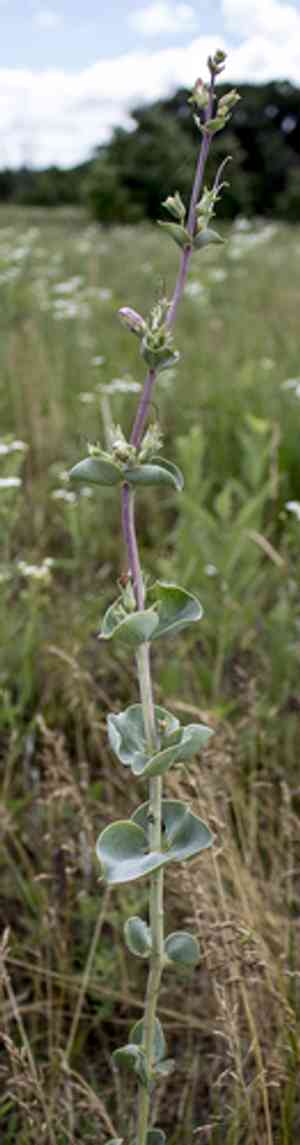
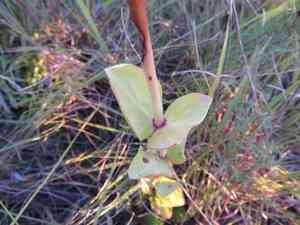
Look for its large, showy, tubular flowers, which typically bloom from late spring to early summer. The plant has smooth, grayish-green leaves, and it can grow up to 3 feet tall.
Scientific Classification of Large beardtongue
Phylum
Vascular plants
Class
Dicotyledons
Order
Lamiales
Family
Plantain
Genus
Penstemon
Species
Large beardtongue
Planting and Growing of Large beardtongue
Care Difficulty
Easy
Watering Schedule
Every 2 days
Sunlight Requirements
Full sun
Sunshine Duration
4-6 hours
Ideal Temperature
65-75℉
Soil Type
Potting Mix, Peat Mix
Soil pH
6.5-7.5
Fertilizer Type
Balanced
Pruning Season
Spring, Summer
Pruning Area
Branches, Leaves
Pruning Frequency
2 times a year
Repotting Season
Spring
Pot Type
Plastic, Ceramic
 How to Water Large beardtongue?
Penstemon grandiflorus prefers a deep and thorough watering, ensuring that the water reaches the root zone. This effectively encourages the roots to grow deeper, providing stability and resilience. Allow the soil to dry between watering sessions to prevent root rot.
What are the symptoms of an underwatered Large beardtongue?
›
What should I do if my Large beardtongue is not getting enough water?
›
What are the symptoms of an overwatered Large beardtongue?
›
How to save an overwatered Large beardtongue?
›
 What Are the Sunlight Requirements for Large beardtongue?
Set in full sun to partial sun. Ideal light enhances photosynthesis, resulting in strong stems and brilliant flowers, optimizing the plant's energy and nutrient uptake.
More About Sunlight Requirements Techniques→
What kind of light is best for Penstemon grandiflorus?
›
How can I ensure the plant gets its ideal lighting conditions?
›
What benefits does ideal lighting provide for this plant?
›
 What Is the Ideal Temperature Range for Large beardtongue?
For optimal growth, Penstemon grandiflorus prefers a temperature range between 65°F and 75°F. This range is conducive to its physiological processes, allowing for efficient photosynthesis and growth. The stability of this temperature range ensures that the plant can maintain its metabolic functions without stress, promoting vibrant blooms and healthy foliage.
 What Soil is Best for Large beardtongue?
Penstemon grandiflorus thrives in well-drained soil as it prevents root rot and allows for excellent aeration. Well-drained soil ensures that the roots of the plant do not sit in water, reducing the risk of fungal diseases and promoting healthy growth. This plant prefers soil with moderate nutrient levels. Excessive nutrients can lead to leggy growth, whereas moderate nutrients promote robust and compact growth, ideal for maintaining the plant's beautiful and natural shape. Penstemon grandiflorus does not require high levels of organic matter. Low organic content helps maintain a balance in soil moisture, avoiding excessive wetness which can be detrimental to the plant's roots.
 How to Fertilize Large beardtongue?
For Penstemon grandiflorus, the application of fertilizer should be done with precision. Use a balanced liquid fertilizer diluted to half strength, approximately 1 to 2 tablespoons per gallon of water. Apply this evenly around the base of the plant to avoid potential root damage.
 How to Prune Large beardtongue?
Begin by using clean, sharp pruning shears to remove any dead, diseased, or damaged stems. Focus on trimming about one-third of the plant's height to encourage new growth. Remove spent flower stalks down to the base to promote the next bloom cycle. Be cautious not to cut too deeply into the wood, as this could harm potential new buds. To shape Penstemon grandiflorus, cut the longest stems back, focusing on maintaining a natural, rounded shape. Make cuts just above a set of leaves, ensuring you are encouraging outward growth. This method not only maintains the plant’s aesthetics but also ensures proper air circulation within the plant structure, reducing the risk of fungal diseases.
More About Pruning Techniques→
 How to Propagate Large beardtongue plant?
1
Start by collecting seeds from mature Penstemon grandiflorus plants. Clean the seeds carefully to remove any plant debris or remnants that might inhibit germination. It's advisable to stratify the seeds by placing them in the fridge for a few weeks to mimic winter conditions, which can enhance germination rates.
2
Select a healthy stem from the mother plant and cut it below a node using clean pruning shears. Remove any leaves from the lower half of the cutting to prevent rot and dip the cut end into a rooting hormone to promote root development.
3
Prepare a pot with a well-draining soil mix, create small holes, and insert the cuttings. Ensure the soil remains moist but not waterlogged to prevent rotting. Position the pots in a warm and bright area but away from direct sunlight to encourage root growth.
 How to Repot Large beardtongue plant?
1
Repotting your Penstemon grandiflorus is advised when roots start emerging from the drainage holes, indicating the plant is root-bound. The best times are during active spring growth or early summer, when the plant can best handle the stress.
2
Select a pot that is one size larger than the current one, ensuring it has adequate drainage holes. This prevents waterlogging, which your Penstemon grandiflorus dislikes, while giving room for root expansion, promoting healthier growth.
3
A sandy, well-draining mix mimics the natural environment of Penstemon grandiflorus, preventing root rot and promoting air circulation around the roots. It provides a balanced medium ensuring neither excessive dryness nor water retention.
Learn More About Large beardtongue Diseases
Anthracnose
Bacterial Leaf Spot
Bacterial Wilt
Black Spot
Chemical Injury
Crown Gall
Cyst Nematode
Damping-off
Downy Mildew
Drought Stress
Fusarium Wilt
Gray Mold
Leaf Curl
Leaf Spot
Mosaic
Nutrient Deficiency
Nutrient Toxicity
Powdery Mildew
Root Rot
Root-knot Nematode
Rusts
Sooty Mold
Spider Mites
Temperature Stress
Thrips Damage
White Mold



