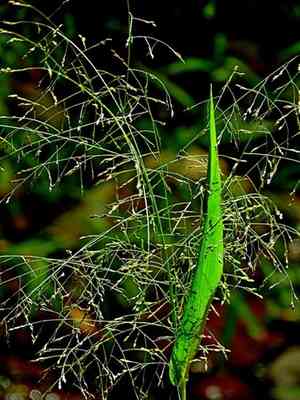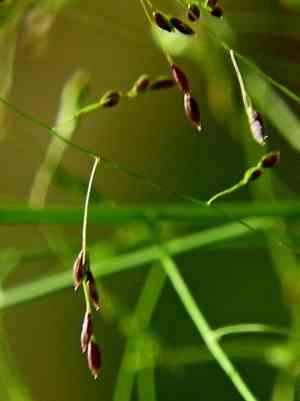
Black-seeded panic(Panicum bisulcatum)

Black-seeded panic (Panicum bisulcatum)

Also known as: Chaff panic grass

Black-seeded panic (Panicum coloratum) is a tropical grass species recognized for its adaptability and resilience. It typically flourishes in open, sunny areas and can thrive in diverse soil conditions, from dry to moist environments.

**Distinguishing Features:**
- **Seed Appearance:** Notable for its black seeds.
- **Growth Pattern:** Forms dense clumps with long, narrow leaves.
- **Flower Structure:** Features open, spreading panicles rather than V-shaped spikelets.

**Ecological Benefits:**
- **Soil Erosion Control:** Its robust root system effectively stabilizes soil.
- **Drought Resilience:** Capable of surviving in arid conditions due to efficient water usage.
- **Wildlife Habitat:** Provides essential cover and food sources for various animals.
- **Climate Mitigation:** Aids in carbon sequestration by capturing atmospheric CO2.

Black-seeded panic’s unique characteristics and ecological roles make it an important species for maintaining healthy ecosystems and supporting soil conservation efforts.

Attributes of Black-seeded panic

Lifespan
Annual
Plant Type
Grass
Plant Height
50 cm to 1 m
Spread
N/A
Leaf Color
Green
Flower Size
15 cm to 30 cm
Flower Color
Purple Green

ForwardPlant - Identify plants with a snap

Identify and diagnose plants, get toxicity alerts, and explore safety guides for all types of fungi.

Try for Free

Images of Black-seeded panic

Black-seeded panic(Panicum bisulcatum)

Quickly Identify Black-seeded panic

1
To identify Panicum bisulcatum, look for its narrow, linear leaves and the characteristic two grooves running along the seed head. The plant often grows in clumps and can reach heights of up to 1 meter.

Scientific Classification of Black-seeded panic

Phylum
Vascular plants
Class
Monocotyledons
Order
Poales
Family
Grass
Genus
Panicgrasses
Species
Black-seeded panic

Planting and Growing of Black-seeded panic

Care Difficulty
Easy
Watering Schedule
Every 3 days
Sunlight Requirements
Partial sun
Sunshine Duration
6-10 hours
Ideal Temperature
68-77℉
Soil Type
Potting Mix, Peat Mix
Soil pH
6.5-7.5
Fertilizer Type
Balanced
Pruning Season
Spring, Summer
Pruning Area
Branches, Leaves
Pruning Frequency
2 times a year
Repotting Season
Spring
Pot Type
Plastic, Ceramic

water icon How to Water Black-seeded panic?

Panicum bisulcatum thrives when its root system receives approximately 300 milliliters of water each session. This ensures moisture reaches deep into the soil without oversaturating the plant. Check if the top half-inch of the soil feels dry before each watering to guide your quantity decisions.
What are the symptoms of an underwatered Black-seeded panic? ›
What should I do if my Black-seeded panic is not getting enough water? ›
What are the symptoms of an overwatered Black-seeded panic? ›
How to save an overwatered Black-seeded panic? ›

sunlight icon What Are the Sunlight Requirements for Black-seeded panic?

Sunlight Requirements: Partial sun, Full sun
Duration of light: 5-8 hours daily
Partial sun to full sun exposure is important, offering 5-8 hours of light helps the plant thrive by enabling sufficient photosynthesis and robust development.
What is the best lighting environment for Panicum bisulcatum? ›
How to achieve the ideal lighting conditions? ›
What benefits does ideal lighting bring to Panicum bisulcatum? ›

temperature icon What Is the Ideal Temperature Range for Black-seeded panic?

Ideal Temperature: 68 ~ 77℉
For Panicum bisulcatum, an ideal growth temperature is between 68°F and 77°F. This range ensures that the plant can carry out metabolic processes efficiently, promoting optimal growth and development. Maintaining temperatures within this range helps to prevent stress on the plant, enabling it to thrive.

soil icon What Soil is Best for Black-seeded panic?

Soil type: Loam, Sandy loam
Soil PH: 6.5 ~ 7.5
Panicum bisulcatum thrives in soils that can retain adequate moisture. Loamy and sandy loam soils provide this characteristic, ensuring that the plant receives consistent hydration without the risk of waterlogging, which can lead to root rot. The grass benefits from nutrient-rich soils that can provide sustained growth. Loamy soils have an ideal balance of nutrient availability, supporting healthy plant development and resilience in varying conditions. Good drainage is imperative to prevent water stagnation around the roots. Sandy loam is especially adept at promoting proper drainage, preventing issues such as root rot and fungal infections that can arise from excess moisture.

fertilize icon How to Fertilize Black-seeded panic?

Fertilizer type: Balanced
Panicum bisulcatum requires balanced fertilization to thrive. Use a 10-10-10 NPK liquid fertilizer, diluted to half strength. For slow-release fertilizer, apply approximately one tablespoon around the plant base, ensuring not to over-concentrate nutrients that might harm the roots.

prune icon How to Prune Black-seeded panic?

Pruning Time: Spring, Summer, Autumn
Start by inspecting the Panicum bisulcatum for any dead or damaged stems. Use sharp pruning shears to cut these off at the base. Trim back any overgrown or tangled areas to maintain a tidy shape. Cutting back the plant by one-third in early spring can encourage bushy growth. Throughout the growing season, remove any spent flower heads to promote vigorous blooming. More About Pruning Techniques→

propagate icon How to Propagate Black-seeded panic plant?

Propagate Time: Spring, Early spring, Late spring
1
Choose high-quality seeds free from pests and diseases. Seeds should be mature, viable, and preferably sourced from a reputable supplier to increase germination rates.
2
Use a well-draining seed starting mix, as Panicum bisulcatum prefers not to be waterlogged. Sterilize the soil by baking it in the oven or using boiling water to prevent pathogen development.
3
Sow seeds thinly in the prepared seed trays, keeping them at least half an inch apart. Cover lightly with soil and mist evenly to maintain humidity necessary for germination.

repot icon How to Repot Black-seeded panic plant?

Repotting frequency: Annually adjust if crowded
1
Panicum bisulcatum needs repotting when its roots begin to encircle the pot, suggesting they are outgrowing the current container. Also, if water drains too quickly, it is an indication that the soil structure has broken down and is no longer suitable for the plant's health.
2
Select a pot that is 1-2 inches larger in diameter than the current one to allow room for growth. Ensure the pot has drainage holes to prevent water-logging, which could harm the plant roots. Terracotta pots can help wick away excess moisture, keeping the plant’s roots in optimal condition.
3
Opt for a well-draining, loamy soil mixture. This type of soil retains sufficient moisture for plant health while allowing excess water to escape, preventing rot. A nutrient-rich blend also provides necessary minerals that support long-term plant vigor.

ForwardPlant - Identify plants with a snap

Find the best spots for them to optimize their health, simply using your phone.

Try for Free