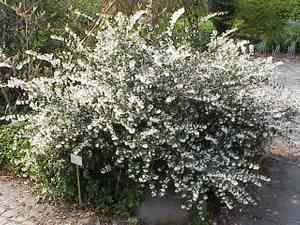
Delavay Teaolive (Osmanthus delavayi)
Also known as: Hollyleaf osmanthus, Delavayi teaolive
The plant in question is the Delavay Teaolive, known for its aromatic, tubular white flowers that are native to western and southwestern China. It was named after Abbe Delavay, who introduced it to France in 1890.
In This Article
Attributes of Delavay Teaolive
Lifespan
Perennial
Plant Type
Shrub
Plant Height
1.8 m to 3.5 m
Spread
1.8 m to 3.5 m
Leaf Color
Green
Flower Size
2.5 cm
Flower Color
White
Images of Delavay Teaolive
Quickly Identify Delavay Teaolive
1
Dense, rounded shrub reaching up to 12 feet (3.7 meters) in height and width.
2
Fragrant white flowers in terminal cymes, each 0.5 inches (1.27 cm) in size.
3
Dark green, lustrous leaves measuring 0.5-1 inch (1.3-2.5 cm) with strong toothed edges.
4
Distinct serrations and glossy texture on the firm leaf blade with prominent vein pattern.
5
Leathery leaves exude a subtle aroma, contrasting against glossy foliage.
Scientific Classification of Delavay Teaolive
Phylum
Vascular plants
Class
Dicotyledons
Order
Lamiales
Family
Olive
Genus
Osmanthus
Species
Delavay Teaolive
Planting and Growing of Delavay Teaolive
Care Difficulty
Easy
Watering Schedule
Every 2 days
Sunlight Requirements
Partial sun
Sunshine Duration
4-8 hours
Ideal Temperature
60-75℉
Soil Type
Potting Mix, Peat Mix
Soil pH
6.5-7.5
Fertilizer Type
Balanced
Pruning Season
Spring, Summer
Pruning Area
Branches, Leaves
Pruning Frequency
2 times a year
Repotting Season
Spring
Pot Type
Plastic, Ceramic
 How to Water Delavay Teaolive?
For Osmanthus delavayi, the watering amount should be enough to fully moisten the root zone, which generally means about 500 ml per watering session. Ensure the water reaches the roots without waterlogging the soil, promoting healthy growth without encouraging root rot.
What are the symptoms of an underwatered Delavay Teaolive?
›
What should I do if my Delavay Teaolive is not getting enough water?
›
What are the symptoms of an overwatered Delavay Teaolive?
›
How to save an overwatered Delavay Teaolive?
›
 What Are the Sunlight Requirements for Delavay Teaolive?
Partial sunlight is optimal, receiving light for a few hours daily. This light balance enhances foliage richness, bloom production, and maintains the plant’s fragrant characteristics.
Is full sun necessary?
›
How to achieve ideal lighting?
›
What are the benefits of ideal lighting?
›
 What Is the Ideal Temperature Range for Delavay Teaolive?
The ideal temperature range for growing Osmanthus delavayi is between 60°F and 75°F. This range ensures optimal growth and flowering conditions, enabling the plant to thrive with healthy leaf development and abundant blooms.
 What Soil is Best for Delavay Teaolive?
Osmanthus delavayi thrives in well-drained soil to prevent root rot. Well-drained soil ensures that the roots get adequate oxygen and maintain healthy growth. For optimal plant health, enhancing drainage with organic matter is beneficial. This plant benefits from a loam soil that is rich in nutrients. Loam provides a balanced mixture of sand, silt, and clay, offering an ideal environment for nutrient uptake, which enhances the plant's lush foliage and fragrant blooms. While well-drained soil is crucial, retaining some moisture is important for Osmanthus delavayi. Sandy loam, which holds moisture while allowing excess water to drain, can meet this need effectively, promoting consistent growth.
 How to Fertilize Delavay Teaolive?
When fertilizing Osmanthus delavayi, use a balanced fertilizer with equal parts of nitrogen, phosphorous, and potassium. For liquid fertilizers, use approximately half a teaspoon per gallon of water, while slow-release granules should be applied sparingly, about 1-2 tablespoons per plant.
 How to Prune Delavay Teaolive?
Use sharp and clean pruning shears to make precise cuts. This helps prevent damage to the plant tissue, reducing disease risk. Invest in quality tools that feel comfortable in your hand for better control. Begin by removing any dead or diseased branches to maintain plant health. Shape the plant by trimming elongated branches to encourage a bushy form. Cut just above a node or a branch fork to promote new growth.
More About Pruning Techniques→
 How to Propagate Delavay Teaolive plant?
1
Select healthy and semi-ripe stems with several nodes from the parent plant. Make a clean cut below a node and clip any leaves from the lower two-thirds of the cutting to reduce water loss and focus the plant’s energy on root development.
2
Dip the cut end of the prepared cutting into rooting hormone powder or gel to encourage root growth. Tap off any excess hormone before planting to ensure a balanced application.
3
Plant the treated cuttings in a well-draining potting mix and ensure they are kept moist but not waterlogged. Monitor for signs of new growth, which indicate successful rooting, typically in a few weeks.
 How to Repot Delavay Teaolive plant?
1
Osmanthus delavayi should be repotted when you notice the roots emerging from the drainage holes or the plant growth is stunted. These signs indicate that the plant has outgrown its current pot and requires more space to continue thriving.
2
Select a pot that is just one size larger than the current one. It should have good drainage capabilities to prevent waterlogging. A pot made of breathable material like terracotta is ideal, as it helps in regulating the soil moisture and minimizing root rot.
3
Opt for a well-draining potting mix that can retain some moisture yet prevent water from pooling excessively at the roots. This type of soil will support the plant's requirement for moderate moisture while ensuring that the roots are well-aerated.
Learn More About Delavay Teaolive Diseases
Anthracnose
Bacterial Leaf Spot
Black Spot
Chemical Injury
Crown Gall
Damping-off
Downy Mildew
Drought Stress
Fusarium Wilt
Gray Mold
Leaf Curl
Leaf Spot
Mosaic
Nutrient Deficiency
Nutrient Toxicity
Powdery Mildew
Root Rot
Root-knot Nematode
Rusts
Sooty Mold
Spider Mites
Temperature Stress
Thrips Damage
White Mold



