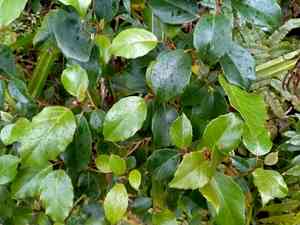
Common tree daisy (Olearia arborescens)
Also known as: Tree Daisy, Akiraho
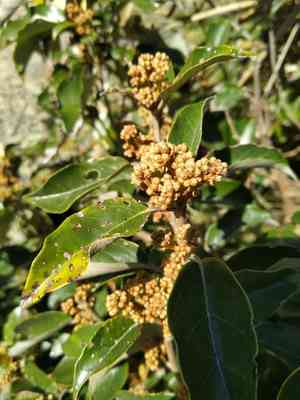
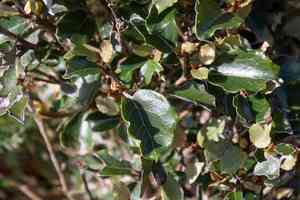
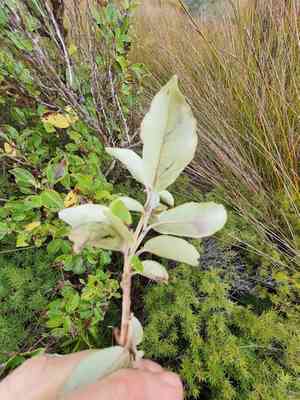
The leaves of the plant are wide, oval-shaped, wavy and toothed, and are greyish underneath. Olearia arborescens produces white bunched flowers in spring to summer.
In This Article
Attributes of Common tree daisy
Lifespan
Perennial
Plant Type
Shrub
Plant Height
1.5 to 4 meters
Spread
1 to 2 meters
Leaf Color
Green Blue
Flower Size
1 to 1.5 cm
Flower Color
White
Images of Common tree daisy
Quickly Identify Common tree daisy
1
Olearia arborescens can be recognized by its leathery leaves that are dark green on top and silvery-white underneath. The leaves are lanceolate to ovate, and the plant produces clusters of small, white, daisy-like flowers.
Scientific Classification of Common tree daisy
Phylum
Vascular plants
Class
Dicotyledons
Order
Asterales
Family
Daisy
Genus
Daisy-bush
Species
Common tree daisy
Planting and Growing of Common tree daisy
Care Difficulty
Easy
Watering Schedule
Every 2 days
Sunlight Requirements
Full sun
Sunshine Duration
4-8 hours
Ideal Temperature
60-75℉
Soil Type
Potting Mix, Peat Mix
Soil pH
6.5-7.5
Fertilizer Type
Balanced
Pruning Season
Spring, Summer
Pruning Area
Branches, Leaves
Pruning Frequency
2 times a year
Repotting Season
Spring
Pot Type
Plastic, Ceramic
 How to Water Common tree daisy?
For Olearia arborescens, aim to provide approximately 500 milliliters of water per session. This amount ensures the soil remains evenly moist without becoming waterlogged. It is crucial to water the plant until the excess begins to drain from the pot’s base, signaling that the root system has received adequate hydration.
What are the symptoms of an underwatered Common tree daisy?
›
What should I do if my Common tree daisy is not getting enough water?
›
What are the symptoms of an overwatered Common tree daisy?
›
How to save an overwatered Common tree daisy?
›
 What Are the Sunlight Requirements for Common tree daisy?
Olearia arborescens thrives best under full to partial sunlight, which supports balanced photosynthesis, encourages healthy foliage, and enhances blooming.
What is the best lighting environment for Olearia arborescens?
›
How can I ensure my Olearia arborescens gets ideal light exposure?
›
What are the benefits of ideal lighting for Olearia arborescens?
›
 What Is the Ideal Temperature Range for Common tree daisy?
The ideal temperature range for Olearia arborescens is between 60°F and 75°F. This moderate range supports healthy growth, ensuring that the plant's metabolic processes function efficiently and stress levels are minimized.
 What Soil is Best for Common tree daisy?
Olearia arborescens thrives in well-drained soil, which prevents root rot and ensures healthy growth. This plant dislikes waterlogged conditions, making efficient drainage crucial for its survival. This plant prefers soil with moderate fertility. Excessive nutrients can lead to overgrowth, while poor nutrient soil can stunt its growth. A balanced nutrient profile ensures it flourishes with strong foliar and flower development. Maintaining a soil pH between 6.5 and 7.5 supports the optimal uptake of essential nutrients. This pH range is perfect for the plant’s metabolic processes and growth dynamics.
 How to Fertilize Common tree daisy?
Olearia arborescens benefits from a moderate approach to fertilization. Use a balanced 10-10-10 NPK fertilizer. For liquid fertilizers, mix it at a concentration of 1 tablespoon per gallon of water. This dilution ensures that the plant receives nutrients without the risk of overfeeding, which could lead to burned roots or nutrient imbalances.
 How to Prune Common tree daisy?
Start by removing any dead or diseased branches to promote healthy growth. Trim the plant to your desired shape using sharp shears. Focus on maintaining a natural form rather than creating sharp edges. To encourage denser foliage, make cuts just above where a leaf pair emerges. Always clean your pruning tools to prevent the spread of disease. To promote more blooms, deadhead spent flowers regularly. This redirects the plant's energy into producing more flowers rather than seed heads. Additionally, thin out the center to improve air circulation, which enhances photosynthesis and overall vitality.
More About Pruning Techniques→
 How to Propagate Common tree daisy plant?
1
Collect seeds from mature Olearia arborescens plants and sow them in a well-draining seed mix. Cover lightly with soil and mist regularly to keep the medium slightly moist until germination occurs.
2
Select healthy stems and cut at a 45-degree angle. Remove the lower leaves to reduce water loss and dip the cut end in rooting hormone to promote root growth before planting.
3
Insert the cuttings into a pot with a moist growing medium, ensuring they are stable. Place the pot in a bright but indirect light location to encourage rooting.
 How to Repot Common tree daisy plant?
1
Repotting should be considered when you notice roots growing through the drainage holes or the soil dries out rapidly after watering. If the Olearia arborescens appears stunted or shows a noticeable decrease in flowering, these are also signals that it's time to repot.
2
Select a pot that's one size larger, with good drainage holes. This allows roots to expand without being waterlogged. An appropriate pot enhances moisture control and promotes healthy root development, vital for the vitality of Olearia arborescens.
3
Opt for a well-draining potting mix, perhaps mixed with perlite or sand. This ensures proper drainage and aeration, crucial for preventing root rot and encouraging robust plant growth typical of Olearia arborescens.
Learn More About Common tree daisy Diseases
Anthracnose
Bacterial Leaf Spot
Black Spot
Chemical Injury
Crown Gall
Damping-off
Downy Mildew
Drought Stress
Fusarium Wilt
Gray Mold
Leaf Curl
Leaf Spot
Mosaic
Nutrient Deficiency
Nutrient Toxicity
Powdery Mildew
Root Rot
Root-knot Nematode
Rusts
Sooty Mold
Spider Mites
Temperature Stress
Thrips Damage
White Mold



