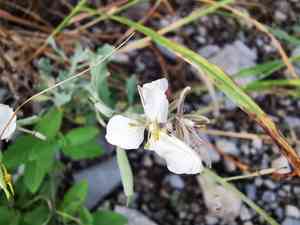
Velvety nerisyrenia (Nerisyrenia camporum)
Also known as: Mesa greggia
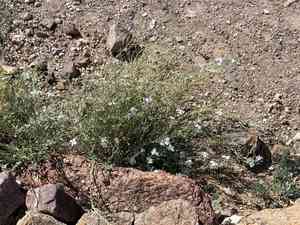
The velvety nerisyrenia is a tough, low-lying perennial herb that excels in arid environments. Its narrow, silver-green leaves are cloaked in fine hairs, which aid in reflecting sunlight and retaining moisture. The plant's soft violet-pink flowers add a touch of color to the otherwise barren landscapes it inhabits.
In This Article
Attributes of Velvety nerisyrenia
Lifespan
Perennial
Plant Type
Herb, Shrub
Plant Height
20 cm to 61 cm
Spread
N/A
Leaf Color
Green
Flower Size
2.5 cm
Flower Color
White Pink
Images of Velvety nerisyrenia
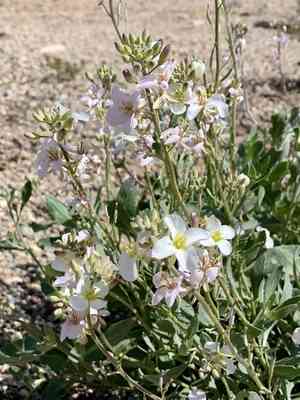
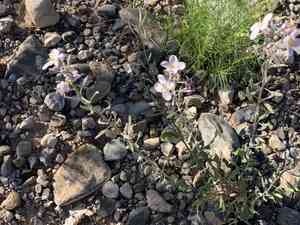
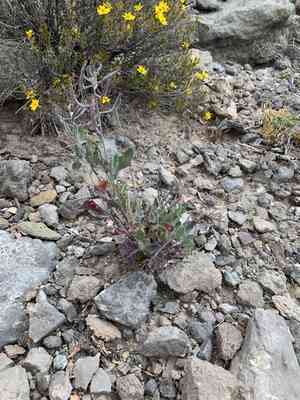
Quickly Identify Velvety nerisyrenia
1
Nerisyrenia camporum can be identified by its small, delicate yellow flowers and slender, linear leaves. Its stems are wiry and can grow up to several feet tall, making it distinguishable from other mustard species.
Scientific Classification of Velvety nerisyrenia
Phylum
Vascular plants
Class
Dicotyledons
Order
Brassicales
Family
Cruciferae
Genus
Nerisyrenia
Species
Velvety nerisyrenia
Planting and Growing of Velvety nerisyrenia
Care Difficulty
Easy
Watering Schedule
Every 2 days
Sunlight Requirements
Full sun
Sunshine Duration
6-12 hours
Ideal Temperature
70-85℉
Soil Type
Potting Mix, Peat Mix
Soil pH
6.5-7.5
Fertilizer Type
Balanced
Pruning Season
Spring, Summer
Pruning Area
Branches, Leaves
Pruning Frequency
2 times a year
Repotting Season
Spring
Pot Type
Plastic, Terracotta
 How to Water Velvety nerisyrenia?
Nerisyrenia camporum requires modest watering, with approximately 150 milliliters per session ensuring its soil is adequately moist but never waterlogged. Water until the soil surface feels moist, but avoid water pooling at the bottom of the pot to prevent root rot.
What are the symptoms of an underwatered Velvety nerisyrenia?
›
What should I do if my Velvety nerisyrenia is not getting enough water?
›
What are the symptoms of an overwatered Velvety nerisyrenia?
›
How to save an overwatered Velvety nerisyrenia?
›
 What Are the Sunlight Requirements for Velvety nerisyrenia?
Full sun ensures Nerisyrenia camporum reaches its full growth potential, increasing resilience and vibrant flowering. Ideal lighting supports its native desert-like conditions, enriching ecological stability and beauty.
Why does Nerisyrenia camporum need adequate sunlight?
›
What are the solutions for achieving ideal lighting for Nerisyrenia camporum?
›
What are the benefits of providing ideal lighting to Nerisyrenia camporum?
›
 What Is the Ideal Temperature Range for Velvety nerisyrenia?
The ideal temperature range for Nerisyrenia camporum is between 70°F and 85°F. This range allows the plant to thrive and maintain healthy growth. Within this temperature window, the metabolic processes of the plant function optimally, ensuring adequate photosynthesis and nutrient absorption. It is crucial to maintain this environment to avoid stress-related issues and promote lush foliage and blooms.
 What Soil is Best for Velvety nerisyrenia?
Nerisyrenia camporum thrives best in well-drained soils that prevent waterlogging. This is crucial as it ensures the roots get enough air and reduces the risk of root rot, contributing to the plant's healthy growth. Although not overly demanding, the plant prefers soils enriched with organic matter. This boosts nutrient availability, promoting vital processes like photosynthesis and root development. While it enjoys good drainage, maintaining moderate moisture levels in the soil is essential. It helps in consistent nutrient uptake and supports steady growth stages.
 How to Fertilize Velvety nerisyrenia?
When fertilizing Nerisyrenia camporum, use approximately 10-20 grams of balanced fertilizer per plant. Ensure the soil is moist before application to avoid burning the roots. This amount supports healthy growth and long-term vitality.
 How to Prune Velvety nerisyrenia?
Start by removing any dead or damaged stems to encourage new growth. Cut back any overgrown branches to maintain a bushy, compact shape. Always use clean, sharp pruning shears to make clean cuts, just above a leaf node, to prevent damage to the plant. For more experienced gardeners, consider selective thinning to reduce density in the center of the plant, improving airflow and light penetration. Also, practice rejuvenation pruning by cutting back one-third of the oldest stems annually to ground level.
More About Pruning Techniques→
 How to Propagate Velvety nerisyrenia plant?
1
Start by collecting healthy seeds from a mature Nerisyrenia camporum plant. Make sure the seeds are clean and dry, and store them in a cool, dry place before planting.
2
Fill seed trays with the sterile potting mix and sow the seeds on the surface. Lightly cover them with a thin layer of potting mix or sand, and water gently to keep the soil moist.
3
Place the seed trays in a warm, bright location, ideally with a temperature of around 18-22°C. Ensure that they receive indirect sunlight and keep the soil moist but not waterlogged.
 How to Repot Velvety nerisyrenia plant?
1
Nerisyrenia camporum should be repotted when growth slows, roots outgrow the pot, or soil quality degrades. These signs often appear after about two to three years, making them ideal repotting indicators. Spring and early summer are best for repotting as the plant is in its active growth phase, helping it to recover swiftly.
2
Select a pot slightly larger than the current one, providing just enough room for the roots to expand without overwhelming the plant's root system. A pot with drainage holes is essential to prevent waterlogging which can lead to root rot. The right pot encourages healthy root development and efficient water management.
3
Opt for a well-draining cactus mix with added perlite or sand. This blend imitates the plant's natural habitat and prevents root rot by ensuring excess water can escape quickly. Such soil also facilitates aeration around the plant roots, promoting robust growth and prevention of pests and diseases.
Toxicity
Ingestion
WARNING
The judgment on toxicity and danger is for reference only. We DO NOT GUARANTEE any accuracy of such judgment. Therefore, you SHALL NOT rely on such judgment. It is IMPORTANT TO SEEK PROFESSIONAL ADVICE in advance when necessary.
Learn More About Velvety nerisyrenia Diseases
Bacterial Leaf Spot
Bacterial Soft Rot
Bacterial Wilt
Chemical Injury
Crown Gall
Cyst Nematode
Damping-off
Downy Mildew
Drought Stress
Fusarium Wilt
Gray Mold
Leaf Spot
Mosaic
Nutrient Deficiency
Nutrient Toxicity
Powdery Mildew
Root Rot
Root-knot Nematode
Rusts
Sooty Mold
Spider Mites
Temperature Stress
Thrips Damage
White Mold



