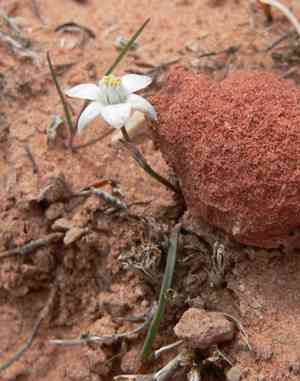
Crowned muilla (Muilla coronata)
Also known as: Crowned muilla
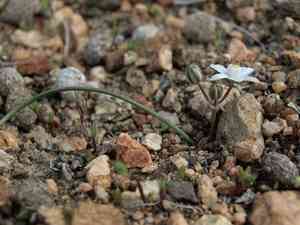
The flower showcases six yellowish-green, elliptical tepals that curve outward. Centrally located, there are six pale green stamens with arrow-shaped anthers. The stamens' filaments are partially fused, forming an upright, cylindrical "crown."
In This Article
Attributes of Crowned muilla
Lifespan
Perennial
Plant Type
Herb
Plant Height
<15 cm
Spread
N/A
Leaf Color
Green
Flower Size
1-1.5 cm
Flower Color
White to greenish
Images of Crowned muilla
Quickly Identify Crowned muilla
1
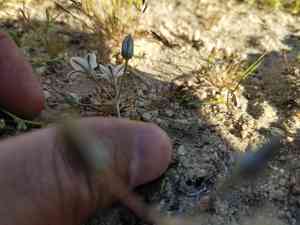
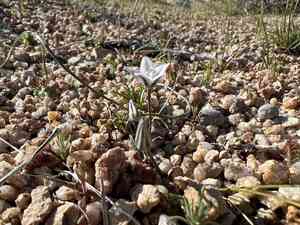
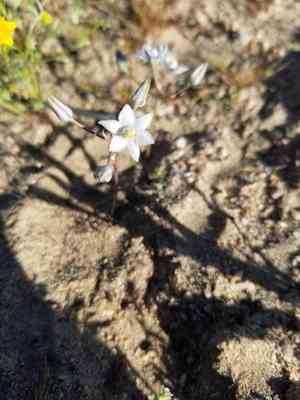
Muilla coronata can be identified by its grass-like leaves and small, white to greenish star-shaped flowers that grow in clusters. The flowers have six tepals and prominent stamens.
Scientific Classification of Crowned muilla
Phylum
Vascular plants
Class
Monocotyledons
Order
Asparagales
Family
Asparagus
Genus
Muilla
Species
Crowned muilla
Planting and Growing of Crowned muilla
Care Difficulty
Moderate
Watering Schedule
Every day
Sunlight Requirements
Full sun
Sunshine Duration
4-6 hours
Ideal Temperature
60-75℉
Soil Type
Potting Mix, Peat Mix
Soil pH
6.5-7.5
Fertilizer Type
Balanced
Pruning Season
Spring, Summer
Pruning Area
Branches, Leaves
Pruning Frequency
2 times a year
Repotting Season
Spring
Pot Type
Plastic, Terracotta
 How to Water Crowned muilla?
Muilla coronata requires careful attention to watering. A typical amount would be about 250 milliliters per session, ensuring that the soil is moist but never waterlogged. The key is to mimic its natural desert habitat where rainfall is infrequent but substantial enough to replenish the plant's needs.
What are the symptoms of an underwatered Crowned muilla?
›
What should I do if my Crowned muilla is not getting enough water?
›
What are the symptoms of an overwatered Crowned muilla?
›
How to save an overwatered Crowned muilla?
›
 What Are the Sunlight Requirements for Crowned muilla?
Muilla coronata is best suited for full sun conditions, ideally receiving 6 to 10 hours of direct sunlight. Proper lighting aids in full flowering potential and minimizes plant stress.
What is the optimal light for Muilla coronata?
›
How to achieve ideal lighting conditions?
›
What are the benefits of ideal lighting?
›
 What Is the Ideal Temperature Range for Crowned muilla?
Muilla coronata thrives best within a temperature range of 60°F to 75°F. This range ensures optimal growth conditions, mimicking the natural habitat of the plant. At these temperatures, the plant's metabolic processes function efficiently, promoting healthy development and blooming. If these conditions are met, the plant can show vigorous growth and enhanced aesthetic value.
 What Soil is Best for Crowned muilla?
Muilla coronata thrives in well-draining soils to prevent root rot. Ensuring the soil allows excess water to escape helps keep the roots healthy and promotes vigorous growth. This plant prefers soils with a rich supply of organic matter. The presence of nutrients is vital for its flowering and overall vitality, ensuring robust blooms and foliage. Soil aeration is crucial as it allows root systems to breathe and absorb necessary oxygen. This ensures better root development and effective uptake of nutrients and water.
 How to Fertilize Crowned muilla?
Muilla coronata requires a balanced approach to fertilization. When applying liquid fertilizers, it's recommended to dilute them to half their suggested strength to avoid any potential root damage. For slow-release fertilizers, use one tablespoon per square foot around the base of the plant. This plant thrives with moderate nutrient availability, ensuring it gets enough without overwhelming its natural growth processes.
 How to Prune Crowned muilla?
Prune in early spring just as new growth begins, and again in late summer for maintenance. Avoid pruning in winter as it's a period of dormancy for the plant. Inspect the plant for signs of pest infestations like aphids or spider mites. Pruning can expose healthy areas to potential invaders if not monitored. Muilla coronata grows from bulbs. When pruning, take care not to disturb the bulbs as this can impair root growth and subsequent flowering.
More About Pruning Techniques→
 How to Propagate Crowned muilla plant?
1
Fill the seed tray with a well-draining potting mix, ensuring it is leveled and lightly compacted. Moisten the soil with a mist spray bottle to prepare it for seed placement.
2
Scatter Muilla coronata seeds evenly across the surface of the soil, avoiding overcrowding. Lightly press the seeds into the soil without fully burying them, to maintain proper light exposure.
3
Place the seed tray in a warm, well-lit area. Keep the soil consistently moist using the mist spray bottle, and ensure the seeds receive adequate indirect sunlight for the best germination results.
 How to Repot Crowned muilla plant?
1
Muilla coronata gives certain signals indicating the need for repotting. Look for roots emerging from the drainage holes as a sign that the plant requires more space. Additionally, if the plant's growth has slowed down or leaves show signs of yellowing, it may indicate root congestion. It's best to repot during spring or autumn when the plant is more active and can adapt better to the new environment.
2
When selecting a pot for Muilla coronata, choose one that's 1-2 inches larger in diameter than the current pot. This gives the roots ample space to expand while preventing excessive soil retention that could lead to root rot. Ensure the pot has adequate drainage holes to allow excess water to escape, preventing waterlogging. Opt for breathable materials like terracotta or clay, which permit air exchange and reduce water retention, benefiting the plant's overall health.
3
For Muilla coronata, opt for a well-draining sandy mix to mimic its natural habitat. This soil mix should consist of sand, perlite, and some light compost to provide nutrients while ensuring excellent drainage. Such a composition prevents water accumulation around the roots, reducing the risk of rot and promoting healthy growth. The sand ensures good drainage, while perlite adds aeration, and the compost delivers essential nutrients, creating an optimal growing environment.
Learn More About Crowned muilla Diseases
Anthracnose
Bacterial Leaf Spot
Bacterial Soft Rot
Bacterial Wilt
Crown Gall
Cyst Nematode
Damping-off
Downy Mildew
Drought Stress
Fusarium Wilt
Gray Mold
Leaf Spot
Mosaic
Nutrient Deficiency
Nutrient Toxicity
Powdery Mildew
Root Rot
Root-knot Nematode
Rusts
Sooty Mold
Spider Mites
Temperature Stress
Thrips Damage
White Mold



