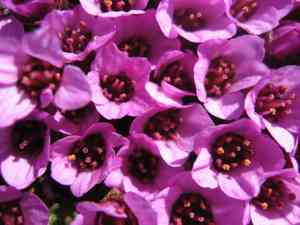
Brewer's miterwort (Mitella breweri)
Also known as: None
Brewer's miterwort (Mitella breweri) is a perennial herb that blooms from spring to summer, showcasing small, yellow-green flowers. It flourishes in light shade and favors consistently moist soil. This plant is native to the north Pacific coast of the United States.
In This Article
Attributes of Brewer's miterwort
Lifespan
Perennial
Plant Type
Herb
Plant Height
15 cm to 41 cm
Spread
20 cm
Leaf Color
Green
Flower Size
Approximately 5 mm
Flower Color
Green Yellow
Images of Brewer's miterwort
Quickly Identify Brewer's miterwort
1
Mitella breweri can be identified by its small, greenish-white flowers which have fringed petals. The leaves are simple, toothed, and heart-shaped, with a hairy surface.
Scientific Classification of Brewer's miterwort
Phylum
Vascular plants
Class
Dicotyledons
Order
Saxifragales
Family
Saxifrage
Genus
Miterworts
Species
Brewer's miterwort
Planting and Growing of Brewer's miterwort
Care Difficulty
Moderate
Watering Schedule
Every 2 days
Sunlight Requirements
Partial sun
Sunshine Duration
6-10 hours
Ideal Temperature
60-75℉
Soil Type
Potting Mix, Peat Mix
Soil pH
6.5-7.5
Fertilizer Type
Balanced
Pruning Season
Spring, Summer
Pruning Area
Branches, Leaves
Pruning Frequency
Once a year
Repotting Season
Spring
Pot Type
Plastic, Ceramic
 How to Water Brewer's miterwort?
Mitella breweri thrives best when its soil remains consistently moist but not soggy. Aim to water it with about 150ml each session. It's crucial to ensure that the water reaches deep into the roots without creating standing water. This mimics its natural habitat in damp forest floors.
What are the symptoms of an underwatered Brewer's miterwort?
›
What should I do if my Brewer's miterwort is not getting enough water?
›
What are the symptoms of an overwatered Brewer's miterwort?
›
How to save an overwatered Brewer's miterwort?
›
 What Are the Sunlight Requirements for Brewer's miterwort?
Partial sun exposure optimizes growth by providing sufficient energy for photosynthesis while ensuring leaves remain unscathed by direct rays.
More About Sunlight Requirements Techniques→
What is the optimal light requirement for Mitella breweri?
›
How can I achieve the optimal lighting for this plant?
›
What benefits does optimal light provide?
›
 What Is the Ideal Temperature Range for Brewer's miterwort?
The ideal temperature range for Mitella breweri is between 60°F and 75°F. Within this range, the plant thrives as it provides optimal conditions for photosynthesis and metabolic processes. This stable temperature range ensures that the plant's enzymatic activities operate efficiently, leading to healthy growth and development.
 What Soil is Best for Brewer's miterwort?
Mitella breweri thrives in soil that retains moisture without becoming waterlogged. Well-draining loam or sandy loam is ideal, allowing roots to absorb necessary water while avoiding root rot. A nutrient-dense soil is crucial for the healthy growth of Mitella breweri, supplying essential minerals and nutrients that fuel vibrant foliage and a robust plant structure. Maintaining soil pH between 6.5 and 7.5 ensures optimal nutrient uptake for Mitella breweri, preventing nutrient lockout and promoting vigorous plant development.
 How to Fertilize Brewer's miterwort?
Mitella breweri prefers a delicate balance of nutrients. When using liquid fertilizers, dilute them to half the recommended strength to avoid overfeeding. For slow-release fertilizers, apply sparingly to ensure there's no nutrient build-up in the soil.
 How to Prune Brewer's miterwort?
Begin by sterilizing your pruning shears to prevent disease spread. Identify any dead, damaged, or crossed stems and carefully cut them back to the base. Undertake this pruning monthly in the growing season to encourage maintained, lush growth. Thinning the plant’s interior branches improves air circulation, reducing mildew risk. Selectively prune dense clusters of stems from the interior to create space, allowing light and air to reach deeper parts of the plant.
More About Pruning Techniques→
 How to Propagate Brewer's miterwort plant?
1
Start by selecting healthy, viable seeds of Mitella breweri. Soak them in water for 24 hours to soften the seed coat, enhancing germination rates. This pre-treatment step is crucial for breaking seed dormancy and encouraging uniform growth.
2
Fill seed trays with a well-draining, sterile potting mix. Sow the prepared seeds evenly across the surface, pressing them gently into the soil. Cover the seeds lightly with a thin layer of soil or vermiculite to maintain moisture and warmth.
3
In early spring, dig up the mature Mitella breweri plants. Carefully separate the clumps into smaller sections, ensuring each division has roots attached. Replant these divisions immediately in a prepared garden bed or container with suitable soil conditions.
 How to Repot Brewer's miterwort plant?
1
Mitella breweri shows signs for repotting when you see roots growing out of the drainage holes or when its growth appears stunted. Additionally, if water isn’t draining as swiftly as it should, it’s time for a change. Ideally, check for these signals during early spring to ensure a smooth transition.
2
Opt for a pot that is slightly larger than the current one to allow for root expansion. Ensure it has good drainage holes to prevent waterlogging, which can lead to root rot. Ceramic pots are often preferred for their ability to regulate temperature and moisture effectively, promoting healthier root systems.
3
Select a soil mix that is well-draining and rich in organic matter, as this ensures proper aeration and nutrients for Mitella breweri. A mix incorporating components like pine bark or perlite can enhance drainage, while organic matter promotes healthy growth by providing essential nutrients.
Learn More About Brewer's miterwort Diseases
Anthracnose
Bacterial Leaf Spot
Bacterial Soft Rot
Bacterial Wilt
Black Spot
Chemical Injury
Damping-off
Downy Mildew
Drought Stress
Fusarium Wilt
Gray Mold
Leaf Curl
Leaf Spot
Mosaic
Nutrient Deficiency
Nutrient Toxicity
Powdery Mildew
Root Rot
Root-knot Nematode
Rusts
Sooty Mold
Spider Mites
Temperature Stress
Thrips Damage
White Mold



