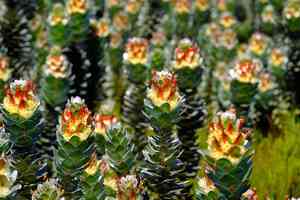
Matchstick pagoda (Mimetes hottentoticus)
Also known as: none
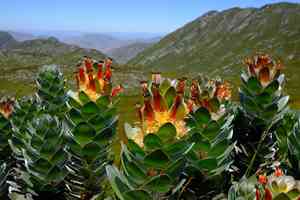
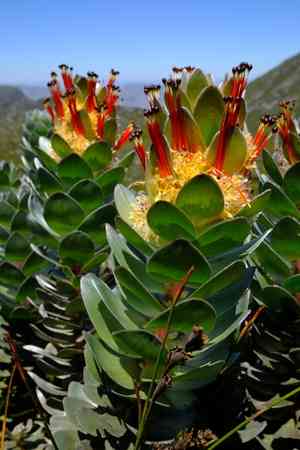
Matchstick pagoda is a striking shrub endemic to South Africa, known for its bright red floral bracts and dense, silvery foliage. These features not only captivate onlookers but also play a role in the plant's adaptation to its fynbos habitat, helping it thrive amid harsh, fire-prone conditions. Its tubular flowers, hidden among the bracts, attract specialized bird pollinators, further evidencing its unique ecological niche.
In This Article
Attributes of Matchstick pagoda
Lifespan
Perennial
Plant Type
Shrub
Plant Height
1.5-2 meters
Spread
Approximately 1 meter
Leaf Color
Vibrant green
Flower Size
Approximately 2 centimeters
Flower Color
Bright red
Images of Matchstick pagoda
Quickly Identify Matchstick pagoda
1
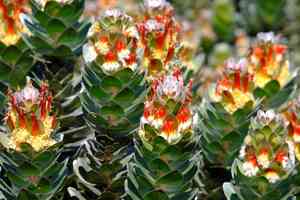
Mimetes hottentoticus can be identified by its tall growth, often reaching up to 2 meters. Its leaves are arranged spirally and are a vibrant green color. The flowers are bright red, tubular, and appear in dense, spike-like clusters.
Scientific Classification of Matchstick pagoda
Phylum
Vascular plants
Class
Dicotyledons
Order
Proteales
Family
Protea
Genus
Pagoda
Species
Matchstick pagoda
Planting and Growing of Matchstick pagoda
Care Difficulty
Hard
Watering Schedule
Every 2 days
Sunlight Requirements
Full sun
Sunshine Duration
6-10 hours
Ideal Temperature
60-75℉
Soil Type
Potting Mix, Peat Mix
Soil pH
6.5-7.5
Fertilizer Type
Balanced
Pruning Season
Spring, Summer
Pruning Area
Branches, Leaves
Pruning Frequency
2 times a year
Repotting Season
Spring
Pot Type
Plastic, Ceramic
 How to Water Matchstick pagoda?
For Mimetes hottentoticus, water approximately 500 milliliters each session. This allows the water to seep down deeply into the root zone, providing ample moisture without oversaturating the soil. A deep watering encourages roots to grow downward, creating a more resilient plant. Always ensure the soil is well-draining to prevent water from pooling around the roots.
What are the symptoms of an underwatered Matchstick pagoda?
›
What should I do if my Matchstick pagoda is not getting enough water?
›
What are the symptoms of an overwatered Matchstick pagoda?
›
How to save an overwatered Matchstick pagoda?
›
 What Are the Sunlight Requirements for Matchstick pagoda?
Mimetes hottentoticus flourishes when receiving full sun to partial sun. This light exposure helps maintain its vibrant colors and encourages healthy flowering patterns.
What is the ideal lighting condition for this plant?
›
How can you ensure the plant receives its ideal light?
›
What benefits does the plant get from ideal light conditions?
›
 What Is the Ideal Temperature Range for Matchstick pagoda?
The ideal temperature range for Mimetes hottentoticus is between 60°F and 75°F. This range provides the optimal conditions for photosynthesis and healthy growth, ensuring that the plant has access to the necessary warmth without experiencing heat stress. Maintaining this temperature range can help facilitate proper enzymatic activities and robust plant metabolism.
 What Soil is Best for Matchstick pagoda?
Mimetes hottentoticus thrives best in well-drained soil that prevents waterlogging. This ensures optimal root health, minimizing the risk of root rot, and promotes vigorous plant growth. This plant favors nutrient-rich soil, providing essential minerals and elements necessary for healthy development. A well-fed plant exhibits vibrant foliage and sustains flowering, enhancing its ornamental value. Soil that retains moderate moisture but is not overly wet supports the plant in dry spells while avoiding conditions conductive to fungal growth. This balance ensures the plant's robustness and resilience.
 How to Fertilize Matchstick pagoda?
Mimetes hottentoticus requires a balanced approach to fertilization. Use a low-concentration liquid fertilizer mixed at a ratio of 1:4 with water. Apply 200 ml per plant to ensure optimal growth without risking nutrient burn.
 How to Prune Matchstick pagoda?
Focus on selecting stems that appear overcrowded or are growing inwards towards the center of the plant. By removing these, you open up space for air and light, vital components for the prevention of rot and promoting uniform growth across the plant. Make sure to identify branches that cross each other, as their friction can cause open wounds, leading to disease. Avoid removing more than 25-30% of the plant at any one time as this can stress the plant and reduce its ability to photosynthesize efficiently. Over-pruning may lead to fewer flowers in the next blooming cycle and can make the plant more susceptible to pests and other environmental stressors. Patience and restraint will yield the best results in maintaining the health of Mimetes hottentoticus.
More About Pruning Techniques→
 How to Propagate Matchstick pagoda plant?
1
Collect seeds from a mature Mimetes hottentoticus plant. Clean the seeds thoroughly to remove any fruit pulp and ensure they are dry before sowing.
2
Fill the seed tray with a well-draining soil mix. Scatter the dried seeds evenly across the soil surface and cover them lightly with a thin layer of soil.
3
Select healthy branches from the plant and cut them just below a node. Remove lower leaves and plant the cuttings in well-prepared soil or seed trays.
 How to Repot Matchstick pagoda plant?
1
Mimetes hottentoticus requires repotting when its roots begin to circle the pot interior, indicating they need more space. Additionally, if water is draining too rapidly or if the plant appears lackluster despite care, it might be time to consider a new pot. Observing these signals ensures the plant thrives and maintains optimal growth.
2
Select a pot with drainage holes and a size slightly larger than the current one, about 2-3 inches wider in diameter. This promotes efficient root expansion while reducing the risk of overwatering. The material should also be breathable, such as terracotta, to best support the plant’s natural health needs.
3
Opt for a well-draining soil mix rich in organic matter. A blend with sand, peat, and fine bark is ideal for maintaining the acidic conditions Mimetes hottentoticus prefers. This kind of soil minimizes root rot and encourages robust plant development by promoting healthy air and moisture circulation around the roots.
Learn More About Matchstick pagoda Diseases
Anthracnose
Bacterial Leaf Spot
Bacterial Soft Rot
Bacterial Wilt
Black Spot
Chemical Injury
Crown Gall
Cyst Nematode
Damping-off
Downy Mildew
Drought Stress
Fusarium Wilt
Gray Mold
Leaf Curl
Leaf Spot
Mosaic
Nutrient Deficiency
Nutrient Toxicity
Powdery Mildew
Root Rot
Root-knot Nematode
Rusts
Sooty Mold
Spider Mites
Temperature Stress
Thrips Damage
White Mold



