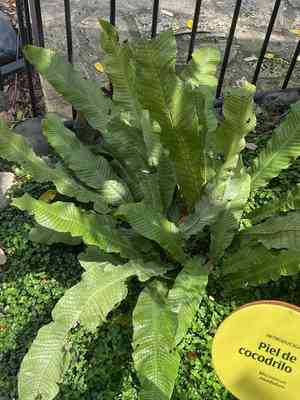
Crocodile fern (Microsorum musifolium)
Also known as: Alligator Fern
The Crocodile fern earns its name from its most captivating feature: the leathery, strap-like fronds adorned with a textured pattern that resembles crocodile skin. This distinctive appearance sets it apart in the fern world, making it a highly desirable plant in the horticultural market.
In This Article
Attributes of Crocodile fern
Lifespan
Perennial
Plant Type
Fern
Plant Height
30 cm to 61 cm
Spread
0.5-1 meter
Leaf Color
Green
Flower Size
N/A (ferns do not produce flowers)
Flower Color
N/A
Quickly Identify Crocodile fern
1
The plant can be identified by its distinctive, elongated, and deeply veined leaves that mimic the texture of crocodile skin. The leaves can grow up to 0.5-1 meter in length and have a bright green coloration with darker green veining.
Scientific Classification of Crocodile fern
Phylum
Vascular plants
Class
Ferns
Order
Polypodiales
Family
Polypody
Genus
Microsorum
Species
Crocodile fern
Planting and Growing of Crocodile fern
Care Difficulty
Easy
Watering Schedule
Every 2 days
Sunlight Requirements
Partial sun
Sunshine Duration
6-8 hours
Ideal Temperature
65-80℉
Soil Type
Potting Mix, Peat Mix
Soil pH
6.5-7.5
Fertilizer Type
Balanced
Pruning Season
Spring, Summer
Pruning Area
Branches, Leaves
Pruning Frequency
2 times a year
Repotting Season
Spring
Pot Type
Plastic, Ceramic
 How to Water Crocodile fern?
When watering Microsorum musifolium, aim for about 300 ml each time. Ensure the soil is evenly moist but not waterlogged. It's crucial not to let this plant sit in water, as it prefers a well-draining medium. Always let the top inch of soil dry out slightly between watering sessions.
What are the symptoms of an underwatered Crocodile fern?
›
What should I do if my Crocodile fern is not getting enough water?
›
What are the symptoms of an overwatered Crocodile fern?
›
How to save an overwatered Crocodile fern?
›
 What Are the Sunlight Requirements for Crocodile fern?
Microsorum musifolium does best with partial sun to full shade, ideally receiving filtered sunlight for a few hours daily. This light range facilitates proper photosynthesis, maintaining rich foliar color and vigor.
What is the best lighting for Microsorum musifolium?
›
How can I ensure my plant gets ideal light?
›
What benefits does ideal lighting offer?
›
 What Is the Ideal Temperature Range for Crocodile fern?
The ideal temperature range for Microsorum musifolium lies between 65°F and 80°F. Within this range, the plant is able to thrive and exhibit its optimal growth characteristics, including healthy leaf structure and vibrant green coloration. Maintaining temperatures within this range allows the plant's physiological processes to function efficiently, ensuring robust overall health.
 What Soil is Best for Crocodile fern?
Why does Microsorum musifolium require well-draining soil? It helps prevent root rot by allowing excess water to escape easily, ensuring the plant's roots stay healthy and oxygenated. What benefits does moisture retention offer to Microsorum musifolium? It ensures the plant receives a consistent level of hydration, which is essential for its lush growth and vibrant foliage. How does rich organic matter benefit this plant? It provides essential nutrients and supports healthy soil microorganisms, fostering robust growth and a resilient plant.
 How to Fertilize Crocodile fern?
For Microsorum musifolium, a balanced liquid fertilizer diluted to half strength is recommended to avoid over-fertilization. Apply approximately 100-150 ml of diluted fertilizer per application, ensuring that the soil is moist prior to applying to prevent fertilizer burn.
 How to Prune Crocodile fern?
Start by inspecting the plant to identify any fronds that are brown, yellow, or clearly dead. These are the ones that need removal since they do not contribute to the plant’s health or appearance. Using your sharp tools, remove the undesirable fronds by cutting them at the base as close to the rhizome as possible. Make clean cuts to facilitate better healing and regrowth. After trimming diseased or potentially infected parts, sterilize your tools with rubbing alcohol to prevent the spread of bacteria or fungi to other parts of the plant.
 How to Propagate Crocodile fern plant?
1
Choose a mature and healthy Microsorum musifolium plant with robust growth. This ensures that the divisions will have a higher success rate and grow vigorously.
2
Carefully remove the plant from its existing container and gently separate the rhizomes by cutting through them with a sharp knife or secateurs. Ensure each section has roots and at least a few leaves attached.
3
Place each divided section in its container with fresh potting soil. The containers should have good drainage to prevent root rot, and the rhizomes should be just covered with soil to encourage new growth.
 How to Repot Crocodile fern plant?
1
You should consider repotting Microsorum musifolium when the roots start circling the bottom of the pot, or when the plant shows stunted growth despite regular watering and feeding. Another sign is when water runs straight through the pot, indicating compacted soil that no longer absorbs moisture efficiently. Spring or summer is the ideal time to repot as the plant is actively growing, allowing it to recover from the move quickly.
2
Select a pot that is one size larger than the current pot. Ensure it has plenty of drainage holes to prevent waterlogging, which could lead to root rot. A pot that is too big can retain too much moisture, potentially suffocating the roots. The right size ensures the plant has space for new growth without overwhelming the root system, promoting robust health.
3
Opt for a well-draining mix rich in organic components like peat or coconut coir. Adding perlite or orchid bark will improve aeration and drainage. This type of soil mimics the fern's natural environment, preventing water retention that could lead to root rot while supporting healthy nutrient uptake.



